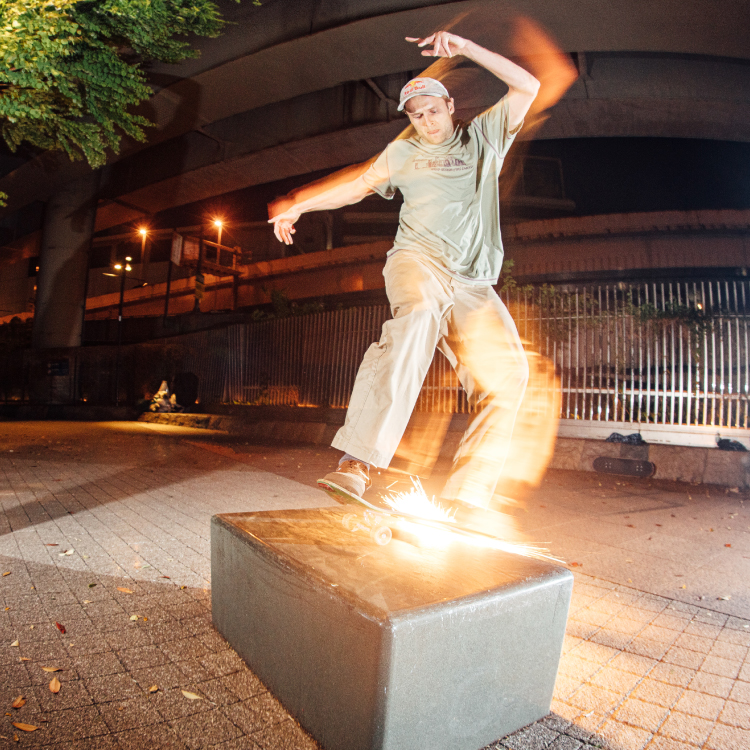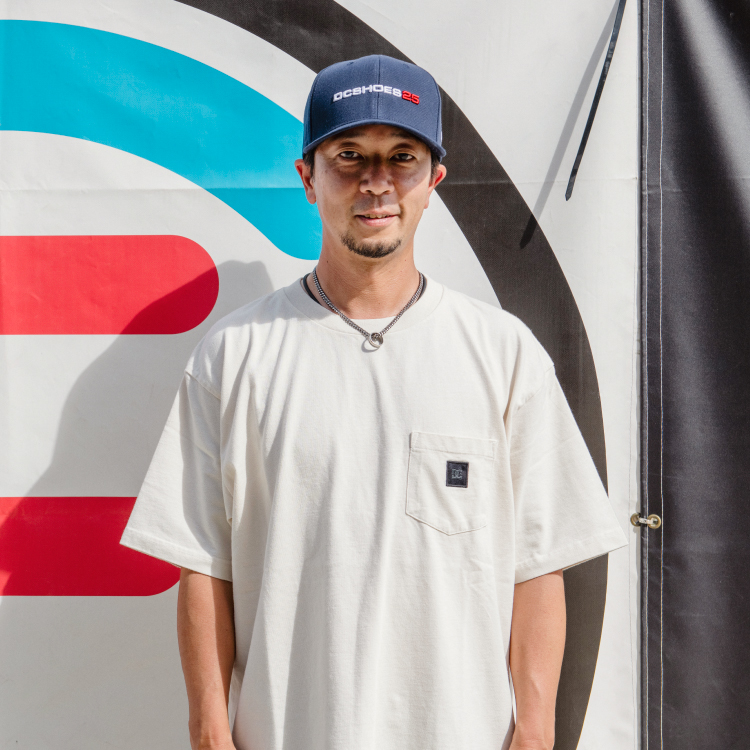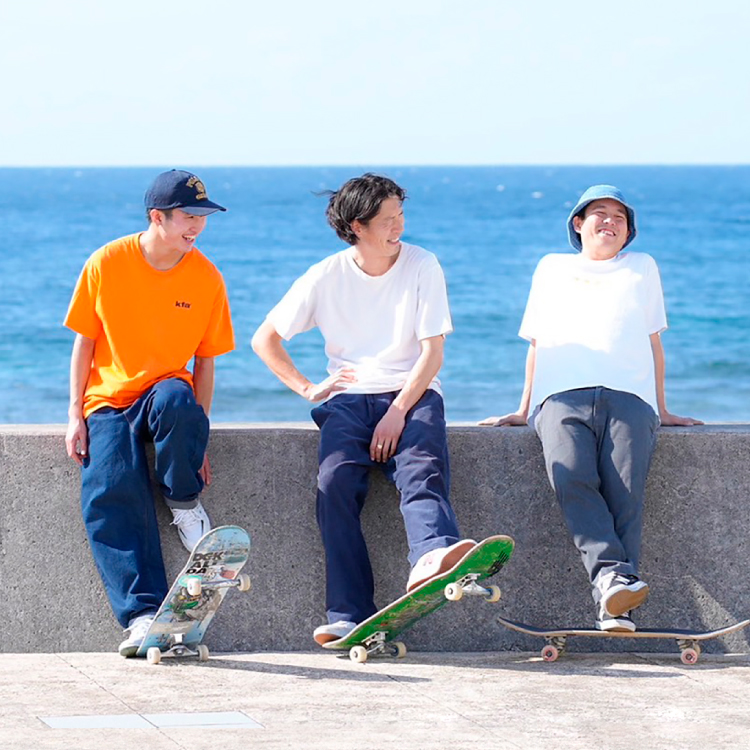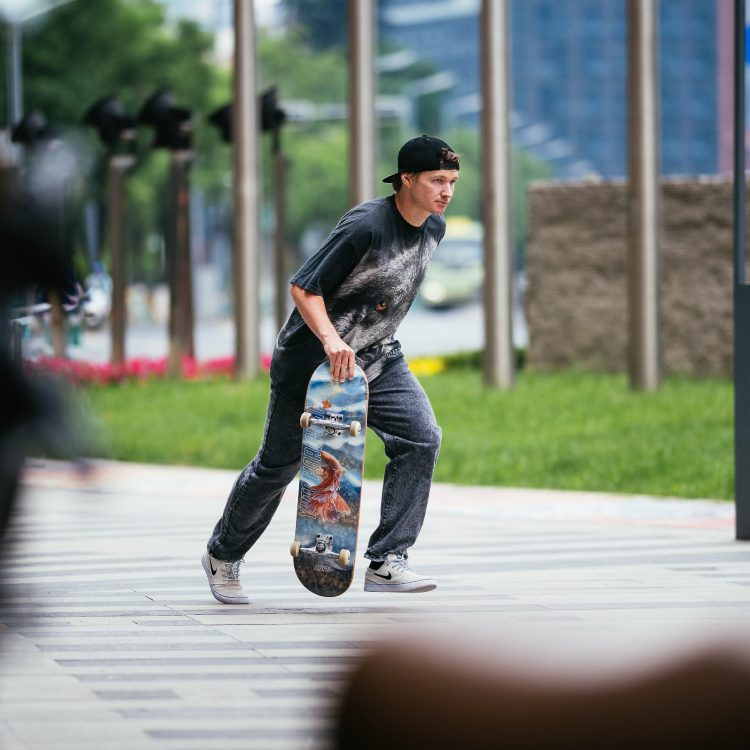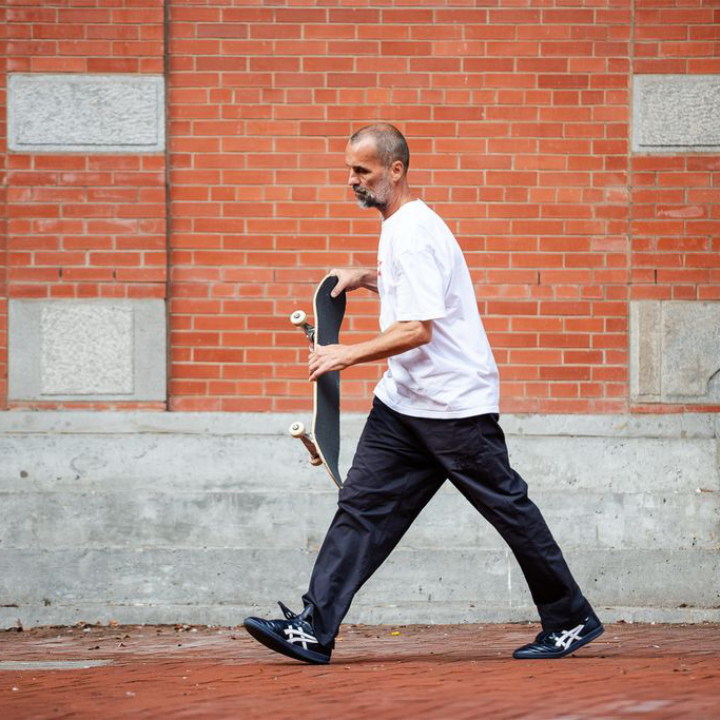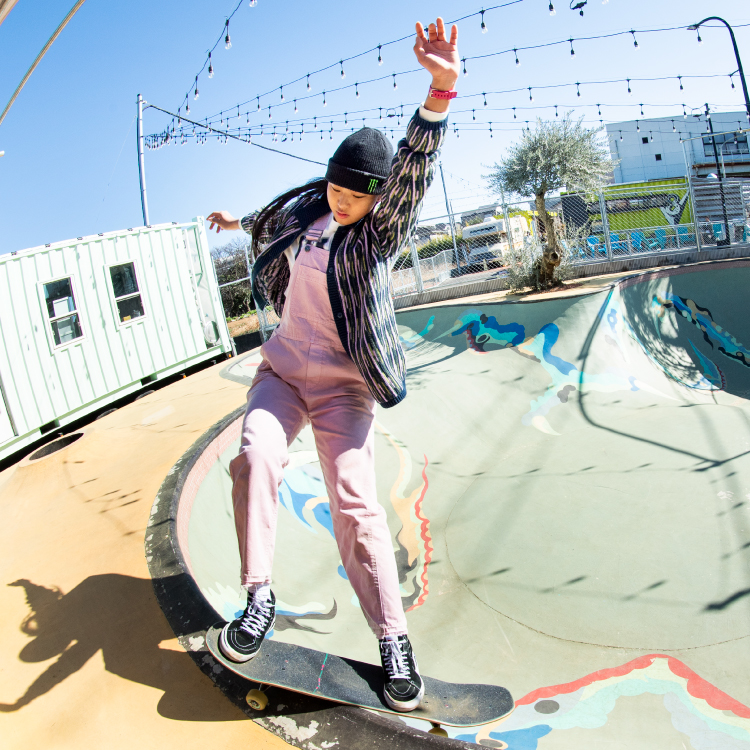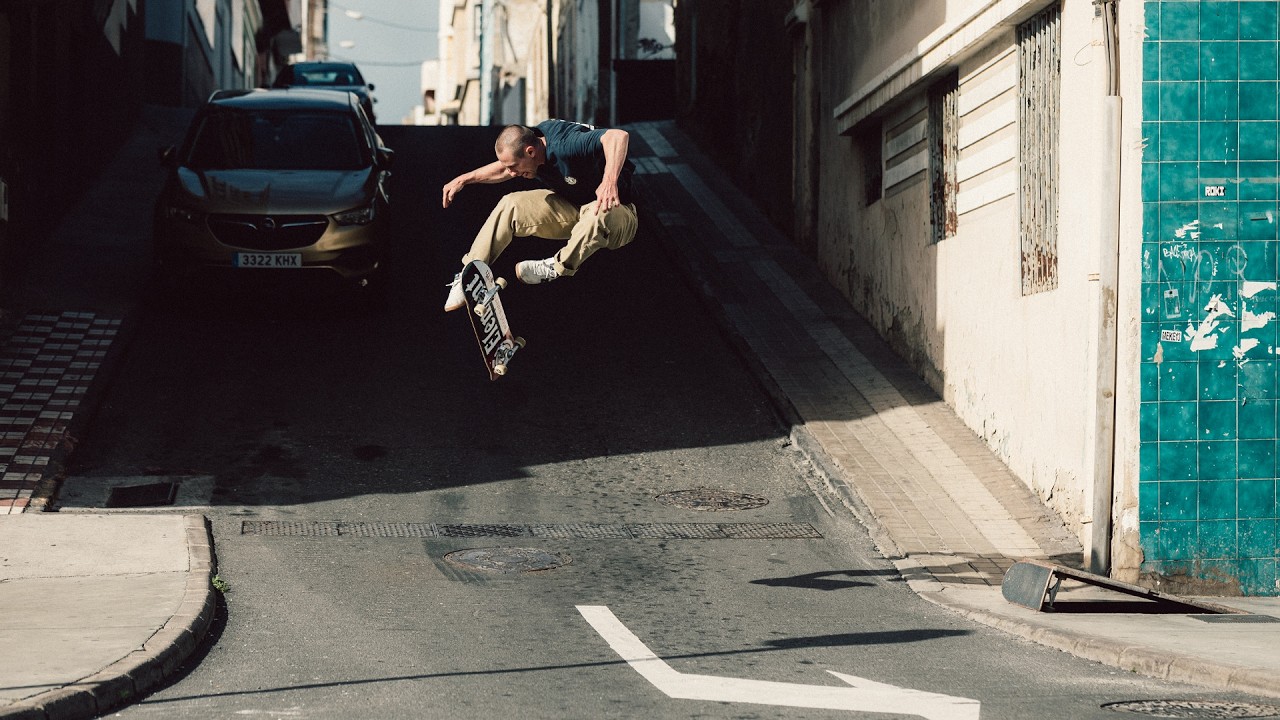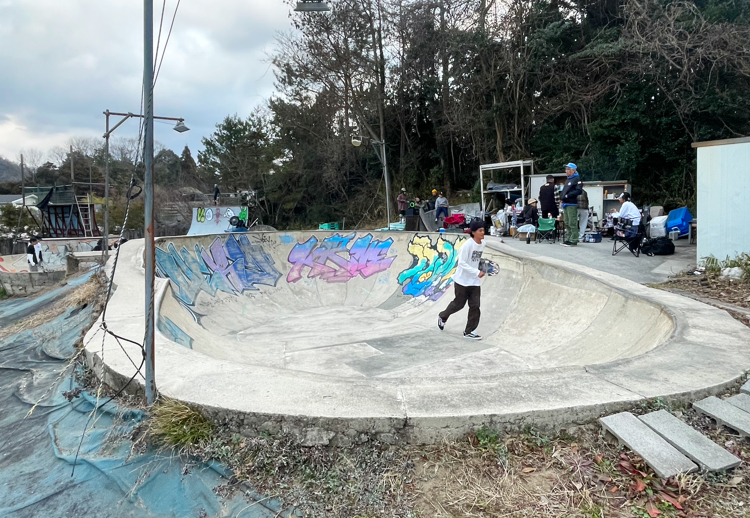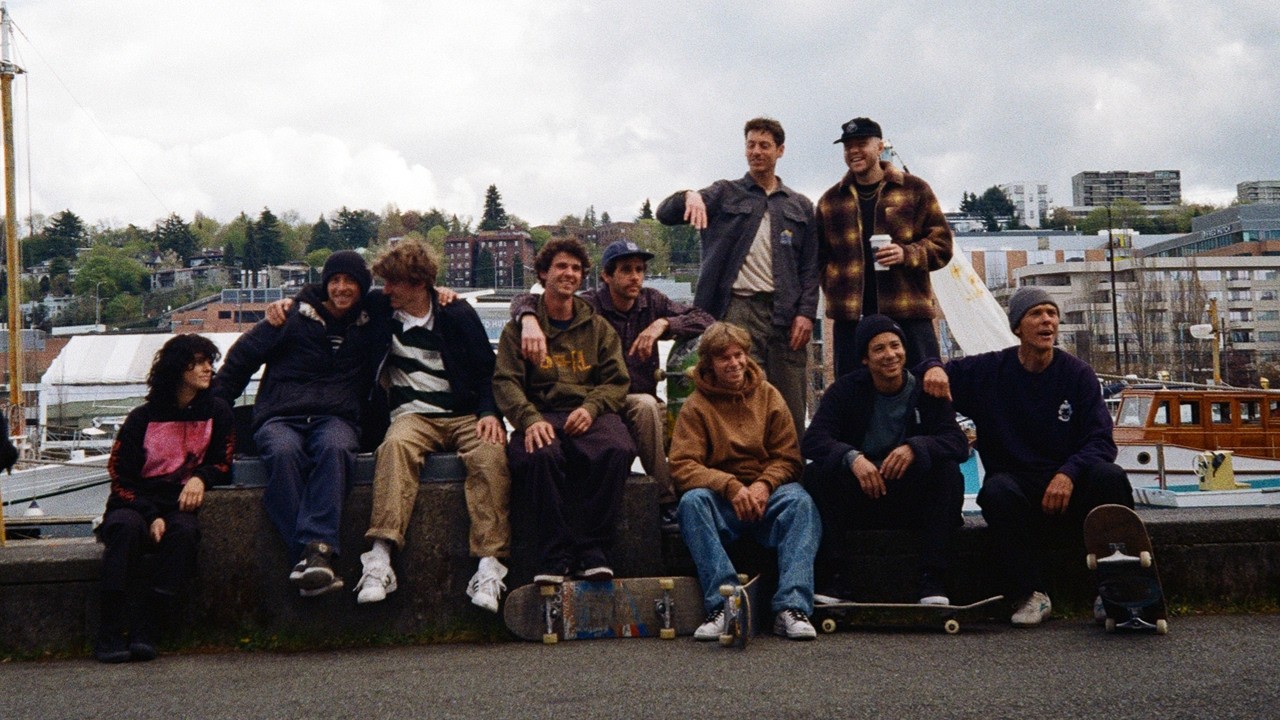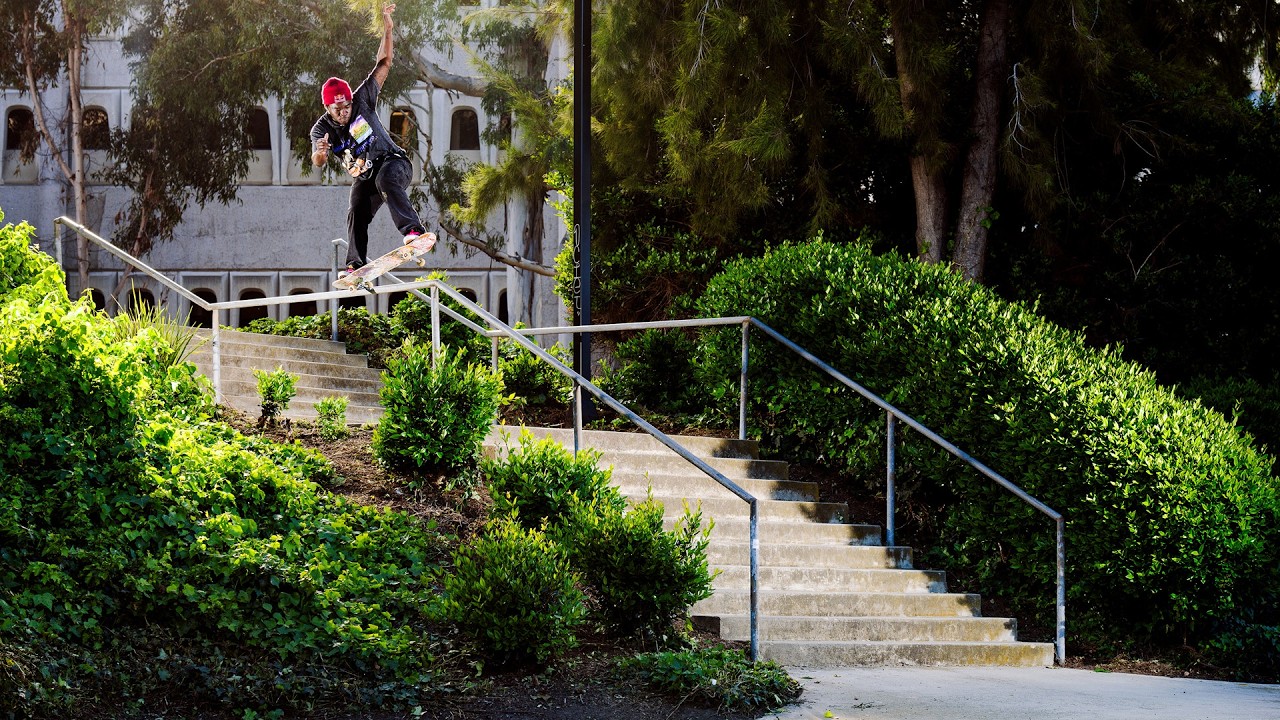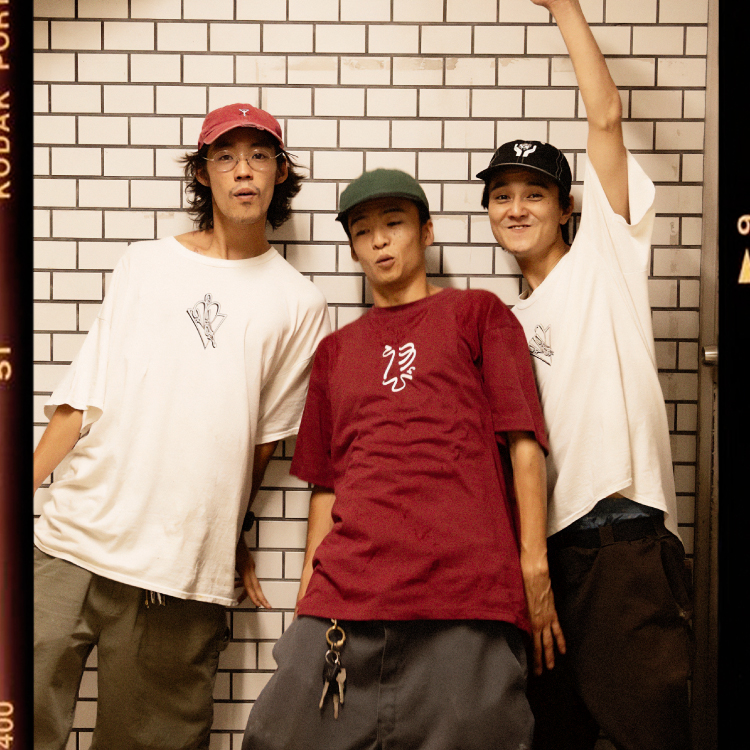


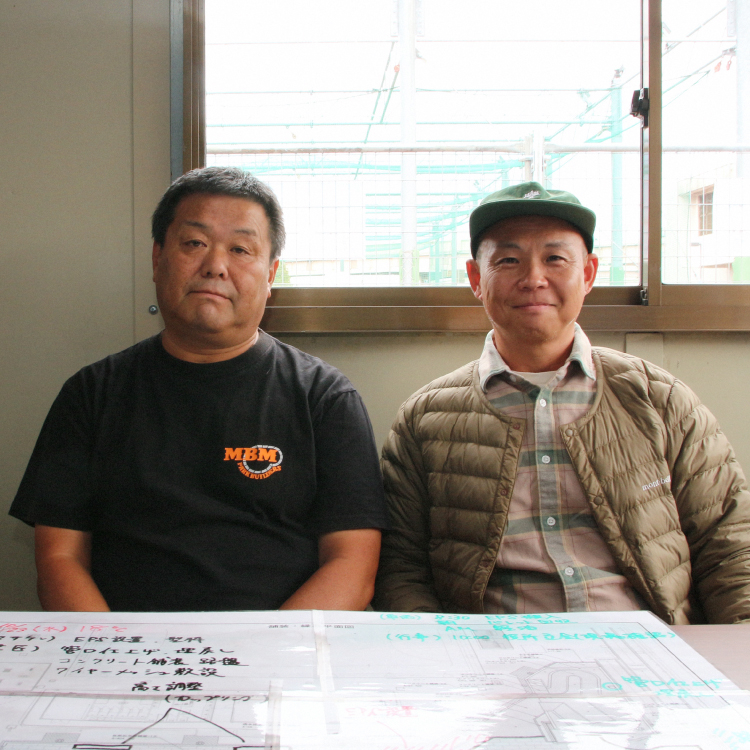
A skatepark is finally opening in Kosuge, Katsushika Ward, Tokyo. This project was spearheaded by Daisuke Hayakawa, known as an Olympic Japan national team coach, and Masato Kimura of MBM, who has developed skateparks across the country. It is the culmination of community efforts, shaped by the dedication of local skaters, the understanding of the government, and the craftsmanship of the builders who supported the site.
──KOSUGE NISHIKOEN SKATEPARK (ENGLISH)
[ JAPANESE / ENGLISH ]
Special thanks_MBM Parkbuilders
VHSMAG (V): First, please tell us the background of creating a skatepark in Kosuge, Katsushika Ward, and the story of the project. I hear Hayakawa-san put a considerable amount of effort into this project.
Daisuke Hayakawa (H): Several people were involved in the design, but I started moving around 2016 or 2017, immediately after the Olympics were decided. My hometown is Katsushika Ward, and World Skate Japan president Hirasawa-san is also from Katsushika Ward. The project started when Matsumoto-san, who was the secretary-general at the time, connected us with the idea of building a park in Katsushika, and that became the starting point.
V: Was the current location a candidate from the start?
H: We were looking for a good spot, and initially, the green space of Higashi Park, located across the highway from Kosuge Nishikoen, was a candidate. Since it was a park with few people, we initially proposed if it could be built there. However, that discussion stalled.
V: How did it restart after that? It ended up being a concept spanning about 10 years, didn't it?
H: I suddenly received a call last year from a customer of the shop I ran in Katsushika Ward. A ward official was a workout buddy of that customer, and there was talk that Katsushika Ward was considering a skateboard park, and they connected us, saying, "There is a person named Hayakawa-san who can help out." When I met the official, this location and subsequent details were already mostly finalized.
V: Who were the people involved from the beginning?
H: Those who participated in the meetings included local skater Tanaka-kun, Matsumoto-san, and Gen Ogawa, who coached with me at the Olympics. Gen is also from Katsushika Ward, and apparently, the ward contacted the federation side, leading to his participation. The federation was involved, as were local skaters. It seems everyone approached the project from different directions.
Masato Kimura (K): MBM was contacted by local skater Tanaka-san and others, and we decided to move forward after visiting the site. At that time, we spoke to the design firm NiX, and we became involved in the construction.
V: By the way, what is the skating scene like around Kosuge?
H: When I was a teenager, over 30 years ago, there was a mini ramp under the highway, or if you went towards Adachi Ward, there was the famous Akirat Park. I first met Akira Ozawa at that mini ramp. Besides that, spots around here have appeared and disappeared over time. It's like the home turf for skaters on the river side.
V: I heard that Joshua Nishimiya also contacted the ward and joined the project partway through.
H: It seems Haroshi found out about the announcement of the park construction in Katsushika Ward and contacted Joshua. Then, when he came to the meeting, we were already there (laughs).
V: How did the park design proceed?
H: We completely discussed it together and incorporated everyone's opinions. Local skaters have different styles and opinions. Some wanted tight transitions, while Joshua, for example, didn't need transition but needed the flat ground to be perfect. My job was to arrange and consolidate these ideas, and then have NiX organize them.
K: When I proceed at the site, I also first listen to the local opinions, but recently they have become quite diverse. Since the generation is getting younger, incorporating all opinions evenly is tough. Consolidating them is quite difficult.
V: Were there any clashes of opinion during this project?
K: Yes, but Dai-chan (Hayakawa) consolidated them. It absolutely won't work without a facilitator.
H: There is a gap in feeling and different standards required between skaters' opinions and what the government envisions. I strongly felt the necessity of standing in the middle and making adjustments to find a compromise acceptable to both sides.
—Daisuke Hayakawa
K: There are differences in opinion even among local skaters, right? Opinions like, "You're good at rails, so you want rails," or "You like boxes, so that's why you want them," come up. Sites without a facilitator find it hard to reconcile opinions.
H: I completely understand that everyone wants to build what they want to skate. However, what people want to skate changes over time. Moreover, once a park built by the government is constructed, it cannot be changed. The difficulty is that "hardly anyone can imagine how they will be skating five years from now". I understand the desire to create something they want to skate now, but a perspective that looks toward the future is necessary. When considering a compromise, thinking about how to revitalize the local skate scene in the future, how to make it a place everyone can enjoy, or how it can be used as an educational venue... I believe that having discussions with that foresight can lead to something good.
V: Where do you think your past experience came to life in this project?
H: Everyone tends to initially ask for a sampling of a famous spot, like "We want something like xxx." But I believe that loses the essence of skateboarding. Isn't the fun of street skating about using skill to transform non-skating objects into expression? Therefore, if you sample something and build a similar item, you can only express the same movements or things you've seen before. I felt that was a waste. So, I progressed by communicating to everyone that we should think in terms of "something that can only be found here" or "something only possible because of this location."
K: My role is to connect the local skaters' way of thinking with the government and contractors who have limited knowledge of skatepark construction. For example, a crucial job is confirming, "The transition here will turn out like this, how do you feel about it?" and accurately conveying that to the contractors. Building a park using A patterns or B patterns, or one based on a catalog, is no good in the first place. You have to listen to the local opinions. I've been thinking lately... a park is built, it becomes a hot topic, it appears in the news. People talk about "the first of its kind in this area," etc... But if you ask if people are still there six months later, that's not the case everywhere. It splits into places where people stay and places where they don't. That's where the passion of the builder is important, and it depends on that.
V: Kimura-san often says things like, "When you work with passionate people, good things are created," right? How was it this time?
K: I also have my anxieties. When you build many parks, anxiety sets in. But when Dai-chan is around, I don't feel that anxiety. I feel like I can entrust it to him. Since we were commissioned to build it, we naturally worry about the reputation, don't we? In the early days, we were cocky and used to say, "This way is definitely better," but we are not in a position to push our own opinions. It's meaningless if the people who skate there daily don't think it's good.
V: Hayakawa-kun, how was working with MBM?
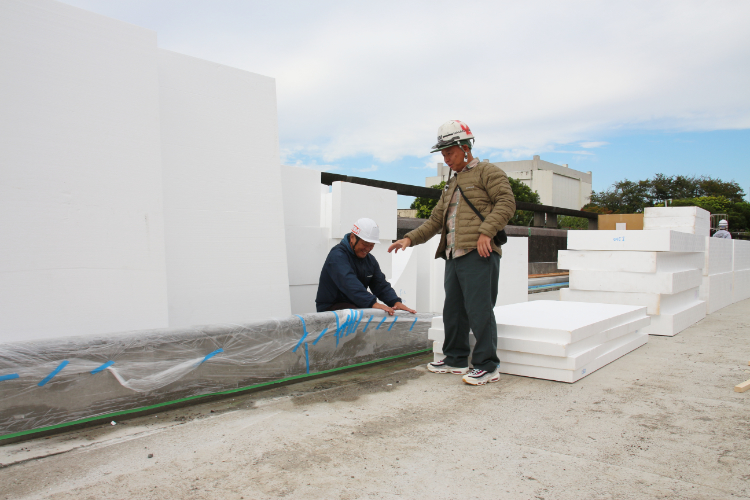
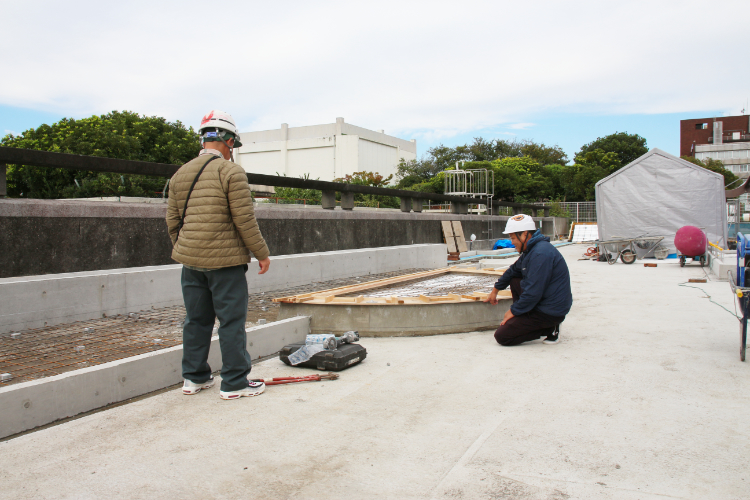
H: Of course, there was a sense of reassurance. Construction companies and landscape architects hired by the government are "pros at building towns," but a skatepark is truly a different thing. The "feeling of skating" cannot be conveyed just through words and then executed with a simple "I see." The ability to accurately convey nuance and feeling through short messages or LINE exchanges, and then receive a finished product that exceeds expectations, is something only possible by entrusting it to Kimura-san. It comes down to whether they have a love for skateboarding. You can feel that immediately, right?.
K: Starting with Hayakawa-san, and Nishikawa-san, Honma-san, and Aki-san, we are always learning while being scolded by everyone! We have to work hard so we don't get told, "This is no good (laughs)."
H: Once the concrete is poured, you can't change it, right? So, he confirms with me, showing videos via LINE, saying, "Is this okay?"
V: You were exchanging details that meticulously?
K: Well, skateboarding is a world where wheels are small, and just one pebble can cause a fall. For example, even with a transition, the feel of skating is completely different depending on whether it's normal, "comes in tight and then slows down," or "super tight". Yet, they look the same.
H: Based on the sensation of "whether your body floats or not at the lip when going up the transition," we might extend the transition area by another 5cm. It's helpful because even millimeter differences are immediately understood by Kimura-san.
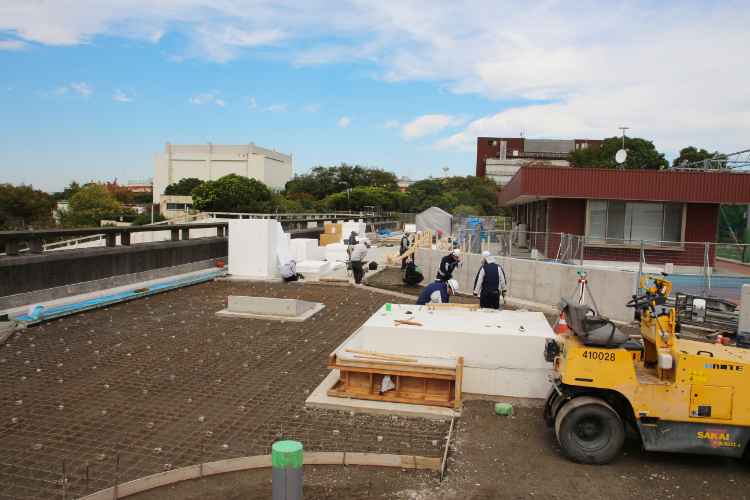
V: Now, please tell us about the features of the park.
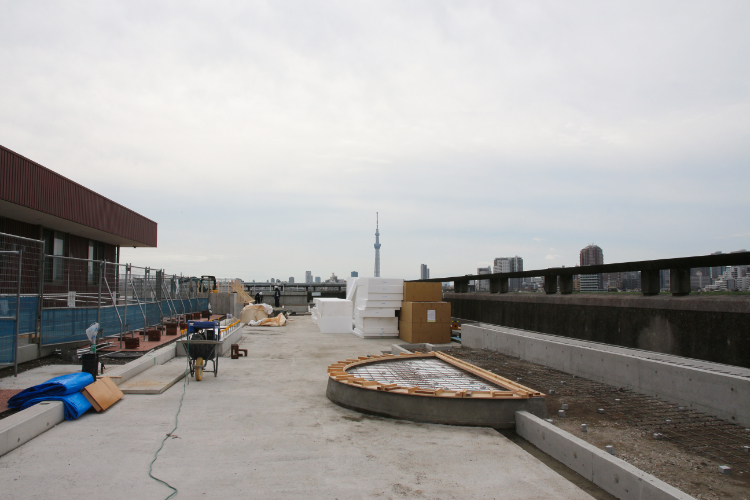
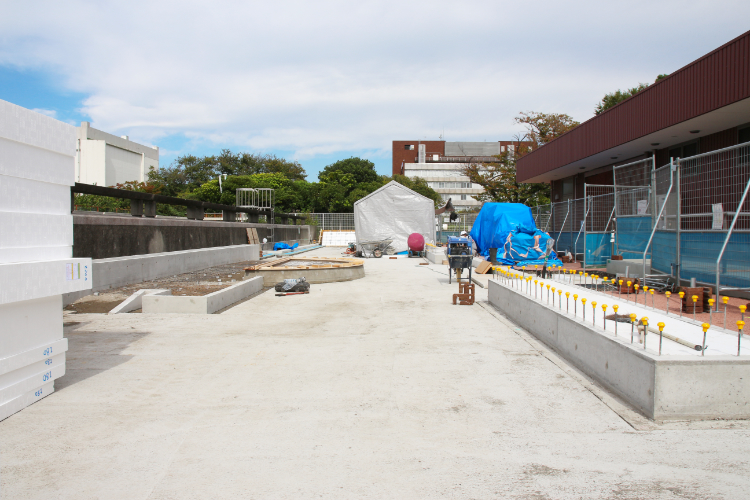
H: Features include, first, the beautiful, stone-paved flat ground designed for durability. Also, there are street sections with many banks, giving it a plaza-like atmosphere. Transitions are also incorporated well, and what makes me happy is the inclusion of a shallow mini bowl. Overall, I think the park is designed so that various types of skating can be learned and enjoyed generally.
V: It sounds like it's designed so skaters of a wide range of levels can enjoy it.
H: That's right. The government tends to categorize things into beginner, intermediate, and advanced, right? But throughout my time skateboarding, I have never once been categorized like that. An atmosphere where everyone can decide how and where to use the sections is better. Beginners can find opportunities for growth, and even if a pro skates the beginner section, it still results in a pro's skating.
V: What part do you like, Kimura-san?
K: The stone transitions. Also, the fact that the entire park is stone-paved. Stone materials are costly, so I thought the government would be hesitant to approve it, but I was surprised they did. We are laying concrete and deliberately placing stone on top of it. I think it will be very popular.
V: Have the park's opening time and usage conditions been decided?
H: It is scheduled to open next March. Since the location also operates a futsal court, it cannot be free, but there will be a usage fee that is considerably lowered. I told the government, "The cheaper it is, the cooler it looks (laughs)." Night lighting is also fully equipped.
V: Hayakawa-kun, how do you want to develop this park in the future?
H: Since this will be the first park in Katsushika Ward, I want to continuously pass down and preserve the experiences I've had to the next generation and the generation after that. I want it to become a rumored spot where many more "cool skaters" like Joshua emerge, and people gather aiming to be like them. Because you know, this is the area where I learned that "Skaters must be cool." I want that electrifying coolness.
—Masato Kimura
V: That's Ozawa-ism. So, what do you think are the future directions and challenges for skatepark construction, Kimura-san?
K: I would like to see more compact parks. A situation like in the US, where there are many skateparks in the neighborhood. If that happens, users will be dispersed, and even if they don't have extremely unique sections, basic elements like transitions, banks, and manual pads would be enough.
H: There are various ways to view it, but now that skateboarding has become "for everyone" due to the Olympics, I believe facilities built using tax money should be "for everyone." A park that is too large and overwhelming just by looking at it might only become a training ground for the few people who can skate it. Instead, a park is a public space. The ideal future is one where there are small parks scattered around, featuring little interesting ideas, as part of an activity anyone can enjoy.
K: Huge facilities capable of hosting national competitions have been built in places like Kasama, Utsunomiya, and Fukuoka. And the World Championships only happen once or twice a year. More importantly, having local parks, even just one in a major city, where people say, "See you tomorrow" and return every day, is better for the entire skate scene.
MBM Parkbuilders
@mbm_parkbuilders
Based in Ibaraki Prefecture, it is a specialized skatepark construction company where all workers are skaters. It is highly regarded for its approach to park building from a skater's perspective. Construction is constantly running at full capacity across the country. The number of skateparks they have worked on is countless.
Daisuke Hayakawa
@daisukehayakawa_jp
Born in 1974, from Katsushika Ward, Tokyo. While serving as an Olympic Japan national team Coach, he operates Hibrid. Through SKATE HARD Inc., which he leads, he is dedicated to nurturing young skaters, including developing projects to send the next generation of skaters overseas.