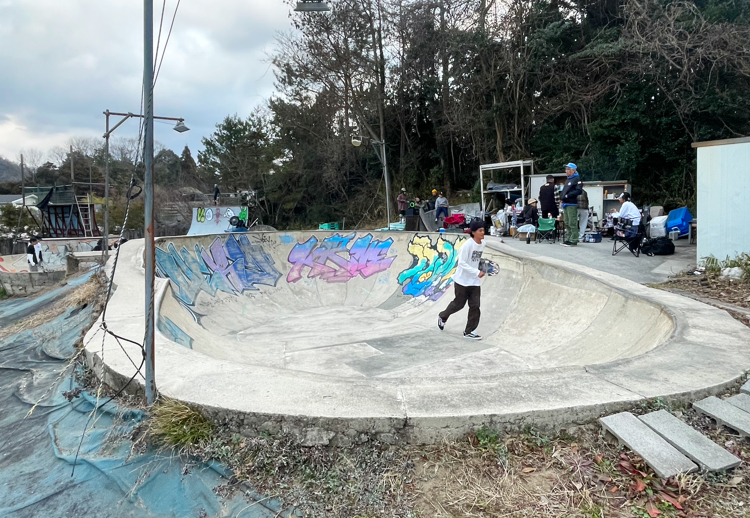
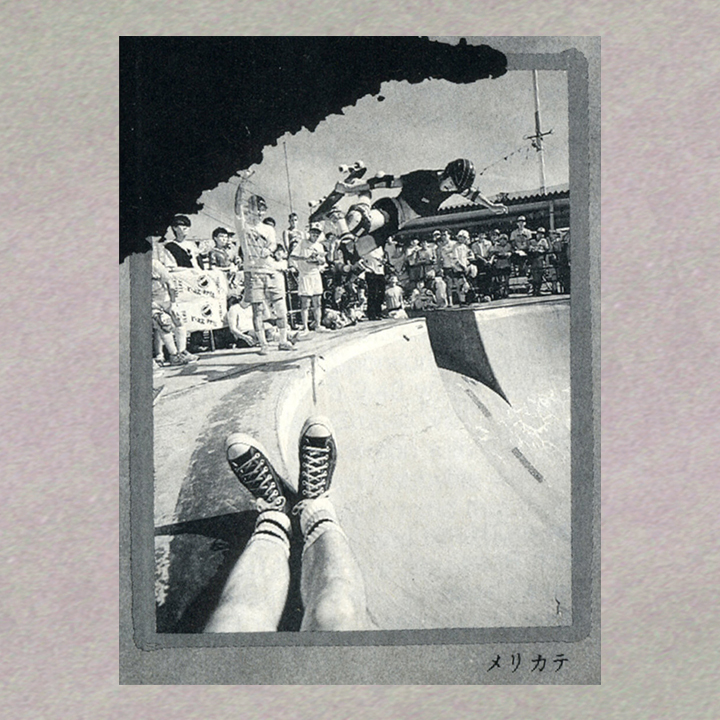
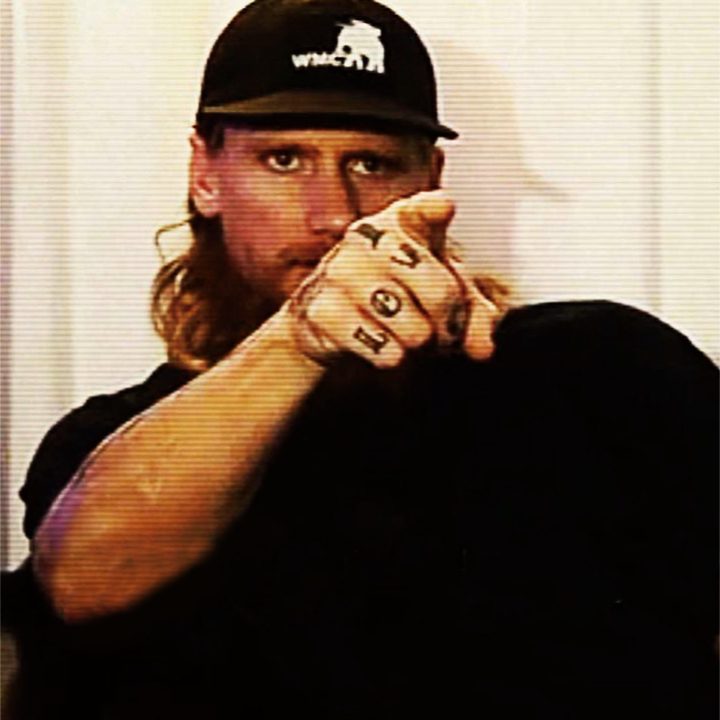


The local government, local skaters, and park builders. Three parties with different roles and backgrounds came together at the same table, building dialogue from scratch. TAGAJO CENTRAL PARK is a skate park born from that accumulation of conversations. From signature campaigns and the mayor’s support to a skater-led design refined through on-site adjustments, this project set out in earnest to create a place where generations from beginners to top-level skaters could intersect. Through the words of these three, we trace the process behind its realization.
──TAGAJO CENTRAL PARK (ENGLISH)
[ JAPANESE / ENGLISH ]
Special thanks_MBM Parkbuilders
VHSMAG (V): Ogido-san and Hoshikawa-san, could you both introduce yourselves?
Moritaka Ogido (O): I’ve been skateboarding for about 34 years. I earned my AJSA pro qualification around the age of 25 and have continued that career ever since. I started running skate schools around 2012, so it’s been about 13 years now. In terms of achievements, the biggest one would be coaching Liz Akama, who went on to win a silver medal.
Tomohiro Hoshikawa (H): I work for a company called MIYAX. I personally hadn’t skated before, but I’ve recently started little by little. As a company, we build parks and playground equipment, and this project was selected through a proposal process. I’ve been involved as the project manager since the stage of submitting that proposal.
V: Can you tell us how the skate park at TAGAJO CENTRAL PARK first came about?
H: Tagajo City originally had a number of different ideas, things like a roadside station concept, but as the city searched for new ways to create activity and vibrancy, the idea of a skate park came up. The concrete starting point was when we took part in a sounding process.
V: So, Ogido-san, you were involved from the very beginning too?
O: Yes. From the sounding stage, before anything had been decided. I was already talking with the city.
V: When did things start to become official?
O: About two years ago.
H: We gave the presentation around April 2024, and it was officially decided around May.
V: Kimura-san, you’ve been involved since then as well, right?
Masato Kimura (K): Yes. Ogido-san asked me to join. To be honest, we’d had a bitter experience in the past where a project we were working on together fell through, so this time I saw it partly as a chance for redemption.
O: I really felt it had to be MBM.
V: Hoshikawa-san, coming from a background outside skateboarding, what was your initial impression?
H: To be completely honest, without sugarcoating it, I had this image of skateboarding as kind of rough or underground (laughs). But that impression changed instantly when I met Ogido-san. I thought, “Oh, this is totally different.” If people like this are involved, then it really makes sense.
O: Since I was about 20, I’ve been involved in skateboarding activities that work directly with the local government, including signature campaigns. If you project a bad image, no one will listen to you, so I’ve always been conscious of that. Through that approach, we’ve been able to realize parks like Genki Field Sendai and Tsutsujigaoka Park.
V: Did Liz Akama’s presence have an impact on this project as well?
H: I think it had a huge impact.
K: If I remember right, she won the silver medal right around the time this project was finalized. Ogido-san was saying, “We’re going to support her at the public viewing,” and then she really went and won the medal.
O: She’d already placed highly at world championships, so we were able to use her achievements in the presentation. We also had support messages from Sakura Yosozumi and Yukito Aoki, which gave the project a big push.
V: Kimura-san, what did you think when you first heard about building this park?
K: At first, I was just thinking, “It’d be great if we could land this.” But because of those past frustrations with Ogido, I was especially fired up this time.
V: For you, Ogido-san, did working with MBM carry special significance?
O: It was huge, absolutely huge. I’ve had a lot of bitter experiences with different municipalities, and a lot of wasted time and effort. I really wanted to avoid seeing all that go down the drain again. There’s a 180-degree difference between entrusting a project to people with real experience who truly understand skateboarding and those who don’t.
K: The city officials have also been very open-minded and cooperative. In a public works project, it’s extremely rare to be allowed to have skaters test-run the park at this stage or to adjust rail heights. Their willingness to accommodate that really means a lot. Normally you’re told, “It’s already designed, nothing can be changed.” The mayor is very passionate, and that’s been a huge help.
V: How did you reflect local skaters’ opinions in the design?
O: In the past, I failed by trying to gather too many opinions, so this time I made sure to listen, but not over-aggregate. Taking trends and the overall flow into account, I made some executive decisions about what would ultimately make everyone happy.
K: Ogido-san decided the overall section design and layout, and we adjusted the finer details like heights on site. It feels like we’re finally able to do that kind of hands-on work to the fullest again. We changed rail positions constantly (laughs). Being able to make changes on site is the most important thing. Skaters don’t have civil engineering backgrounds, so you can’t fully understand everything from drawings alone. You need to actually stand there, see it, and decide.
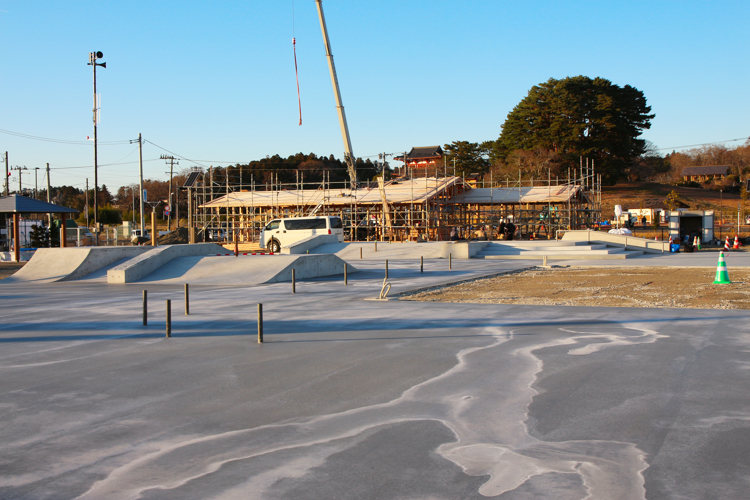
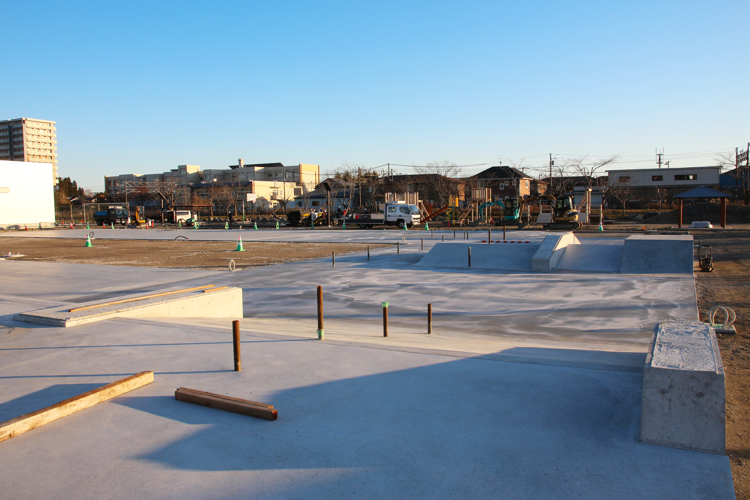
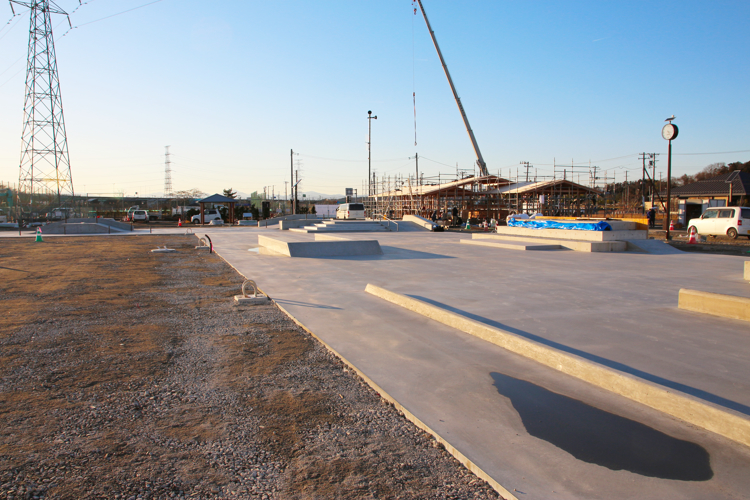
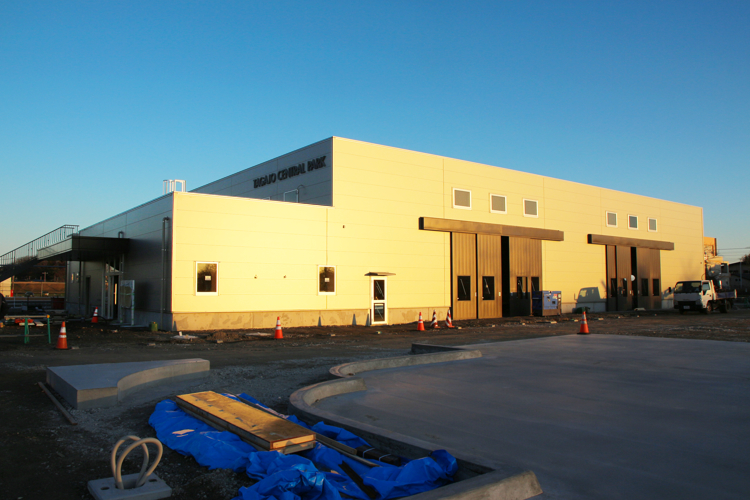
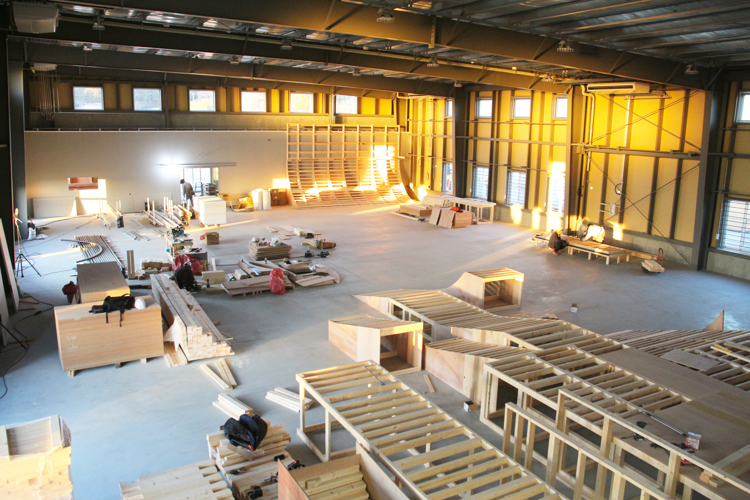
V: Could you briefly explain the overall layout of the park?
O: The park is broadly divided into three areas. First, there’s a beginner-friendly zone centered around flat ground. Then there’s a plaza-style area with street elements. And finally, there’s an indoor space designed for top-level practice and competition use. It’s a structure that starts from play, the essence of skateboarding, then leads to admiring skilled, stylish skaters, connecting to fashion and music, and ultimately embracing skateboarding as a lifestyle or as a competitive pursuit. All the steps are there, allowing skaters of different styles to find their own path and progress.
V: Kimura-san, which obstacle do you feel the strongest attachment to?
K: Definitely the small, tight transition. At first I wasn’t sure about it, but once we built it, it turned out to be really good (laughs).
V: You can already tell from the test runs. There are a lot of skate marks just on that thing (laughs).
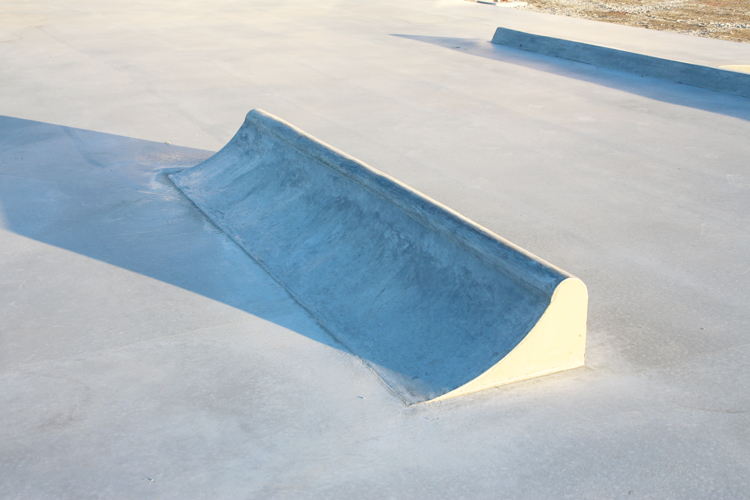
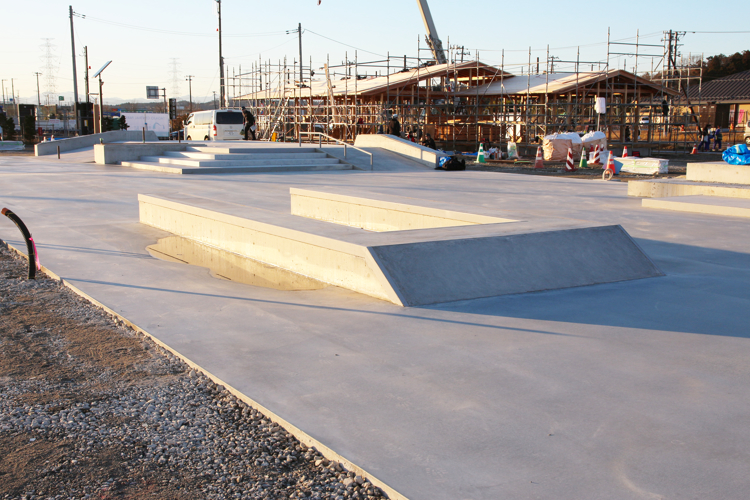
O: Normally with public facilities, you’re supposed to keep everything pristine and unmarked right up until handover (laughs). Personally, my favorite feature is that U-shaped ledge. You don’t see that kind of shape very often, and it can be used in so many ways. I wanted to create something that also works as an object, visually.
K: That ledge has a bank attached to it, but we deliberately kept the entrances tight instead of rounding them out. It was about giving it more of a street feel.
O: There’s also the three-ledge you might find in a street plaza overseas.
K: And for some reason, we ended up adding small banks on both sides at the very end. That was a total afterthought, decided on site once construction had already started (laughs).
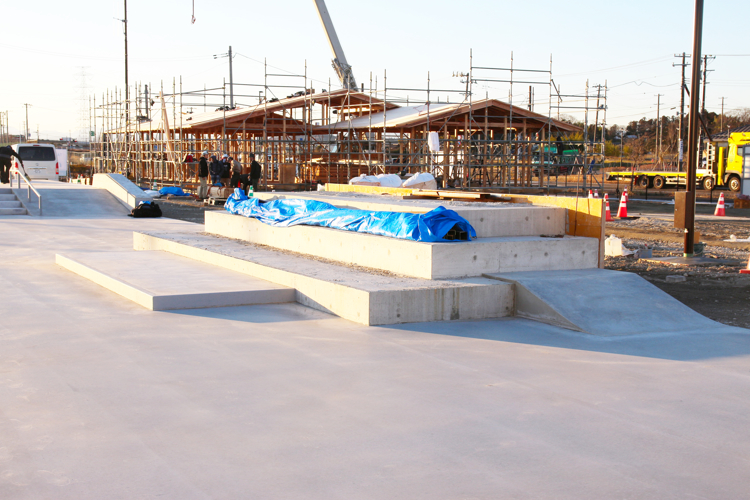
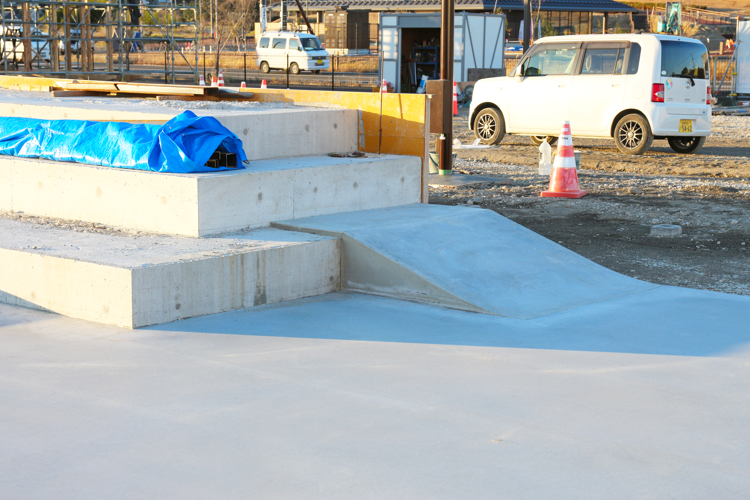
V: Being able to make changes on site and incorporate feedback like that is pretty amazing, isn’t it?
O: If it hadn’t been MBM, there’s no way those kinds of changes would’ve been possible.
K: Parks built that way tend to stay popular even years later. Instead of treating it as just another job, I think what really matters is having the courage to make changes when needed.
H: On our end, we basically left everything up to them (laughs). As long as the budget lined up, it was fine. I think it’s a park that genuinely makes you want to try skateboarding. It just looks fun.
V: By the way, there’s also going to be a café and bakery on site, right?
H: Yes. The concept is more like a bakery café. This person who runs a café in Miyakojima is involved, and they handle everything themselves from growing the coffee beans to roasting them. Because they’re so selective about what they serve, the coffee is simply excellent.
V: So that means people who aren’t skaters will also come here to hang out.
H: Exactly. Recently, the restoration of the South Gate of Tagajo has brought in a lot more tourists. The buildings aren’t finished yet, but in the future, we hope it becomes a place where people think, “I’ll just stop by for a bit.”
O: It’s interesting how elements of American culture are blending into a historical landscape.
H: This project is a major challenge in that it creates new value on land with deep historical significance. Our goal is to generate activity and vibrancy in the area while balancing the preservation and utilization of archaeological sites.
V: After the park opens, what kind of scene would make you feel, “This was a success”?
O: Ideally, it would be a place where everyone from beginners to advanced skaters, from kids to seniors gathers in one place and skates together. As an ultimate goal, of course, I’d love to see kids who grow up here go on to compete in the Olympics and then pass things on to the next generation. If you can visibly see that whole process, from planting the seeds at zero to watching the flowers bloom, I think that’s when you can call it a success.
H: I agree. If it gets to that point, I’d be truly happy. From a management perspective, I’d love to see grandparents, little kids, younger generations, and older guys all mixing together. If it becomes a place where people from different generations can naturally come together, that would be ideal.
V: Kimura-san, you’ve built many different types of parks with MBM. How do you personally position this park?
K: Sendai is a city with both the ocean and the mountains, and there are a lot of people into board sports. I think it’s great how naturally everything can mix, like, “There are no waves today, so let’s skate,” or “There’s no snow right now, so I’ll skate instead.” You can casually say, “The waves aren’t great today, so I’ll just come here,” and while you’re hanging out, you make new friends. Kids who were playing on the playground might say, “I want to try skateboarding,” and skaters might end up playing basketball. If all those different kinds of play can mix together, that’s the best outcome.
V: To wrap things up, we’d like to hear some final words from Ogido-san, as a local skater.
O: I’ve been skateboarding for a long time, and I know there are many different ways of thinking about it, but what really bothers me is that skaters who work this hard still aren’t fully recognized by the general public. I’ve always wanted to raise the value and perception of skaters. With this place, local people might first encounter skateboarding through the school programs, and from there the circle can keep expanding. If skaters and local residents can connect, build excitement together, and people start saying, “This is a really great town,” then that would be my true goal. Beyond just this park, I also want to create small flatground spaces where people can skate, even just a little, in general parks everywhere. If this can become one model case for that, I’d be really happy. Working together with municipalities across the country, I’d like to aim for a model where, like in the US, there are easily accessible parks in every district, and people eventually gather here from those places. That’s the final vision. And honestly, I caused my fair share of trouble around Tagajo when I was younger, so if this can be even a small way of giving back, that would mean a lot (laughs).
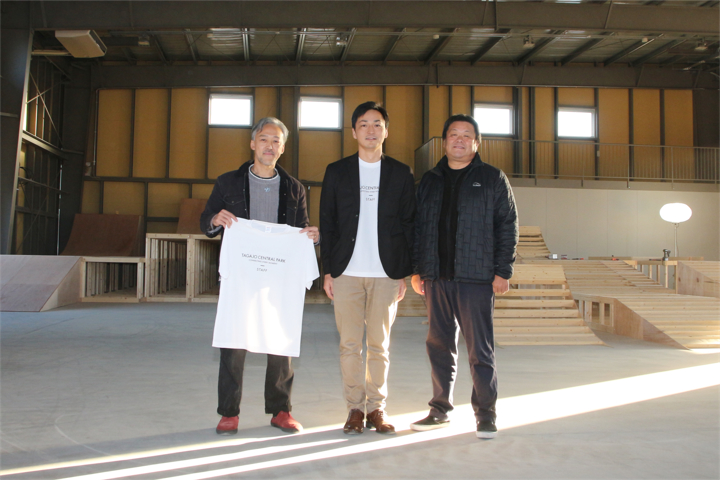
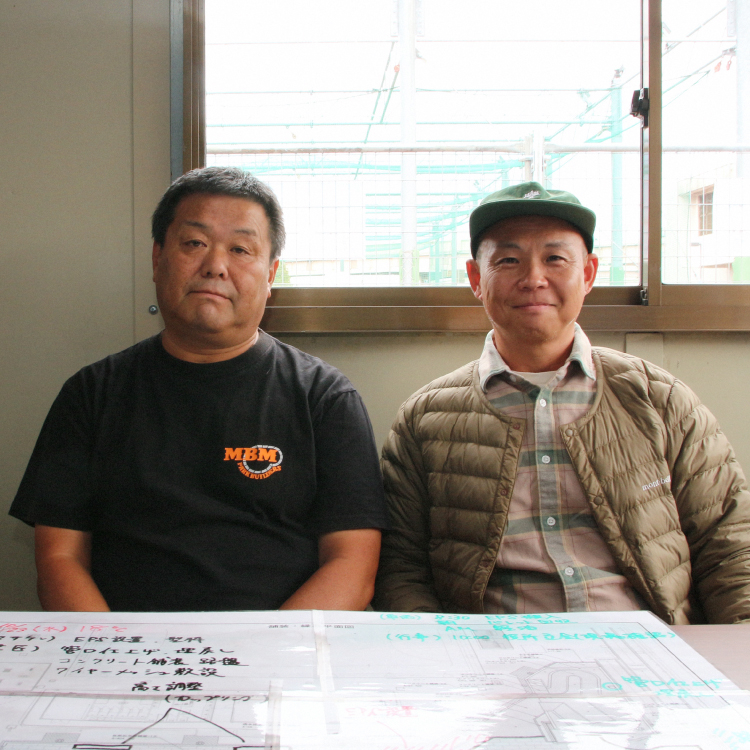
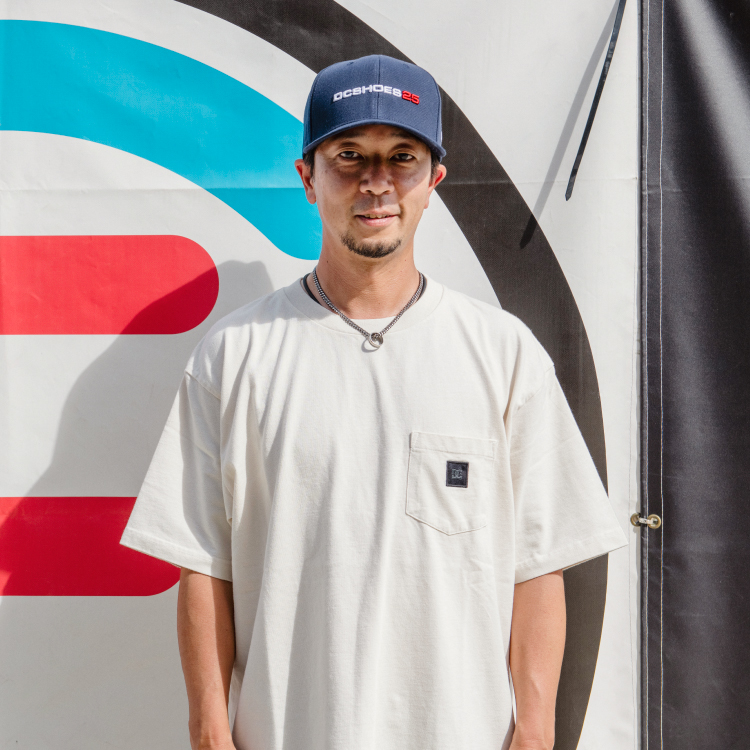
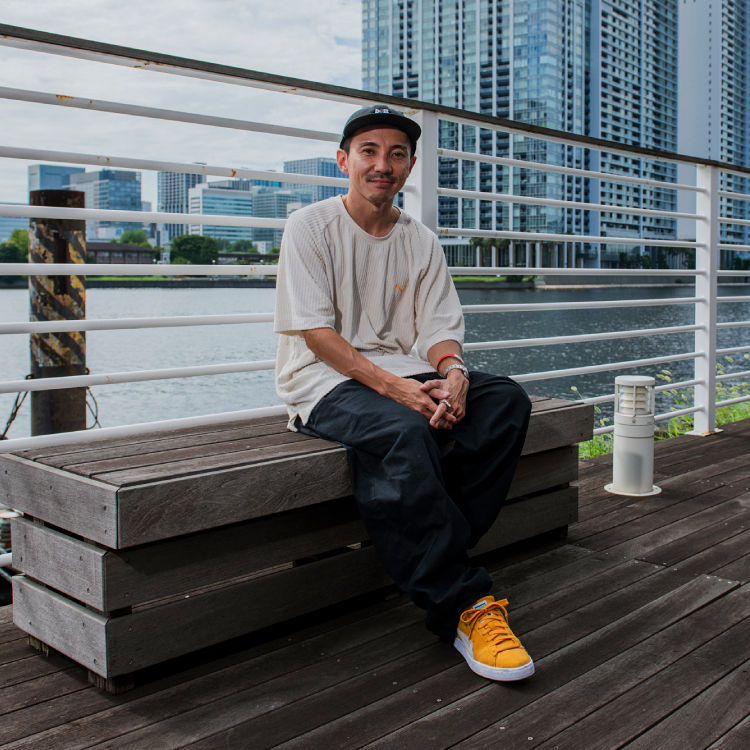
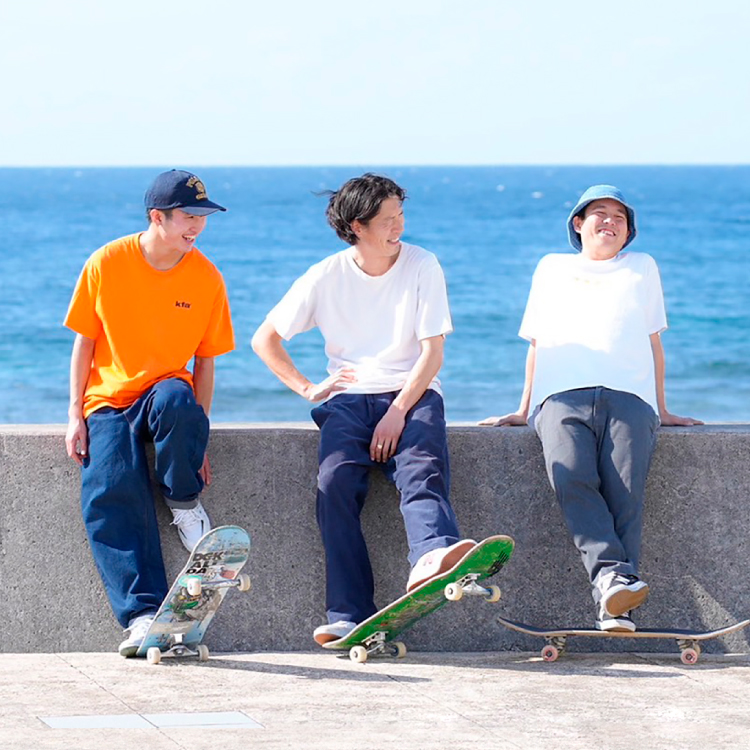
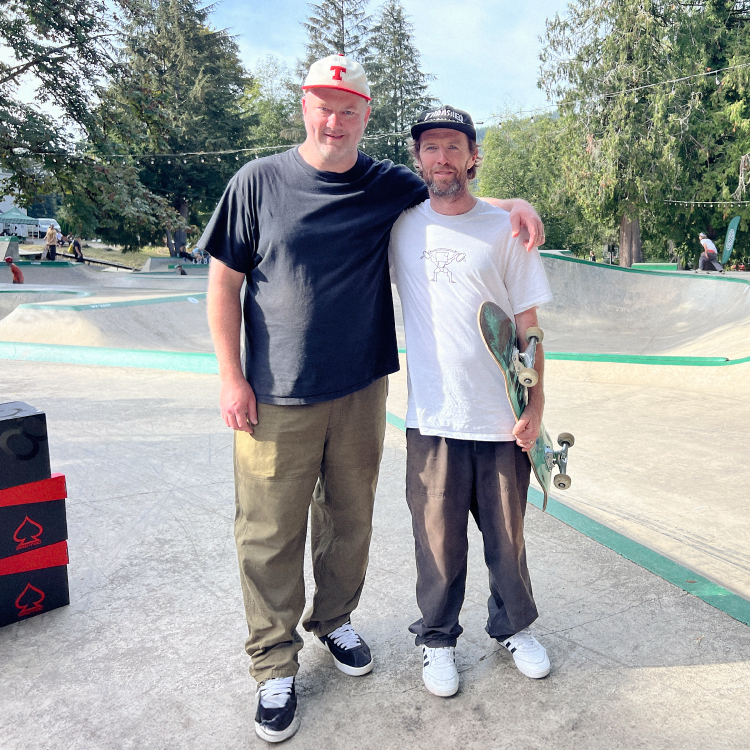
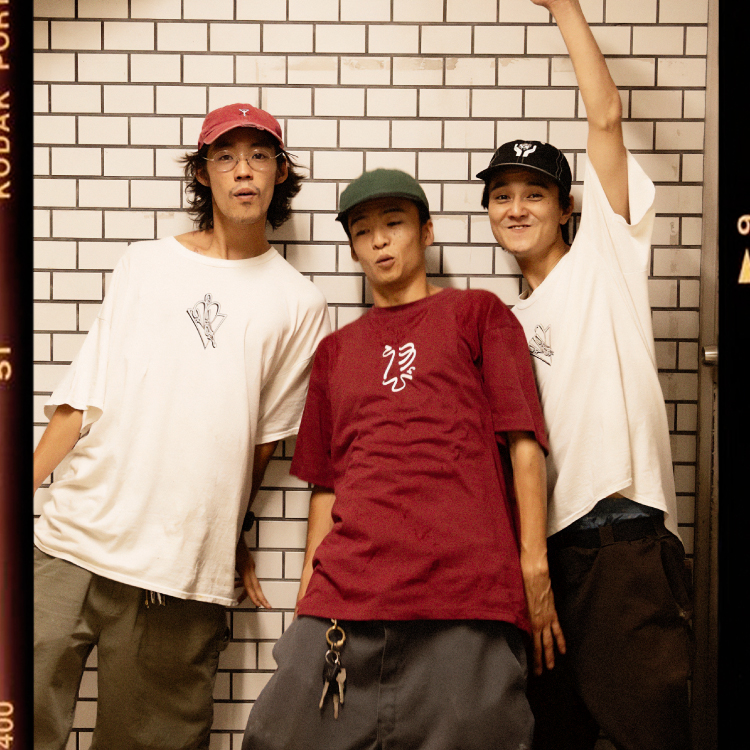
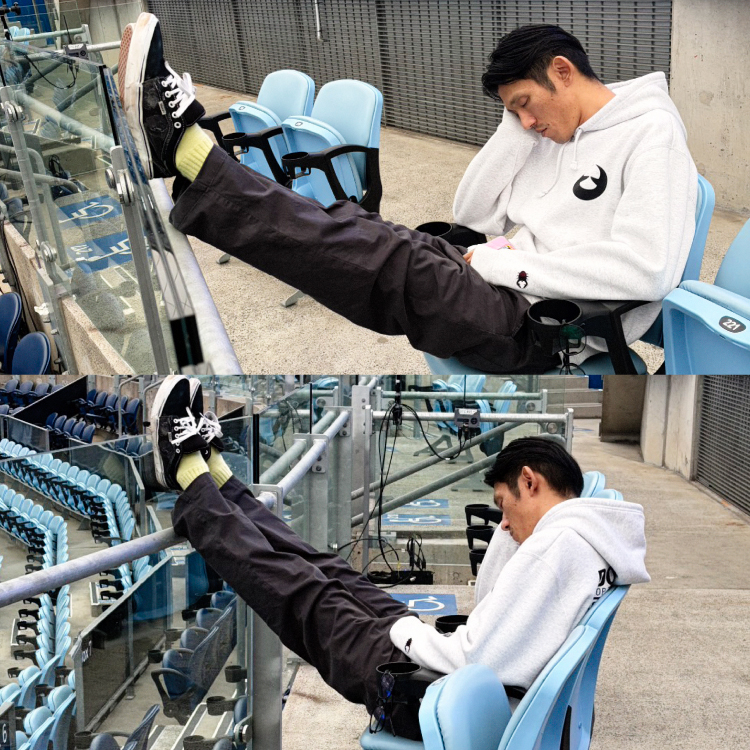
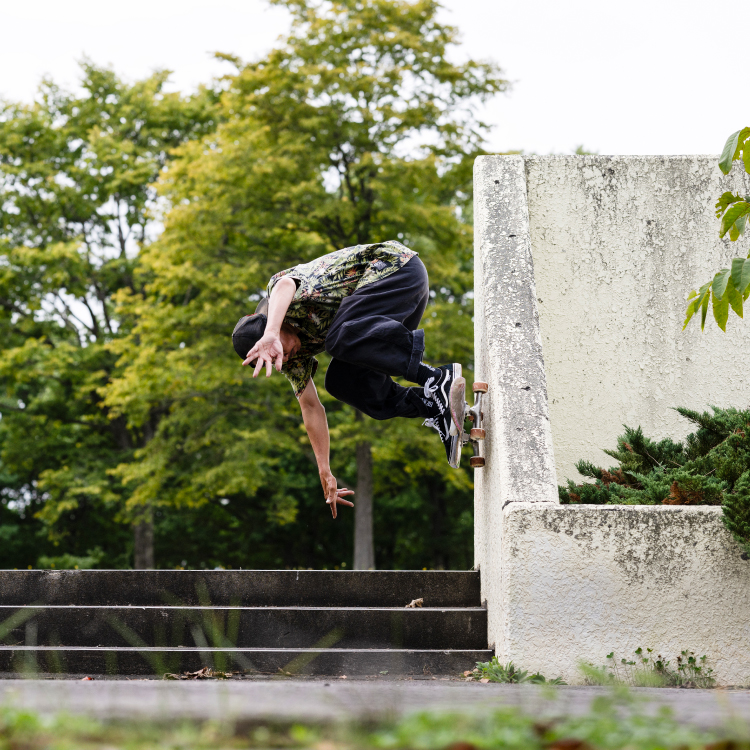
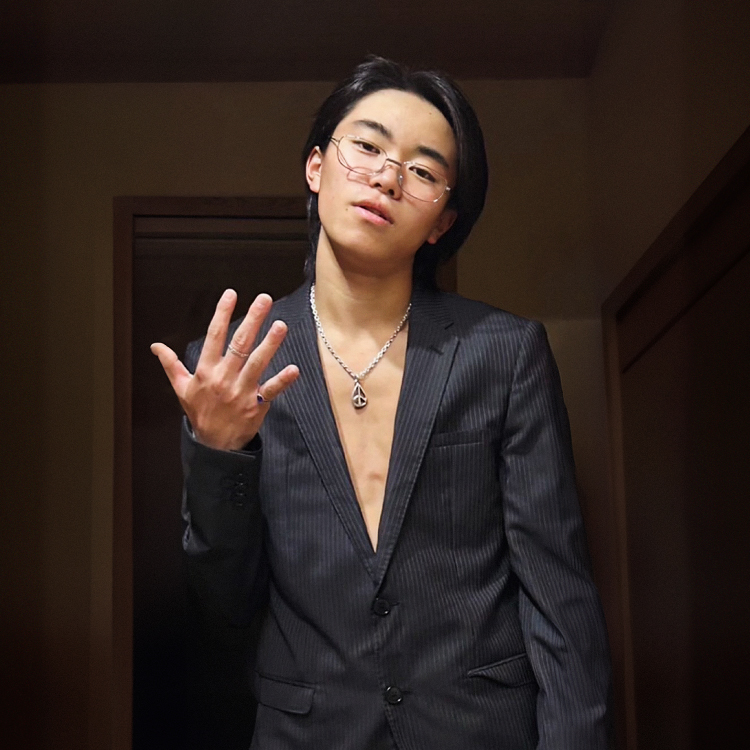
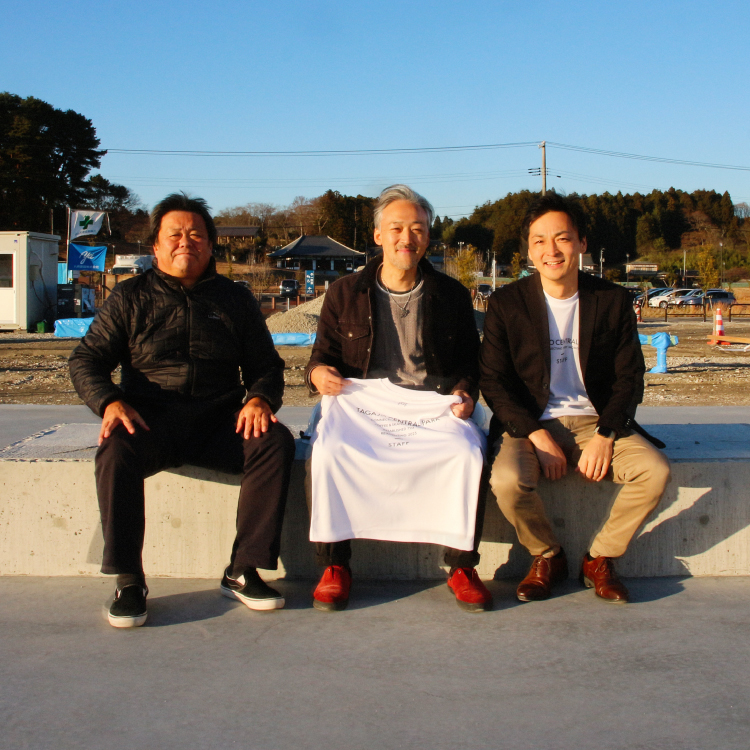
Key figures behind TAGAJO CENTRAL PARK. From left to right: Moritaka Ogido, Tomohiro Hoshikawa and Masato Kimura.
TAGAJO CENTRAL PARK
tagajocentralpark.com @tagajo_central_park_official
A multi-purpose public space set to open in Tagajo City, Miyagi Prefecture, featuring a skate park, an indoor training facility, and a bakery café. By intentionally blending skate culture into an area rich in historical scenery, it aims to create a new kind of public space where people of all generations and backgrounds can come together. Scheduled to open in mid-March.