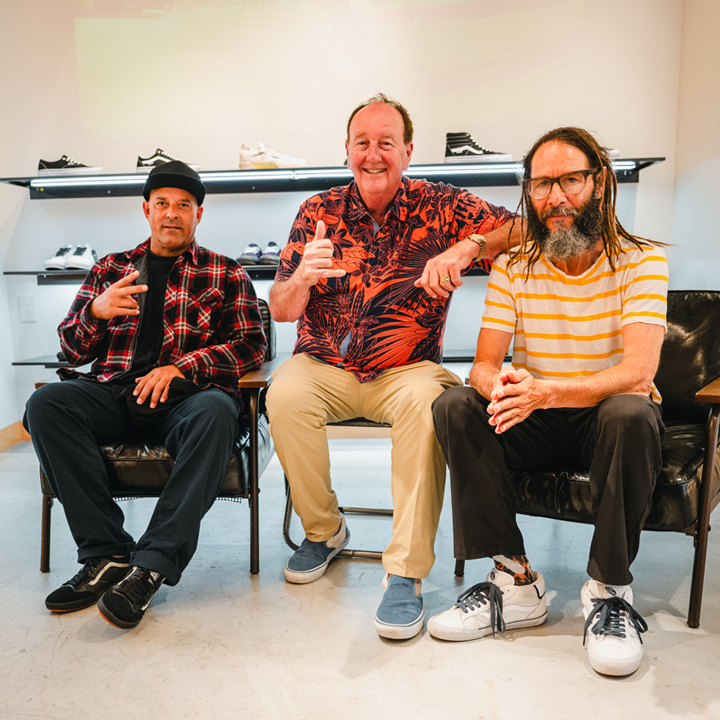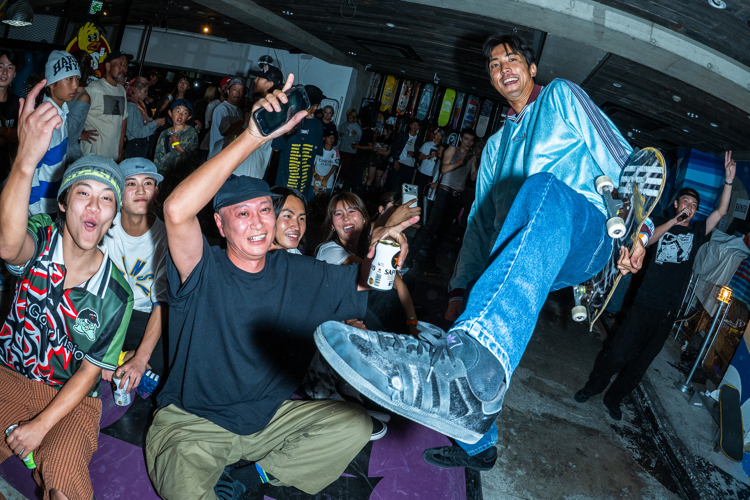
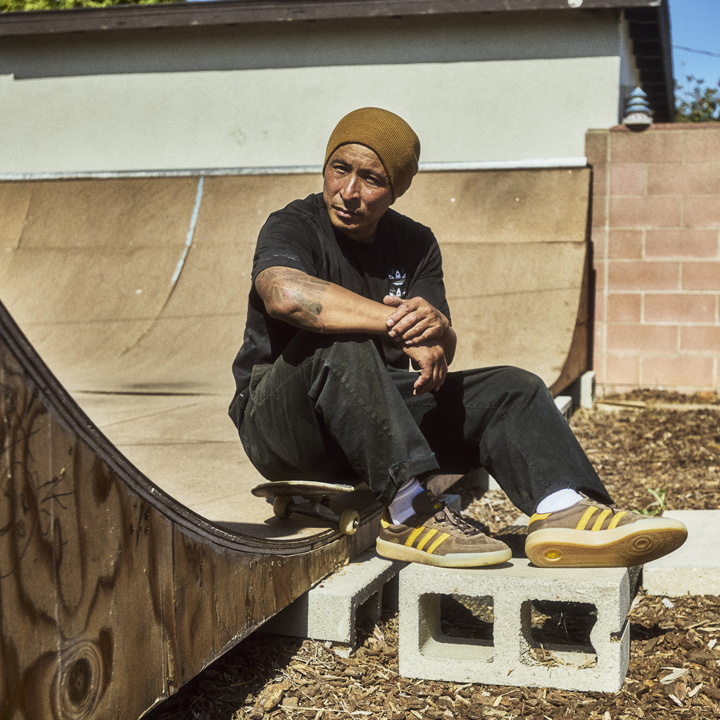

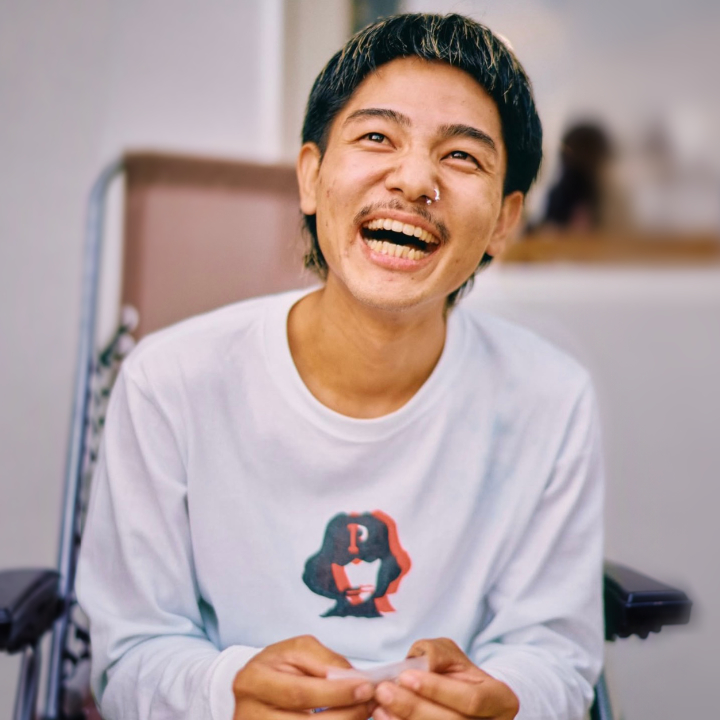

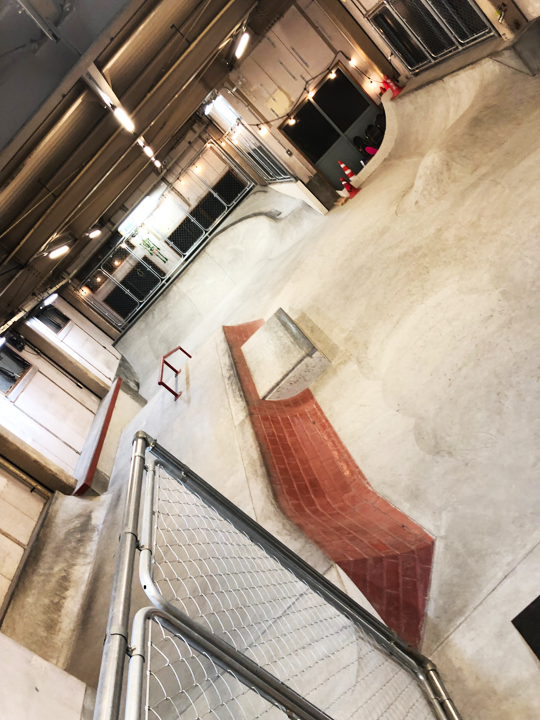
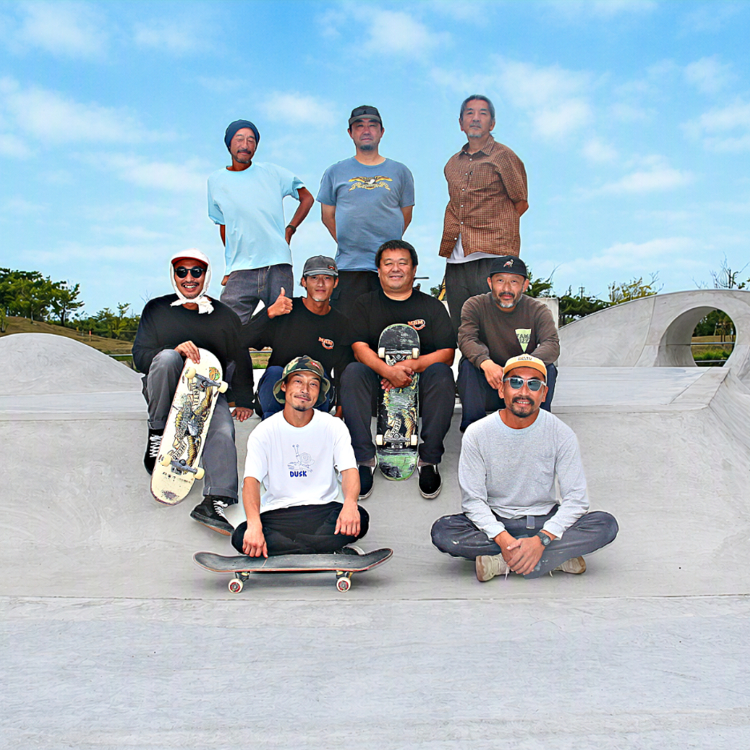



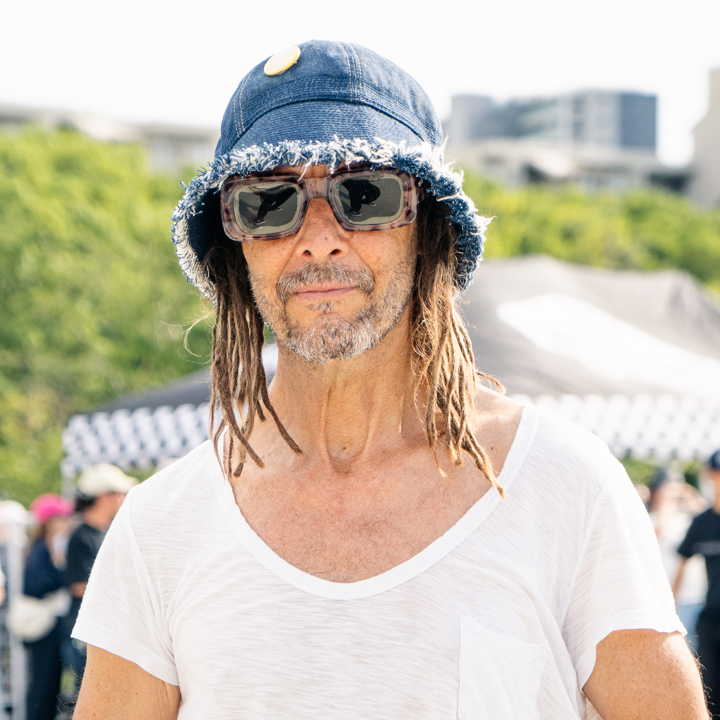
In 1976, after Tony Alva and the skaters he grew up with pushed Vans to build something that would work for skateboarding, the Era was born — the first skateboarding shoes ever, and a model that changed the course of skate history. Fifty years on, we caught up with Tony Alva during his visit to Osaka for a Vans event to hear the story behind the Era's creation and the philosophy that shapes his life today. He calls himself a "living legend", and the emphasis is on living: what he talks about isn't past glory, but what keeps him moving forward, one more day at a time.
──TONY ALVA (ENGLISH)
[ JAPANESE / ENGLISH ]
Photo_Simoyan
Special thanks_Vans Japan
VHSMAG (V): You played a key role in the creation of the Era. Before we get into that story, what were the biggest issues with shoes at the time?
Tony Alva (A): The biggest problem with skate shoes back then other than Vans was grip. They just weren't made for skateboarding, so they didn't grip the board very well. That's why we loved Vans. The waffle sole had amazing grip, and it felt right the moment you stepped on a board. Most of the other shoes were designed for running, basketball, or other sports, not for skateboarding, so they simply couldn't do what we needed them to do.
V: You were skating in the Authentic at the time, and it was your idea that led to the creation of the Era, right?
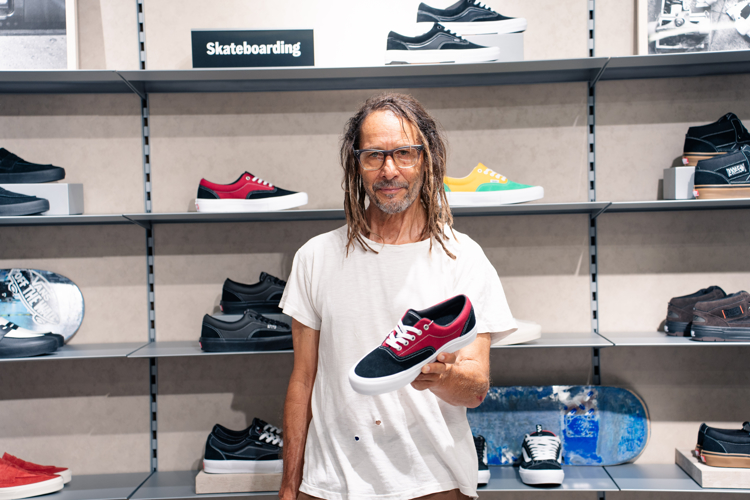
A: Yeah. A few of the guys I grew up skating with and I used to visit the Vans store on 19th Street and Wilshire in Santa Monica. We'd talk to the store manager, Betty Mitchell, and tell her, "If you get a chance to speak with the Van Dorens, let them know we love their shoes. But there are a few things we'd like to change to make them work even better for skateboarding." They listened, and eventually we started collaborating to develop what became the first shoe designed specifically for skateboarding, the Era.
V: How was it different from the Authentic?
A: The biggest change was the added padding and a few refinements to the upper, but we wanted to keep the design simple. The one thing we were absolutely determined not to change was the gum rubber waffle sole. That was what made Vans work for skateboarding in the first place. It gave us the grip we needed. To us, that was the most important part of the shoe. We also loved the colors Vans was using. As we started wearing through shoes, the company would sometimes replace only one shoe at a time, so we'd end up skating in mismatched colors. Looking back, I think that's where the idea for the two-tone look really came from.
V: How did the Van Dorens respond when you shared your ideas?
A: They were incredibly open to it. That was one of the things that made Vans special. Back then, it was just a small neighborhood company, almost like a corner store. They were part of the same community we grew up in, so they understood the culture we came from. When I met Steve Van Doren, things really started to move. Steve kept telling his dad, Paul, "These skateboard kids know what they're talking about. We should listen to them and let them have some input into the design." Even though we were just a bunch of rough and dirty kids from the beach, he believed in us. He knew we understood what skateboarders actually needed. Looking back, it's an incredible story. Vans grew from a tiny neighborhood shop into a multibillion-dollar company, and I was lucky enough to be there from the beginning. What's even more meaningful is the impact it's had on youth culture, not just skateboarding, but music, surfing, and the entire lifestyle that surrounded it. Those have always been the things I love, and Vans has been part of that journey from the very beginning.
V: Do you remember the first time you skated in the Era?
A: Yeah, I do. We were mostly skating the newer parks at the time, and the Era worked great right from the start. But I always felt there was room to keep improving it. As we began skating more backyard pools, we realized we needed better protection around our feet and ankles. The low-top shoes left our ankles exposed to board hits and ankle rolls. That naturally led us toward higher-cut shoes, which eventually became the Sk8-Hi. Interestingly, the Sk8-Hi came before the mid-top models. As shoe design continued to evolve, mid-tops became really popular because they offered a great balance between support and flexibility. Back then, the only mid-cut option was the Chukka, which was inspired more by its look than its performance. But once form and function came together, mid-top shoes really took off, and that evolution eventually led to models like the Half Cab and many of the shoes skaters still love today.
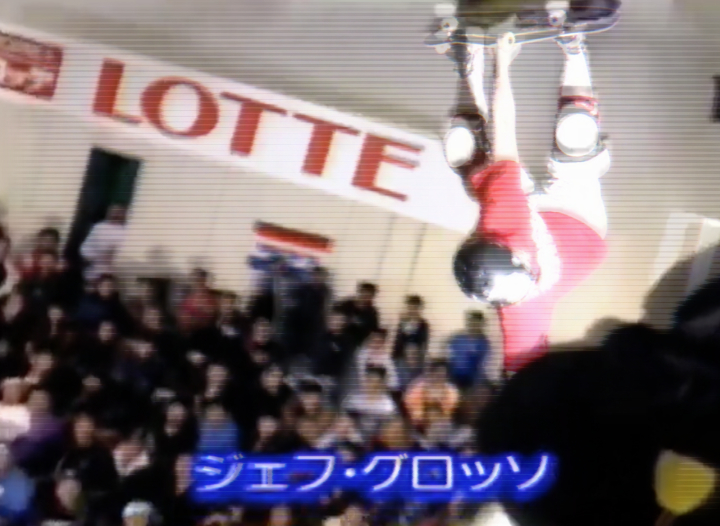
V: Speaking of mid-top shoes, Jeff Grosso immediately comes to mind.
A: Yeah, definitely. Jeff was always thinking about where skateboarding, and skate shoes, needed to go next. Jeff was a real thinker and a great talker, but the difference was that he could back it all up. He wasn't someone who just talked. He was a powerful skater who charged hard and could skate just about everything. He wasn't limited to vert or skateparks, he enjoyed every kind of skateboarding, and that's what made him so influential.
V: Rest in peace. So it's been 50 years since you helped create the Era.
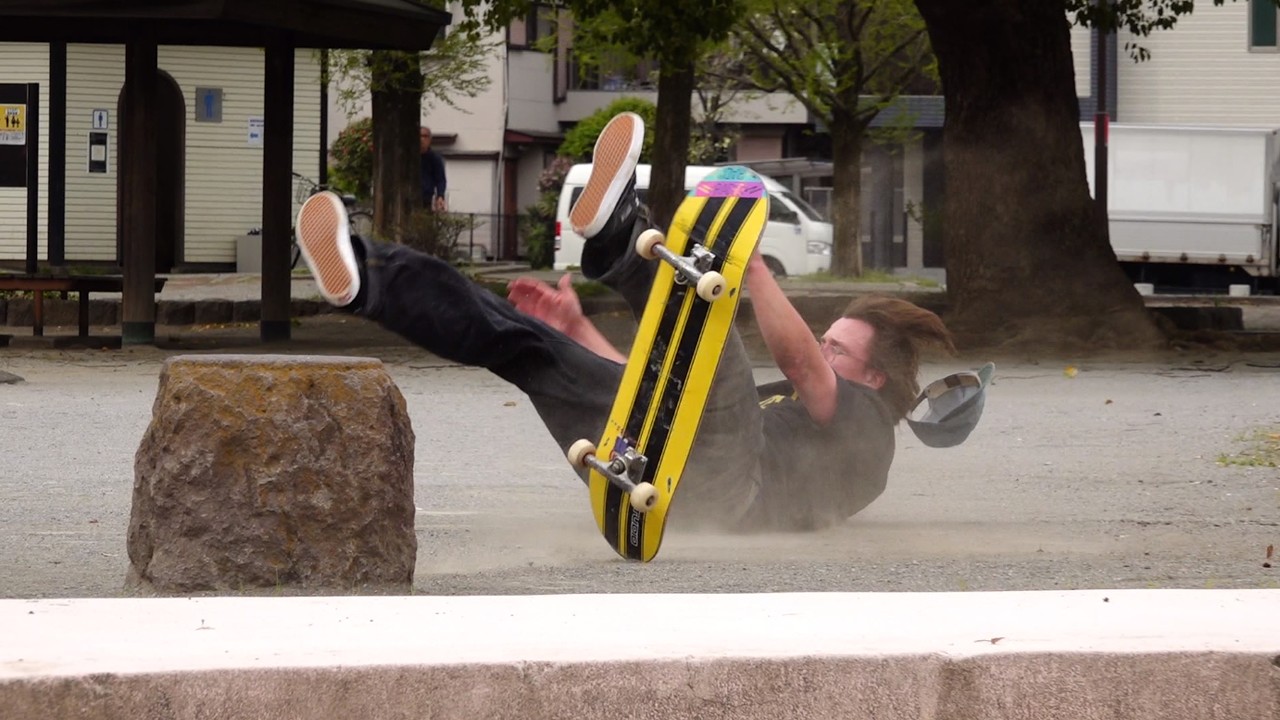
A: And it's also been 50 years since I started making skateboards. I founded my skateboard company in 1977, just 11 years after Vans began making shoes in California. We both came out of that same era, the '60s and '70s, and everything we did back then is what brought us here today. When you think about it, it's pretty incredible. I'm not just talking about the good decisions, either. We made plenty of mistakes. We did some stupid things, too. But those experiences are part of the reason we've made it this far. You don't learn without making mistakes, and you don't win a fight without taking a few punches. That's true in skateboarding, and it's true in life. You saw the kids skating today. You saw the slams they took. Even the girls were taking hard falls. Skateboarding has always been for tough people. I guess I'm just one of the tough kids who survived. A lot of my friends are gone now, and I feel fortunate to still be here. In the end, survival has a lot to do with being honest with yourself and being willing to change. You have to admit your mistakes and recognize your own flaws. That's how you keep growing.
V: And the legacy lives on.
A: Yeah. You know, when people call me a legend, it's funny because you know what I always say to them? I say the key word is living. I'm a living legend. A lot of the others aren't here anymore like Jeff. Of course I miss those guys. But my job now is to carry on. Just one more day. One more day surfing, one more day skateboarding, one more day sober, one more day giving back to kids, and one more day supporting the things I love. It's never been about the money. It's about progress. I've never claimed to be perfect, and I know I'm not. But I do believe in trying to make progress every single day. Not just for myself, but for someone else, too. That's what keeps me going. I've been given one more day, and I want to make the most of it.
V: You've done so much throughout your career. Looking back, if you had to pick one moment that stands out the most, what would it be?
A: Probably the moment I started my own skateboard company after winning the World Championships in Carlsbad. Taking first at the Hang Ten contest, I realized I'd beaten some of the skaters I'd looked up to. That gave me the confidence to believe I could build something of my own. Up until then, I'd spent years skating for other companies, other sponsors, and other teams. Eventually, I got tired of watching everyone else benefit from what I was creating. I felt it was time to take control of my own future, to start my own business and build something I truly believed in. It was time to create something that I could be proud of and benefit from myself.
V: After everything you've accomplished, what still keeps you going every day?
A: More than anything, it's my spiritual practice. That's what keeps me going. I've learned that nothing on the outside is going to change me. The real work happens on the inside. Prayer and meditation are the foundation of my life now. Today, the most important thing to me is maintaining my spiritual balance. As long as I stay grounded, I get to wake up to one more day and really appreciate it. Living a simple, clean life is one of the biggest achievements of my life.
V: You helped create the Era. How does it feel to see young skaters still wearing it today?
A: I think people still love the Era because it's comfortable, simple, and uncomplicated. It's a perfect example of "less is more." To me, it's still one of the best skate shoes ever made because it doesn't try to do too much. It just works. That idea of simplicity applies to my life, too. I believe in keeping things simple, even if we have complicated minds. My life today is built around a simple routine. Yoga, surfing, skateboarding, and taking care of myself. That's what works for me. Keep it simple.
V: Is there anything you're looking forward to, or any projects you have coming up?
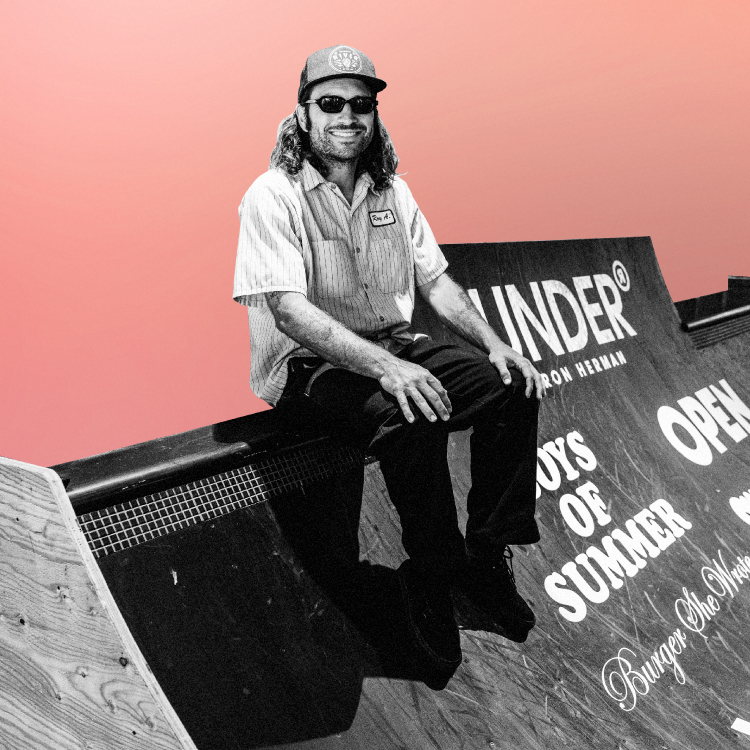
A: I just want to keep supporting cool kids. That's always going to be a big part of what I do. I also want to keep bringing together the spirit of surfing and skateboarding, they've always gone hand in hand for me. I'm also playing bass in a really cool band with Ray Barbee, and we're working on some exciting things. Hopefully, the next time we come to Japan, we'll bring the band with us and play a show for everyone.
Tony Alva
@thetonyalva1957
Born in 1957 in Santa Monica, California, Tony Alva is a legendary skateboarder and a central figure of the Z-Boys, the pioneering crew that redefined skate culture in the '70s. Today, Alva continues to skate, surf, and perform music while dedicating himself to supporting and inspiring the next generation.