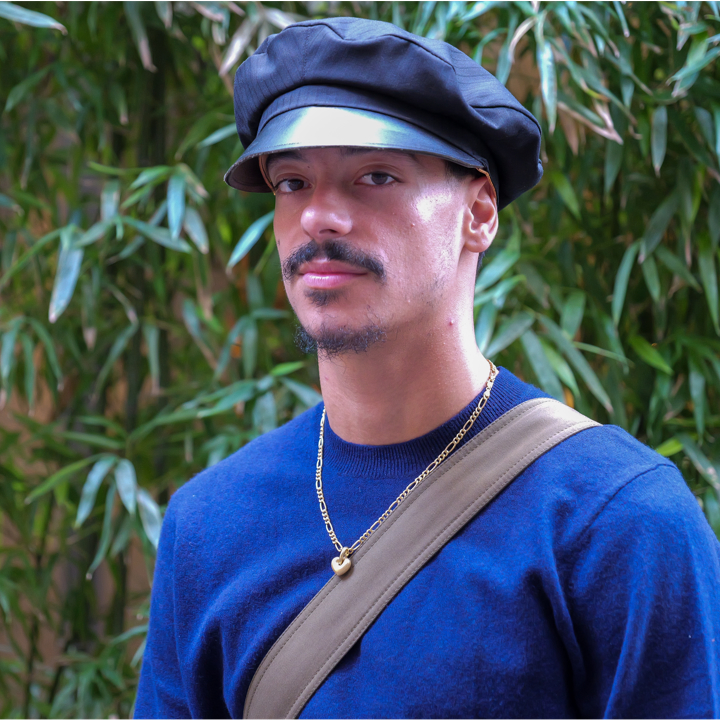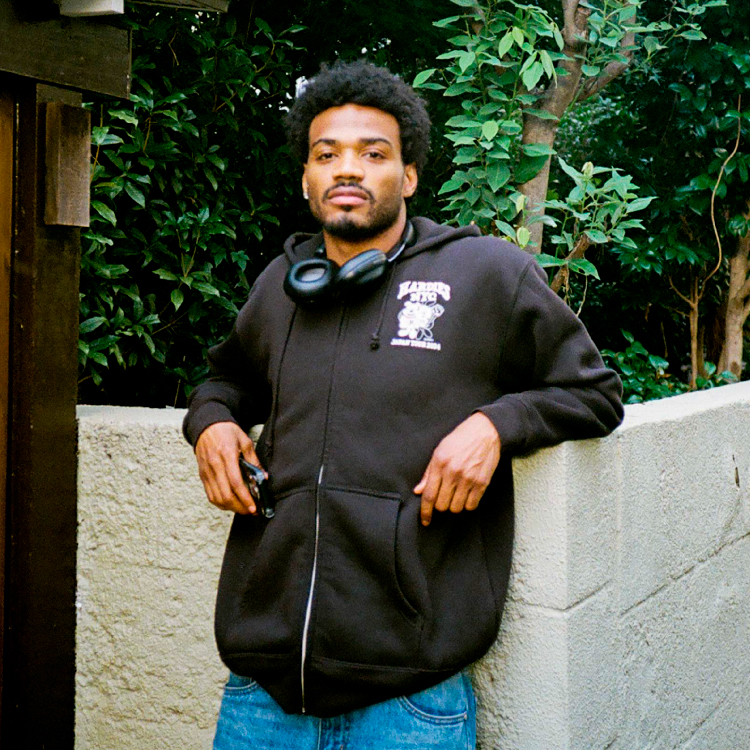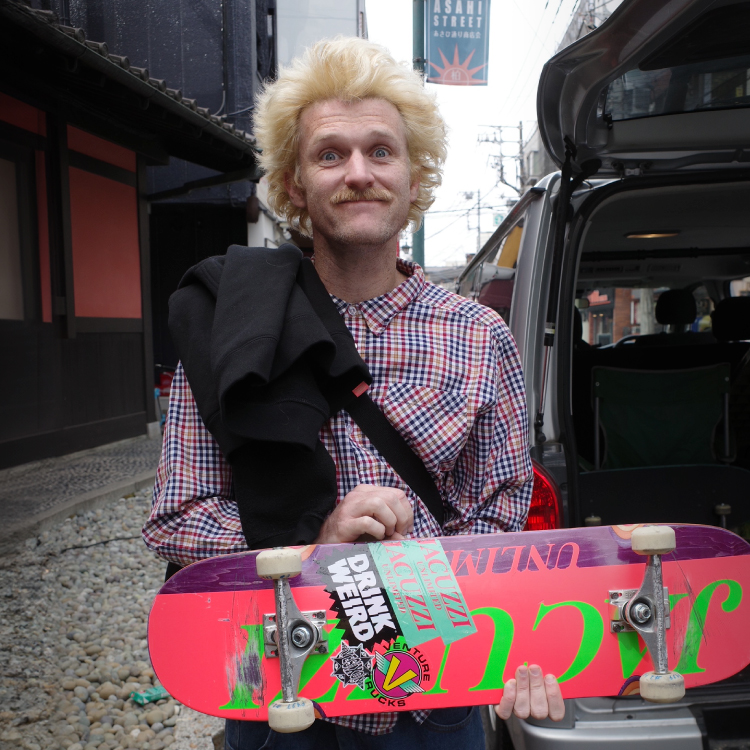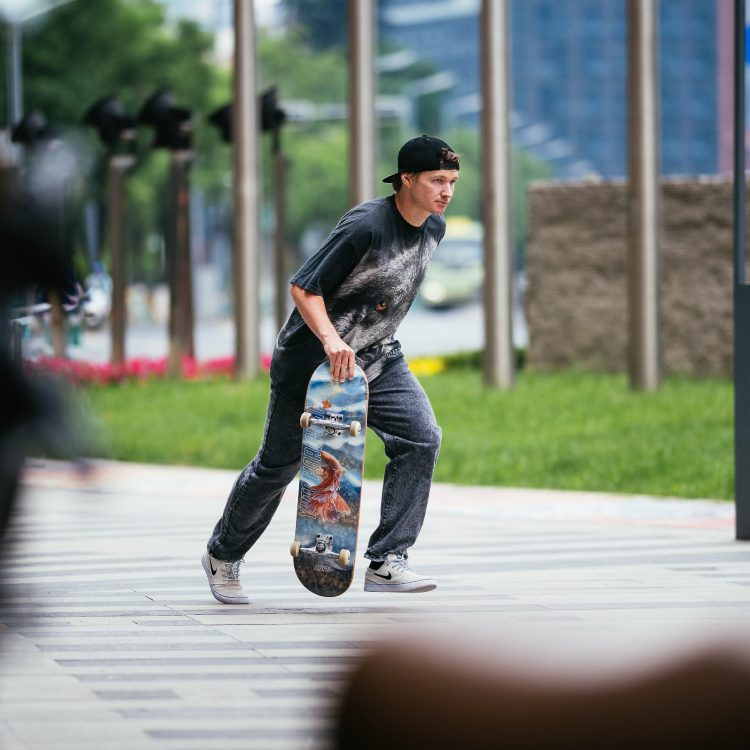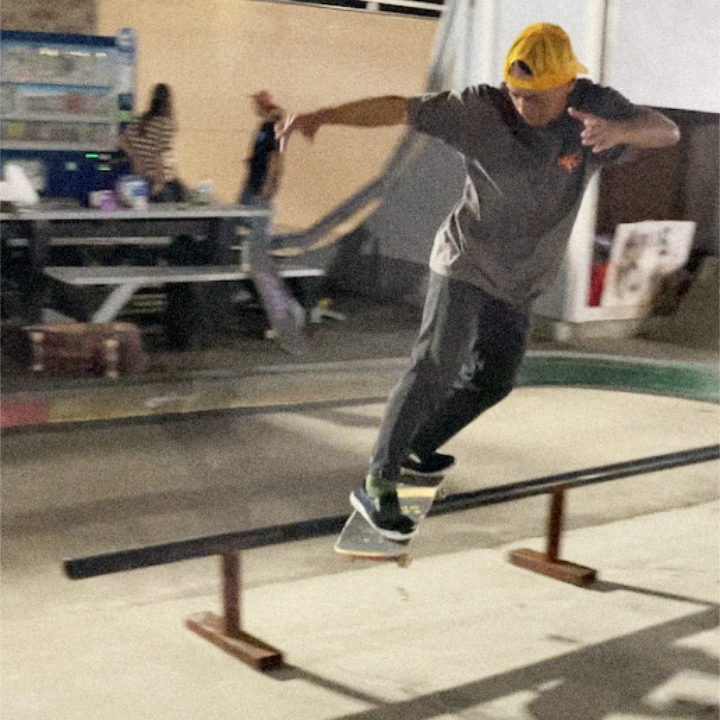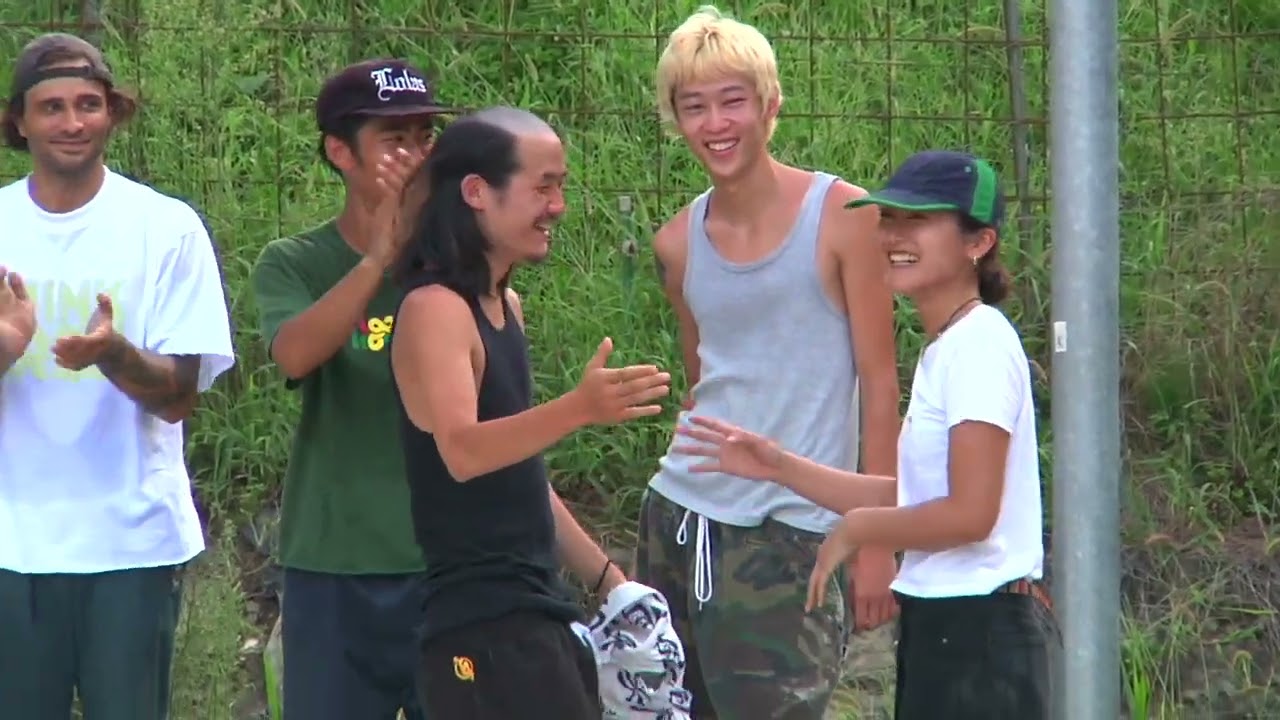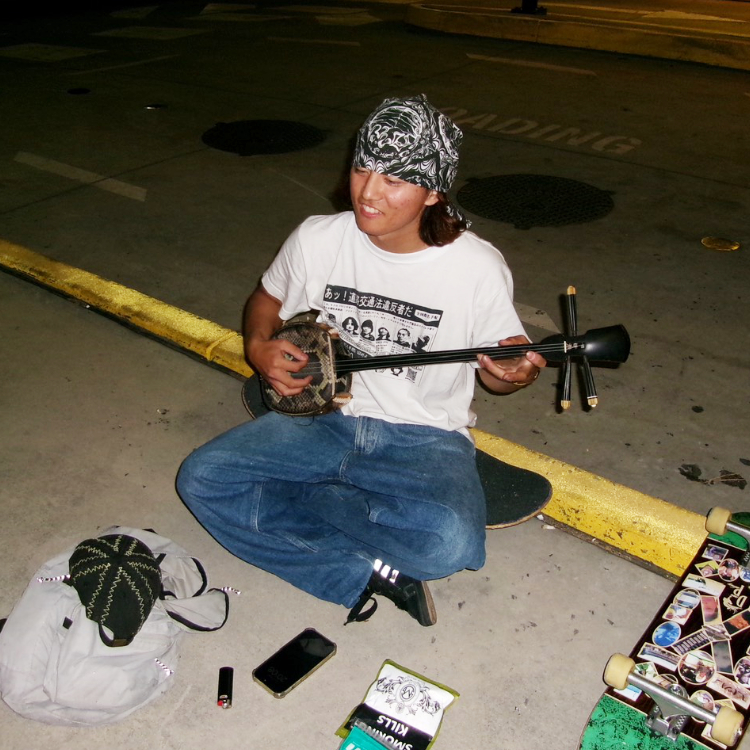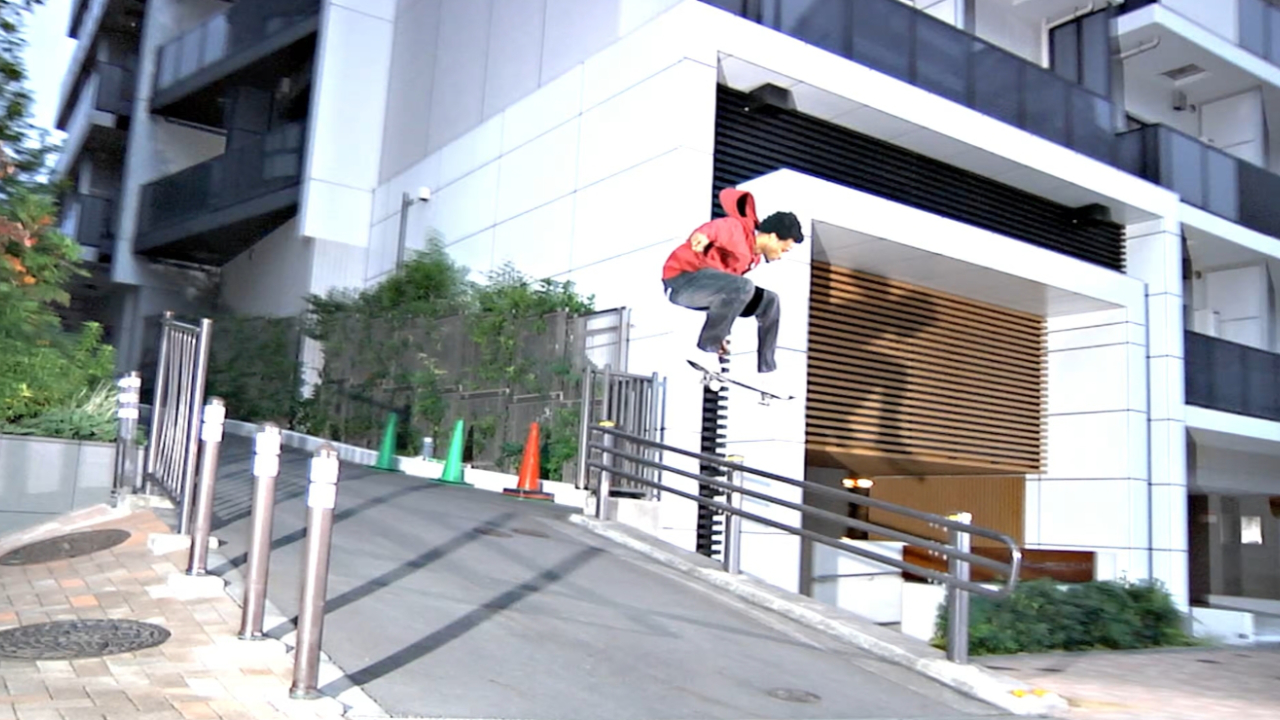



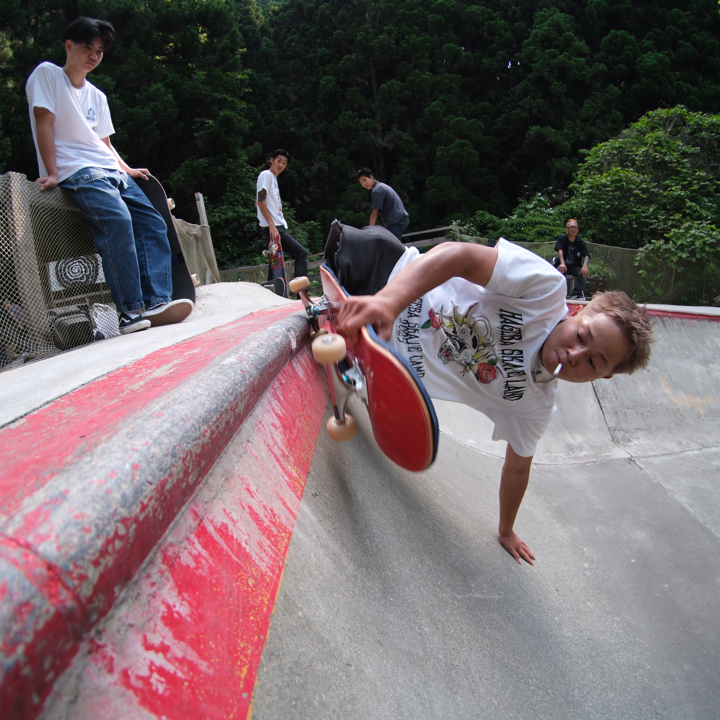
Yoshiteru Ogaki survived a devastating traffic accident that left him with just a 14% chance of survival. When he finally awoke from a prolonged coma, he was faced with the reality that he had lost both legs. Still, he says, “Skateboarding was the one thing I didn’t want to give up.” After undergoing rehabilitation, he eventually made his way back on a skateboard. Having come back from the brink of death, “44 Magnum” looks back on a turbulent year and a half.
──YOSHITERU OGAKI (ENGLISH)
[ JAPANESE / ENGLISH ]
Special thanks_Woods Skateshop
VHSMAG (V): First, could you introduce yourself?
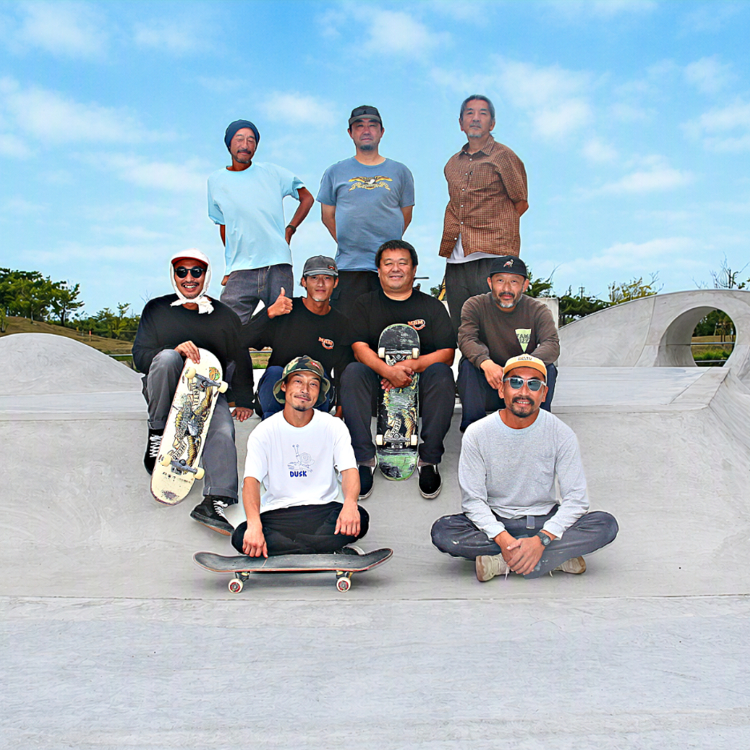
Yoshiteru Ogaki (Y): My name is Yoshiteru Ogaki. People call me 44 Magnum. I usually skate at a DIY skatepark called Hageba, which we built together up in the mountains of Takatsuki, Osaka. I’ve been skating for about six years.
V: Why do people call you 44 Magnum?
Y: I tend to charge pretty hard, kind of like a bullet. There’s a handgun called the 44 Magnum, and that’s how I got the nickname.
V: I’d like to ask you about the accident from here. Could you walk us through what happened that day, as much as you’re comfortable sharing?
Y: On the day of the accident, I was on my way to Kohnan to pick up some supplies. My memory of what happened before and after is pretty much gone. I lost consciousness in the accident, and at one point my heart stopped.
V: Were you on your board? Or were you on a motorcycle or in a car?
Y: I was on a motorcycle, and the other person was in a car, and we collided. I was taken straight to the hospital. Of course, I don’t remember any of it, but according to the records, it looks like I regained consciousness about one or two weeks later.
V: When did the accident happen?
Y: It was in March 2025, so about a year and a half ago.
V: Do you remember when you first became aware of the extent of your injuries?
Y: At first, I had what’s called phantom limb pain. Even though my legs were gone, my brain made it feel like they were still there, so I thought I still had my legs the whole time. It wasn’t until my dad told me, “You don’t have your legs anymore,” that I realized for the first time that they were gone.
V: So by the time you regained consciousness, your legs had already been amputated. You also mentioned on Instagram that you only had a 14% chance of survival. Is that right?
Y: Yeah. I was 22 at the time, and the doctor told me that a 22-year-old man had only a 14% chance of surviving an accident like that.
V: I can’t even imagine... How did you honestly feel when your dad told you about your legs?
Y: Apparently the doctors had told me too, but I don’t remember that at all. I asked my dad, “Do I still have my legs?” and he said, “No.” For a moment, it felt like time just stopped. I was like, “What do you mean?” You just assume you’re going to have your legs, you know? I cried my eyes out for a while. I was basically in a state of panic. Everyone around me tried to comfort me, but none of it really registered.
V: How did you go from that to having the positive mindset you have now?
Y: Everyone was trying to comfort me, but it’s hard for the people doing the comforting too, you know? None of them knew what it was like to have no legs, so I figured they probably didn’t know what to say to me. Thinking about that, I realized that if I stayed down, it would bring everyone around me down too, and I thought, “That’s kind of lame.” So I figured that if I stayed positive, everyone else could be positive too. I thought we’d have a better relationship that way, so I’ve stayed positive ever since. What’s gone is gone. I cried my eyes out, but my legs aren’t coming back. So I started thinking it would be more interesting to see what I could do without them.
V: Was quitting skateboarding ever an option for you?
Y: At first, I wasn’t really in any condition to even think about that. But once I started coming around and people asked me, “What do you want to do?” I’d say things like, “I want to skate when I get out of the hospital,” or “I want to drink.” I had tubes all over my body, so they were probably thinking, “What the hell is this guy talking about?” I’d been skating all this time, and I figured I could still do it even without my legs. Skateboarding was the one thing I didn’t want to give up.
V: What was the rehabilitation process like?
Y: I’d hit my head in the accident too, so I did a lot of mental exercises, and because I no longer had my legs, a lot of the rehab involved building up my upper body, especially my arms. My brain had also suffered some damage from my heart stopping, so I’m glad I’m able to talk normally now.
V: Is there anything from rehab that particularly stands out to you?
Y: I did a ton of bench presses. At first I could only lift around 20 kilos, but eventually I got my max up to 64. I actually started enjoying it, wondering, “How far can I take this?” I knew that getting stronger arms would definitely help with skateboarding, and I needed core strength too. So for me, rehab was basically about getting myself ready to skate again.
V: Is there anything your friends did to support you that you’ll never forget?
Y: Rei Takazawa from Woods told me, “Even without your legs, you’re still a Woods rider, so come back.” That really moved me, and I was so happy to hear it. It fired me up even more.
V: When did you first get back on a skateboard after the accident?
Y: I spent the first two months in intensive care and then about six months in a regular hospital ward, so it was probably around eight months after the accident. When I was transferred to a rehabilitation hospital, Yusuke Takazawa from Hasco sent me a board, and that’s where I skated for the first time. I got permission from the hospital to skate, but I might have been the first person ever to skateboard in that hospital (laughs).
V: What did it feel like getting back on a board after so long?
Y: I don’t have anything below my pelvis, so the bones in my butt were pressing directly against the board, and it hurt like hell. Rei tried putting a yoga mat on the board for me, but it still hurt. I started looking around for something that might help and found a cushion made by a Dutch company called Vicair. It’s designed to help people with spinal cord injuries maintain their balance while sitting. I tried one out at an accessibility expo, and it fit me perfectly. I told a guy named Mark who was in charge, “I want to skateboard with this,” and he said they’d give me one if I posted videos using it. Now I use it as one of their ambassadors. Thanks to the cushion, there’s a lot less pain and it’s much easier to balance. It was a game changer.
V: I imagine the way you skate now is completely different from before the accident. How did you feel about having to relearn everything?
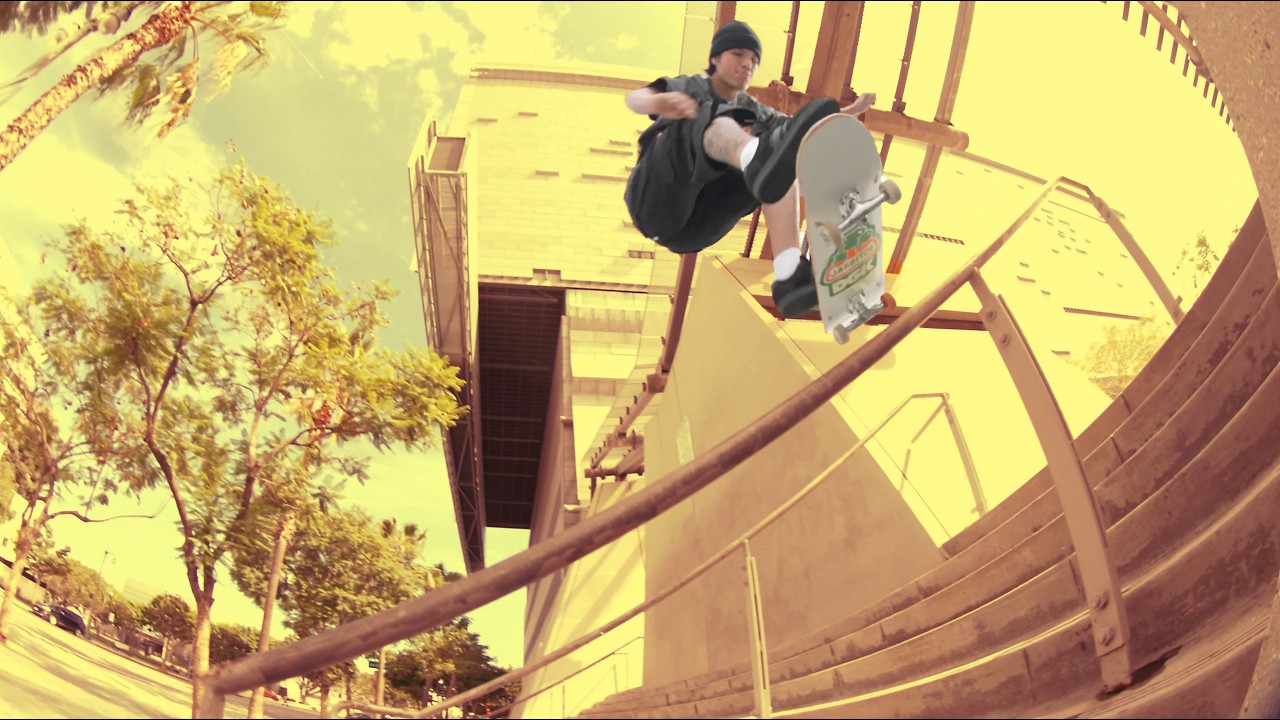
Y: It feels more like piecing together the skills and knowledge I already had. The lines I take and the way I approach things are completely different now, but figuring all of that out is part of what makes skateboarding so fun. I enjoy it.
V: There are skaters overseas like Felipe Nunes who are skating at an incredible level too.
Y: Yeah, I watch his videos. At first I wondered if there were even people out there skating without legs, so I looked it up and was like, “Wait, this dude is even competing in the X Games? That’s insane.” Then when I actually tried skating like this myself, it felt completely different, and I was like, “What the hell is this?” But it’s still so much fun. If I’m going to do it, I want to reach the level those guys are at.
V: I also heard you’re going to Paris as a model.
Y: Someone who works in the welfare field told me about a modeling project for people with stomas, so I applied. I passed the interview, and they told me the shoot would be either in Tokyo or Paris, so I said, “Paris, of course.” I’m going there for a fashion show on October 6. I lost a lot because of the accident, but I’ve also come to realize that I’ve gained things from it too.
V: You also went on the Woods tour to Hiroshima, right?
Y: Yeah, that was my first big event since the accident. I went on the first one, but I couldn’t make the second one because of the accident. This year, Rei invited me, so I went. I love drinking with everyone, so I ended up drinking way too much and puking my guts out next to the camper van (laughs). But I had the best time.
V: Has the way you approach skateboarding changed at all since the accident?
Y: Being closer to the ground is nice, but every obstacle feels huge now (laughs). There’s also the fear that if my board shoots away, it’s hard for me to go get it, and if I injure my hands, I’m screwed. But I’m a skater, so I want to have fun, and I love skateboarding. There’s no reason for me to quit.
V: What does skateboarding mean to you?
Y: Connection. Even if you don’t know someone, you can skate together and become friends, and it’s so much fun. It’s about being connected with everyone.
V: Is there anything you want to challenge yourself with in the future?
Y: I want to travel overseas for skateboarding again, especially to Australia. When I had the accident, all my friends over there were worried about me and called to check on me. They’re really passionate, caring people. I’ve made up my mind that I’m going back to Australia to skate with everyone again.
V: Is there anything you’d like to say to people going through something similar, or to our readers?
Y: You never know what’s going to happen from one day to the next. I never imagined I’d be in an accident like this either. It might sound obvious, but going through this myself really made me realize how important it is to make the most of each day. You really never know what might happen or when. You only get one life.
Yoshiteru Ogaki
@yoshiteru_44
Known as 44 Magnum, Yoshiteru Ogaki is an Osaka-based skater and Woods rider who calls Hageba, a DIY spot he built with his friends in the mountains of Takatsuki, his home. He lost both legs in an accident in March 2025, but returned to skateboarding after a lengthy hospital stay and rehabilitation. Today, he continues to skate with a new style adapted to his body.