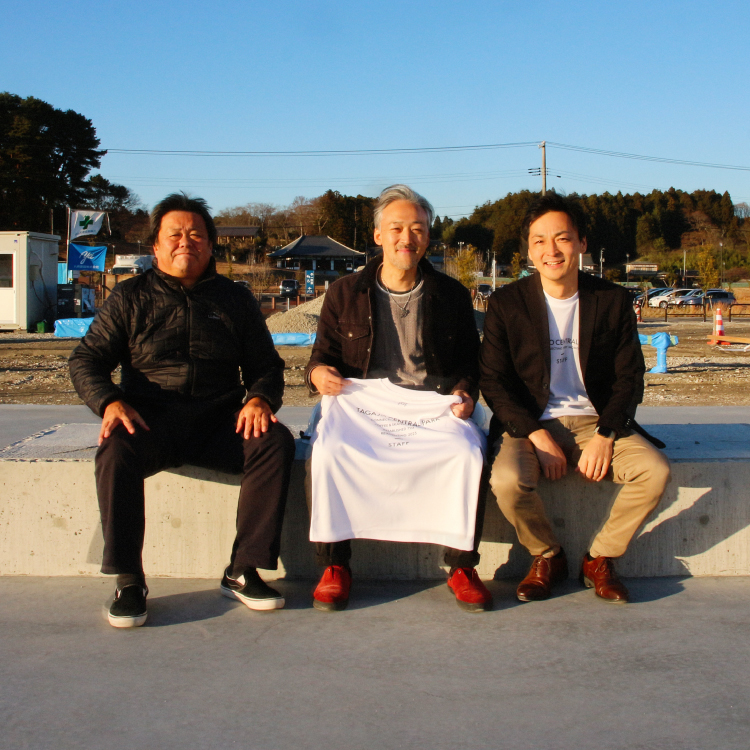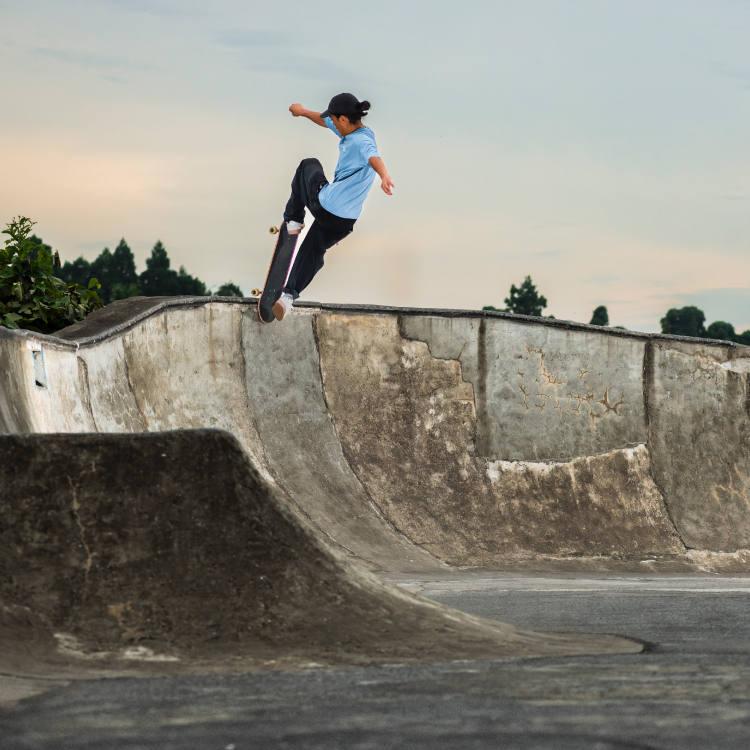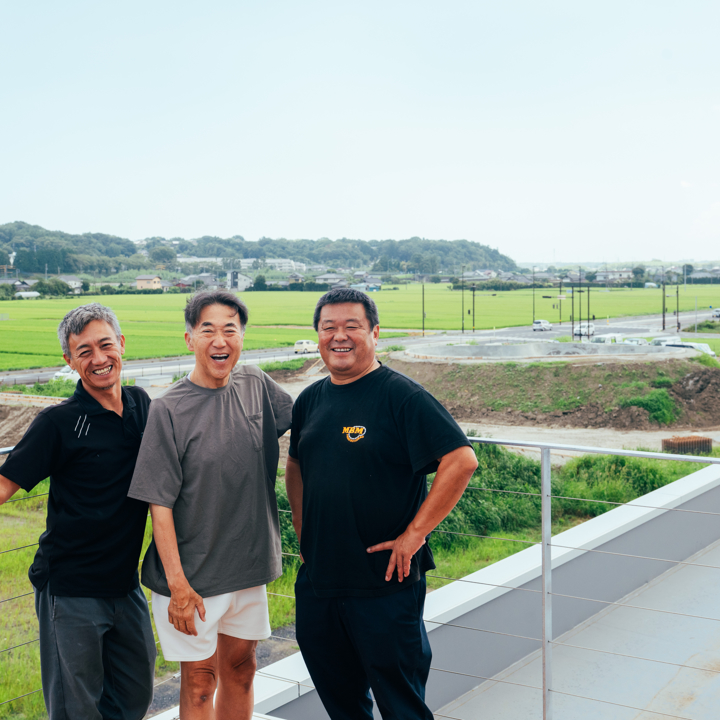
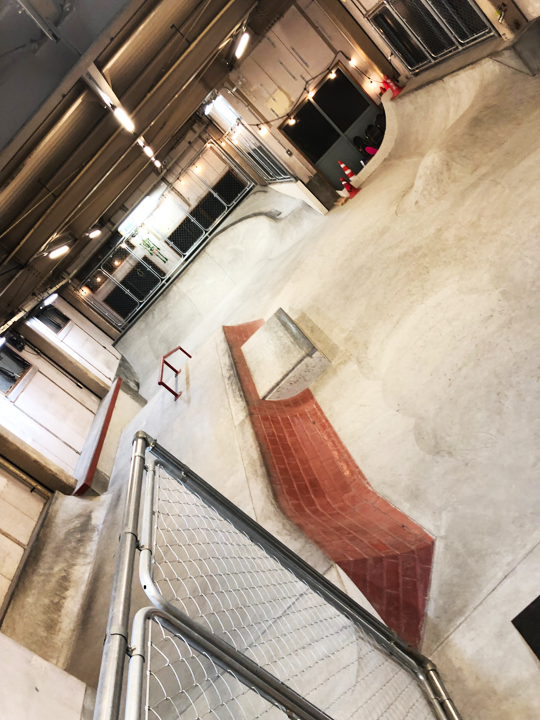
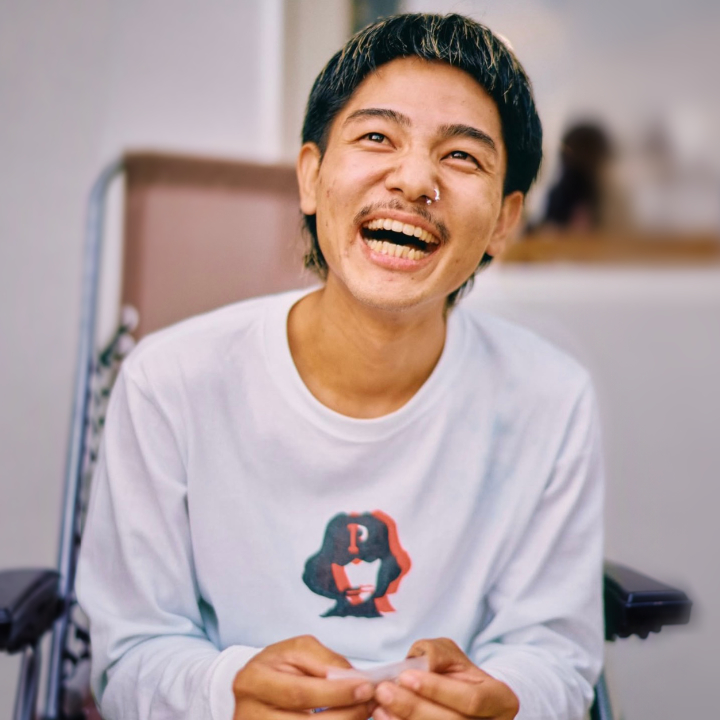
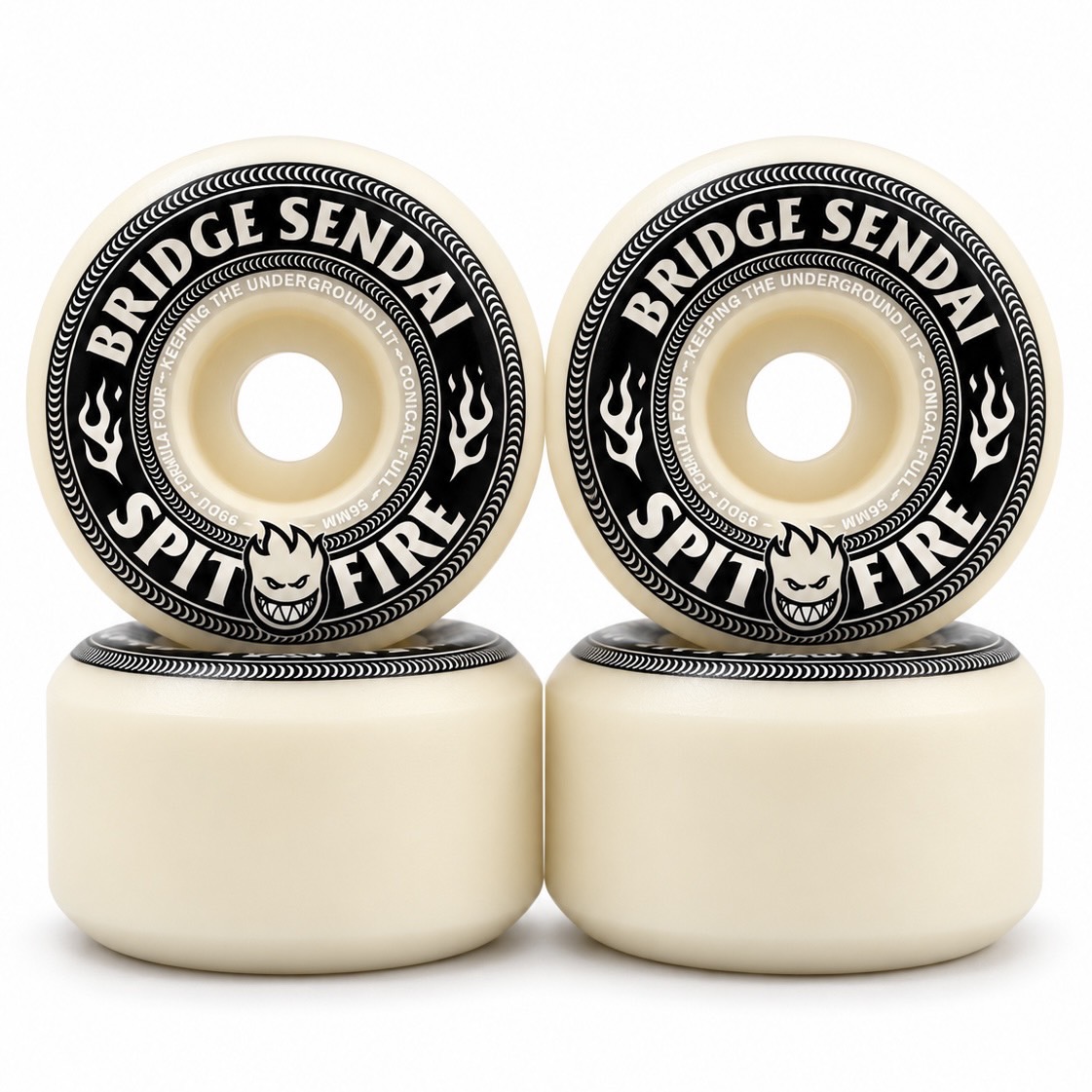


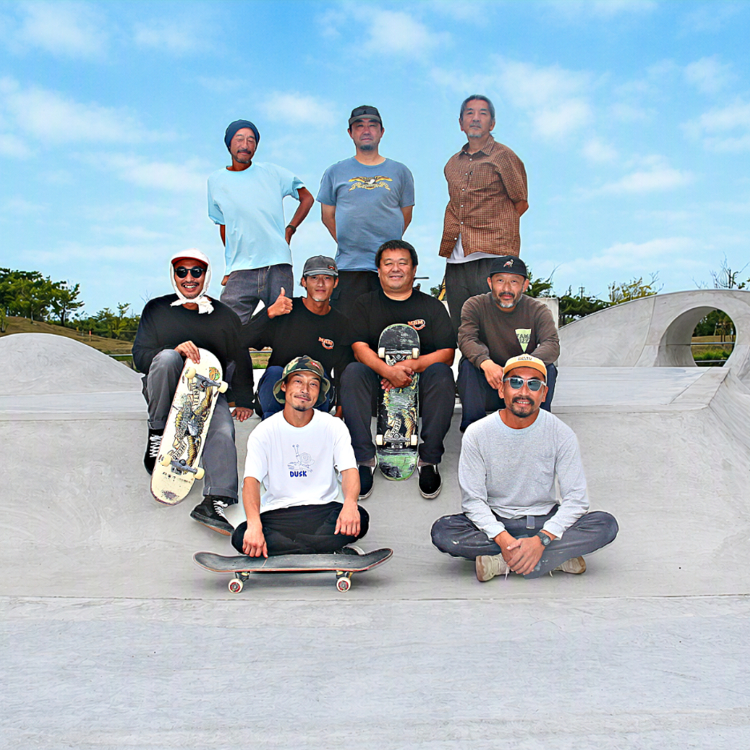
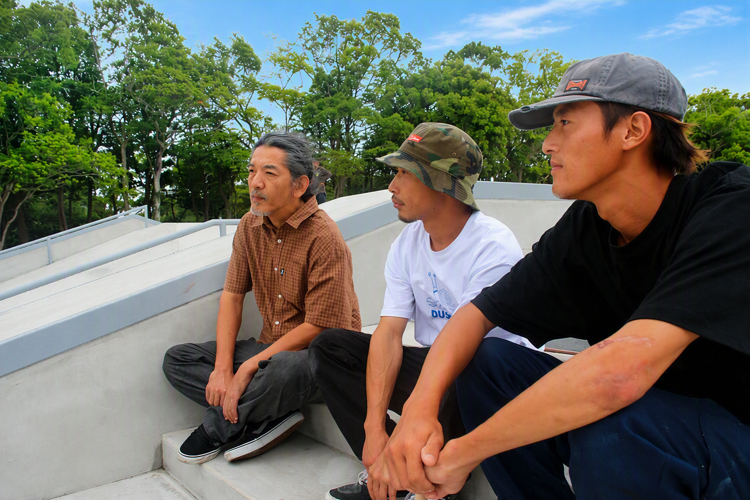
A long-awaited new Roller Sports Park has opened inside Matsuura Riverside Park in Karatsu, Saga. The park was designed and built by MBM Parkbuilders, the crew behind numerous skateparks across Japan. We sat down with site foreman Daiki Yoshizawa, builder Koji Kawamoto, and Yusuke Tanaka of the Karatsu Skateboard Federation and skate shop POSSI. The three spoke about everything from the nearly two years of planning that went into the project to their hopes for the park’s future.
──KARATSU ROLLER SPORTS PARK
[ JAPANESE / ENGLISH ]
Special thanks_MBM Parkbuilders, Karatsu Skateboard Federation
VHSMAG (VM): Could you introduce yourself?
Yusuke Tanaka (YT): I’m Yusuke Tanaka. I run a skate shop called POSSI and I’m involved with the skateboarding federations in both Saga Prefecture and Karatsu.
Daiki Yoshizawa (DY): I’m Daiki Yoshizawa from MBM. I served as the site foreman for this project.
Koji Kawamoto (KK): I’m Koji Kawamoto from MBM. I worked on the construction as one of the builders.
VM: What was this place like before the new park was built?
YT: At first, there weren’t any obstacles at all. It was basically just an open space where people were told they could build things themselves and skate freely.
VM: What kind of place was it for the skaters in Karatsu? And what’s the local scene like?
YT: It was a free space that anyone could use. Back in the day, a lot of skaters would come here from Fukuoka, Imari, and Takeo too. As for the Karatsu skate scene, we’ve also been holding an annual contest in the Futago area for years.
VM: What led to a park of this scale being built here?
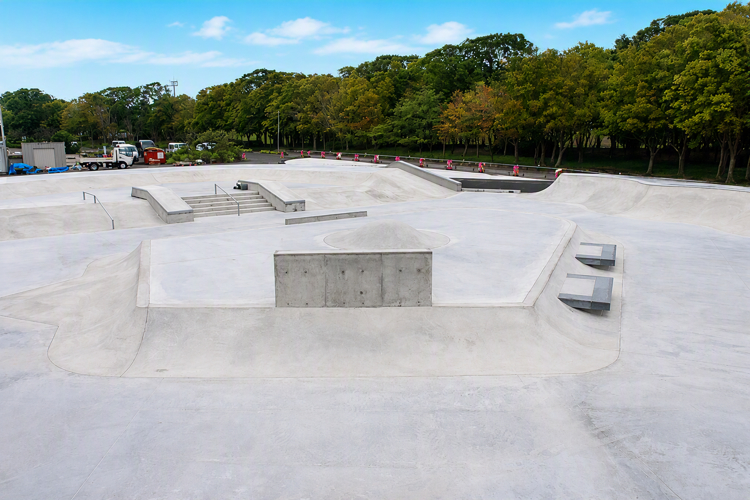
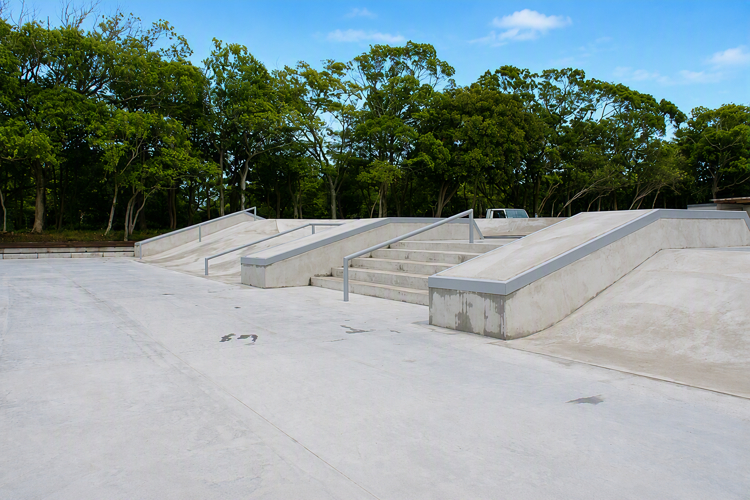
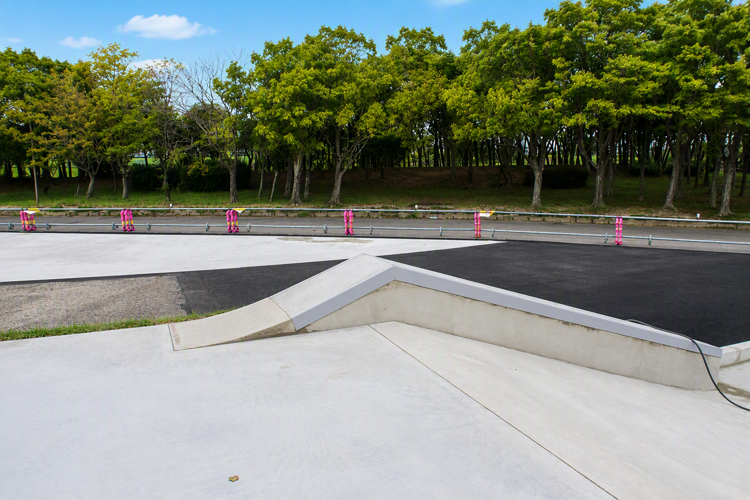
YT: The trigger was the first major redevelopment of Matsuura Riverside Park in about 50 years. The city brought up the idea of building a skatepark as part of that project. We locals had already been asking the city for a proper park for a long time. The previous park had been built by a contractor that didn’t specialize in skateparks, so once you actually skated it, there were a lot of things that didn’t work very well. Local skaters had been asking for improvements for years. So when we started talking with the city, we specifically asked them to bring in a company that actually builds skateparks. That’s how MBM got involved. In addition to the street area that has now been completed, there are plans to add a snake run and a park section as well.
DY: The old bank that used to be here had a pretty unusual angle too. It was really difficult to skate, but in its own way it was super challenging and fun.
VM: How did MBM approach the design process for this park?
DY: We first presented a basic framework, and from there the discussions continued for nearly two years. But when our crew became directly involved, the design was still essentially at that base-plan stage. From there, Yusuke-san, the local skaters, and I held more meetings and worked out changes and additions to the specs and placement of the obstacles.
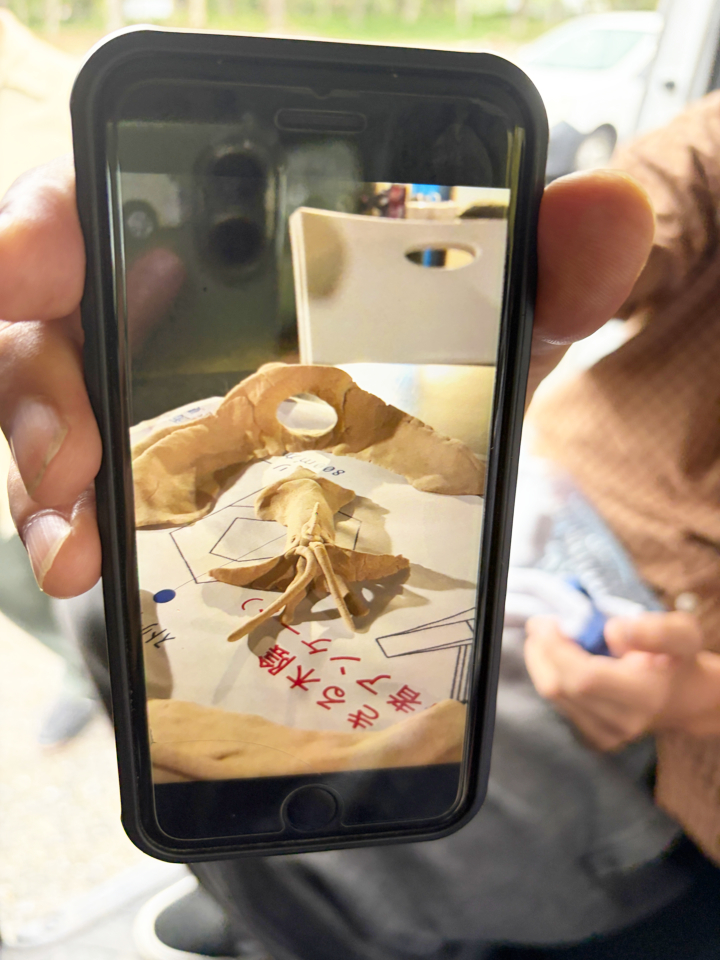
YT: We exchanged photos, and we even made clay models ourselves and sent them over. That’s how we started working back and forth with Kimura-san from MBM.
VM: What kind of requests came from the local side?
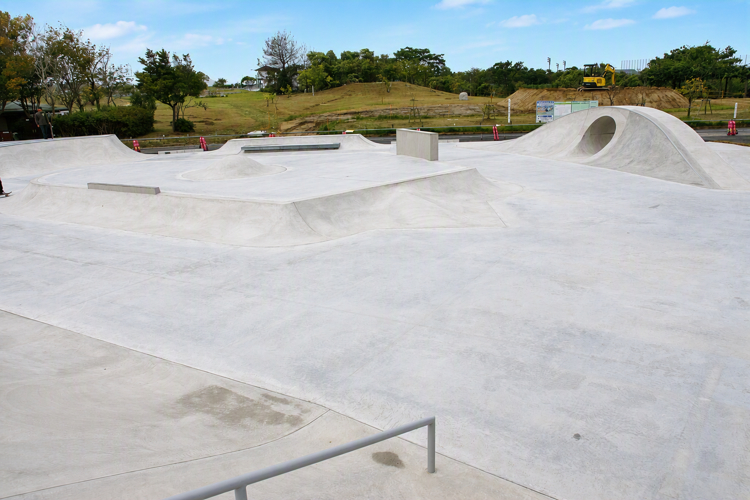
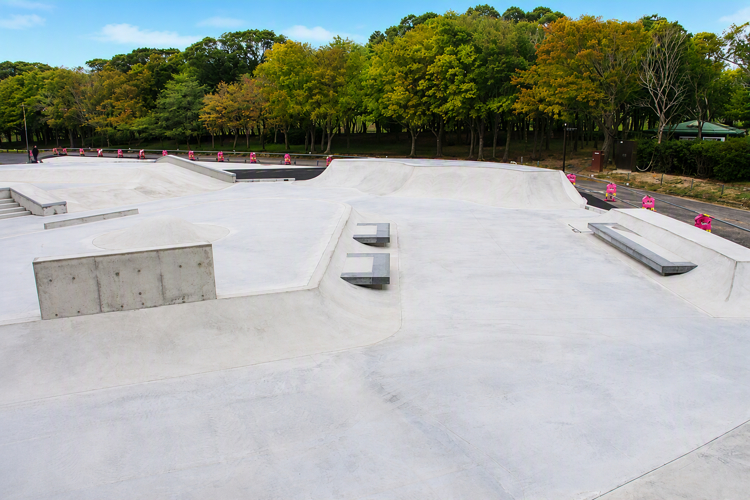
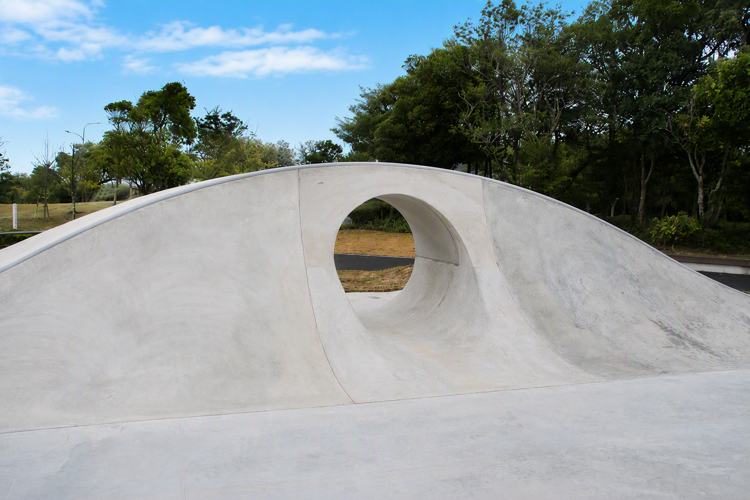
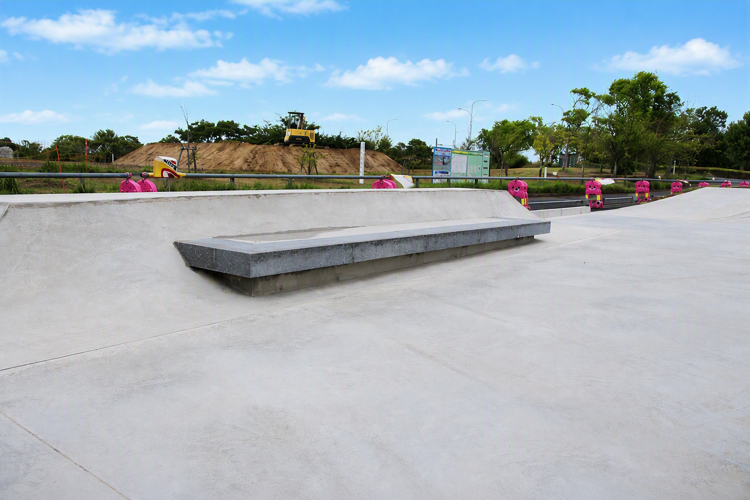
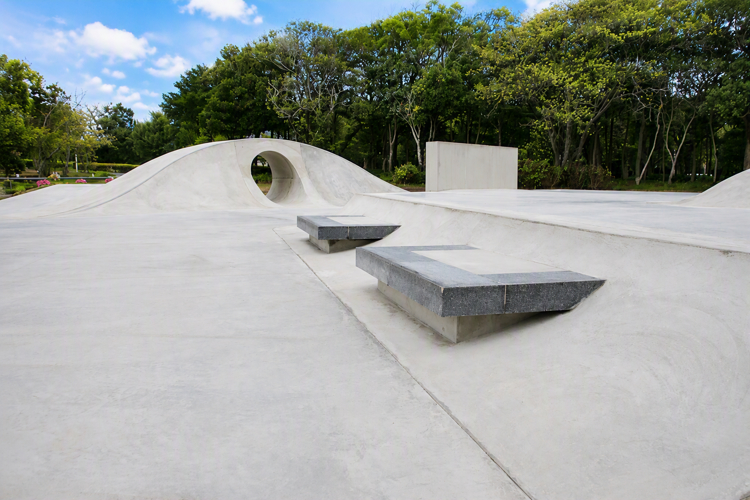
YT: We asked for things like an obstacle with a hole through it and a China-bank-style ledge. Actually, with the very first design, we half-jokingly sent over an idea for an obstacle shaped like a squid, since Yobuko is famous for squid. All the tentacles were rails. That idea was pretty quickly rejected, and Kimura-san came back with something shaped more like an eggplant instead (laughs). That eventually evolved into the island obstacle in the center of the park.
DY: But when we finished the hip bank next to the island, the transition shape accidentally ended up looking kind of like a squid’s head. So in the end, at least the squid’s head survived (laughs).
VM: If you had to describe the concept of the finished park in one phrase, what would it be?
DY: “A park with a lot of freedom.”
KK: None of the rails or other obstacles are ridiculously high either, so I think it’s a pretty approachable park that everyone from kids to adults can enjoy.
VM: From a construction and design standpoint, what would you say is the park’s biggest selling point?
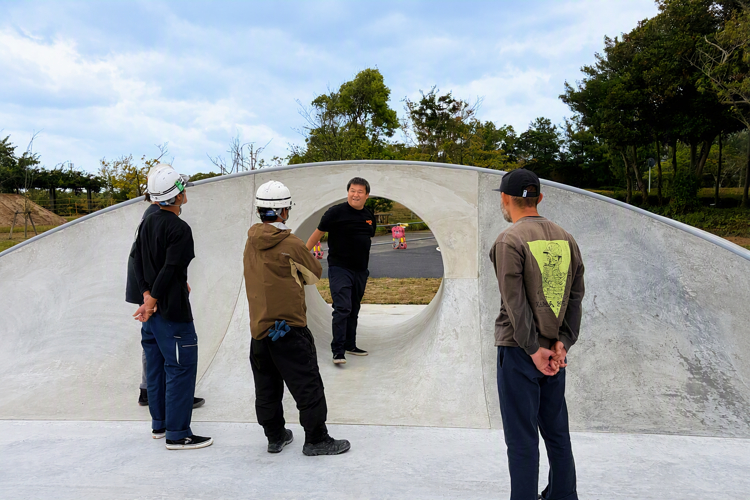
DY: Definitely the doorway tunnel, xthe obstacle with the opening in it. For this crew, building an obstacle with a hole in that particular shape was something we’d never attempted before.
YT: We talked over and over about whether we should fill that hole in or leave it open. But looking at it now, it has definitely become the symbol of the park, so I’m really glad we kept it.
VM: For the two of you who were actually building it, how long were you on site, and what were some of the biggest challenges?
KK: We arrived in late May and stayed in Karatsu for about four months. The food is great here, and there are plenty of places around the station, so it was a really comfortable place to stay. It wasn’t like some remote job sites where you have to drive down a mountain just to get to a convenience store, which we definitely appreciated.
DY: But Kyushu had an exceptionally hot summer this year, with temperatures going over 40 degrees Celsius, so we were constantly battling the heat. During the first part of construction, we’d all skate during our breaks. But once midsummer hit, everyone was basically halfway to heatstroke all the time, so skating during breaks was completely out of the question (laughs).
KK: We also experienced the Kumamoto earthquake while we were here. It was around four in the afternoon and we had just finished work and were cleaning up when this huge rolling shake came through and lasted almost a minute. When we got back and watched the news, we saw highways that had cracked apart. It was pretty shocking.
VM: Like the park in Omura, Nagasaki, I get the impression that a lot of parks in Kyushu have very free-flowing, creative designs.
DY: The shape of the site probably plays a role too. The irregular boundaries of the sites in Omura and Karatsu are kind of similar, and I think that naturally led both parks toward more free-form layouts.
VM: Do you feel like MBM’s skill level and strengths continue to evolve with every project?
DY: Koji and I have been with MBM for around five to seven years now, and compared to when we started, there are a lot more builders on the crew with both experience and high-level skills. So even as the number of projects grows, we’re able to maintain a high level of quality.
KK: Another major strength is that we can do much more than just concrete work. From earthwork to pouring concrete, welding coping, and even the final paintwork, we can handle everything in-house. More than anything, the biggest advantage is that everyone approaches all of those jobs from a skater’s perspective.
VM: Were there also challenges in communicating with the city and getting through the administrative process?
YT: To be honest, there were definitely moments when it was difficult to bridge the gap in understanding between skaters and the city. So in a way, for us, the fact that this park actually got completed feels almost like a miracle. It really comes down to MBM respecting the opinions of the local skaters and building the park while genuinely being on our side.
VM: What does this park mean for the skate community in Karatsu?
YT: I don’t want it to be a temporary park that only exists for contests. I want it to become a place where people can be involved with skateboarding every day, a true “lifework.” Skating is heavily restricted in places with a lot of pedestrians, but now that we have this park, people can gather here every day and enjoy skating. It’s going to be an amazing place for the community.
VM: Five years from now, what would need to be happening here for you to call the park a success?
DY: I can already see it being successful (laughs). If skaters who grow up here come to love skateboarding as part of their everyday lives and carry it with them throughout their lives, that would be the greatest success. That’s exactly the kind of place we wanted to build.
KK: When I visited the park in Omura, which I also helped build, I saw elementary school kids, adults, and older people all greeting one another, getting along, and taking turns while they skated. That really moved me. It would be amazing if that same kind of warm scene became an everyday thing here in Karatsu.
YT: I think success means creating an environment where kids and adults can gather every day and everyone can skate with a smile on their face. We don’t necessarily need contests or anything flashy. If there are skaters gathering here every single day, I think that alone means the park is a success.
VM: Finally, from a skater’s perspective, is there any particular kind of skating you’d love to see go down here?
DY: The coping on top of the doorway tunnel. I want to see someone charge into it at full speed and grind the whole thing from one end to the other.
KK: For me, it’s that little bump sitting by itself in the middle of the island. If someone popped a perfectly clean backside flip or treflip over that thing, I’d be like, “Damn!” That would get me hyped.
YT: I want people to get creative with the doorway tunnel, jumping over the opening, going through it, and putting together unexpected lines. Once the park opens, I hope skaters from all over Japan come to Karatsu and check it out.
[PARK INFO]
Karatsu City Matsuura Riverside Park Roller Sports Park - Street Section
Address: 1774-1 Hara, Karatsu, Saga
Opening Date: September 19
Opening Ceremony / Ribbon Cutting: September 26
Admission: Free
Helmet Use: Recommended
Daiki Yoshizawa
MBM Parkbuilders @zawachin612
A builder involved in skatepark construction across Japan, overseeing job sites while specializing in the construction of concrete obstacles. For the Karatsu project, he served as site foreman and led the park’s construction.
Koji Kawamoto
MBM Parkbuilders @kojikawamoto_
A craftsman with MBM Parkbuilders who took part in the construction of the Karatsu skatepark, working hands-on to turn the park’s obstacles from designs into finished concrete.
Yusuke Tanaka
唐津市スケートボード連盟 @karatsu_skateboard_federation
ワールドスケートジャパン佐賀県連盟 @srsf.jp
Runs skate shop POSSI while also working with the skateboarding federations in Saga Prefecture and Karatsu. He was involved in the development of the new park and represented the perspective and ideas of the local skate community throughout the project.