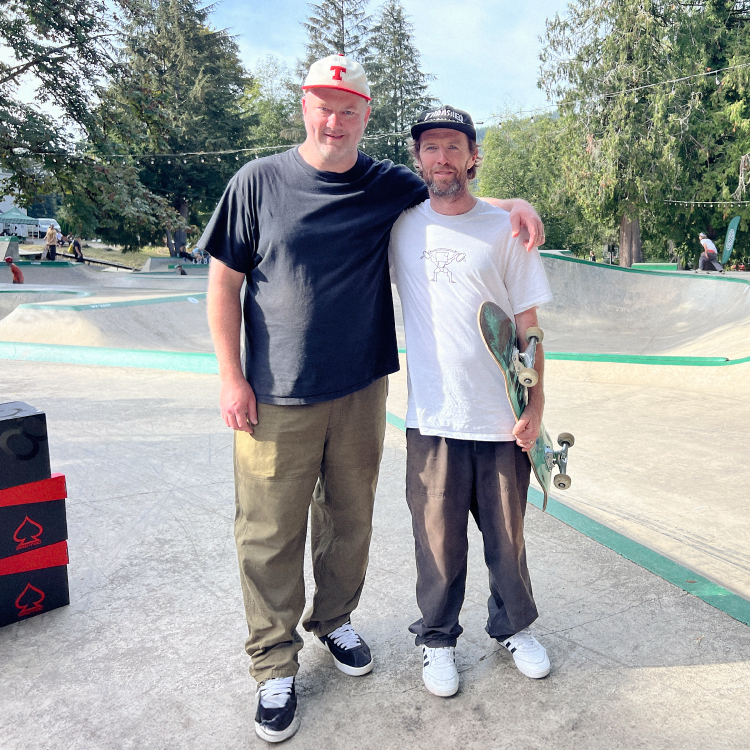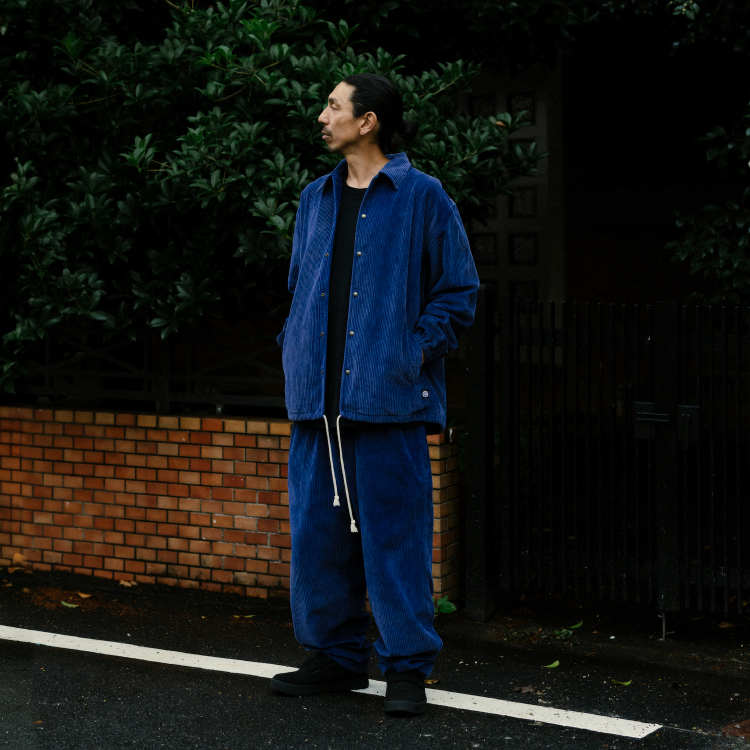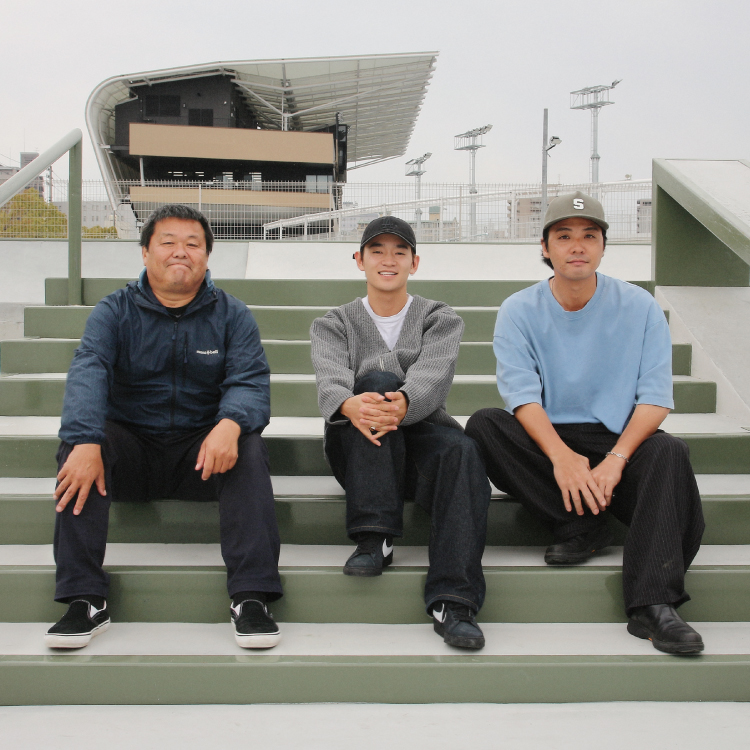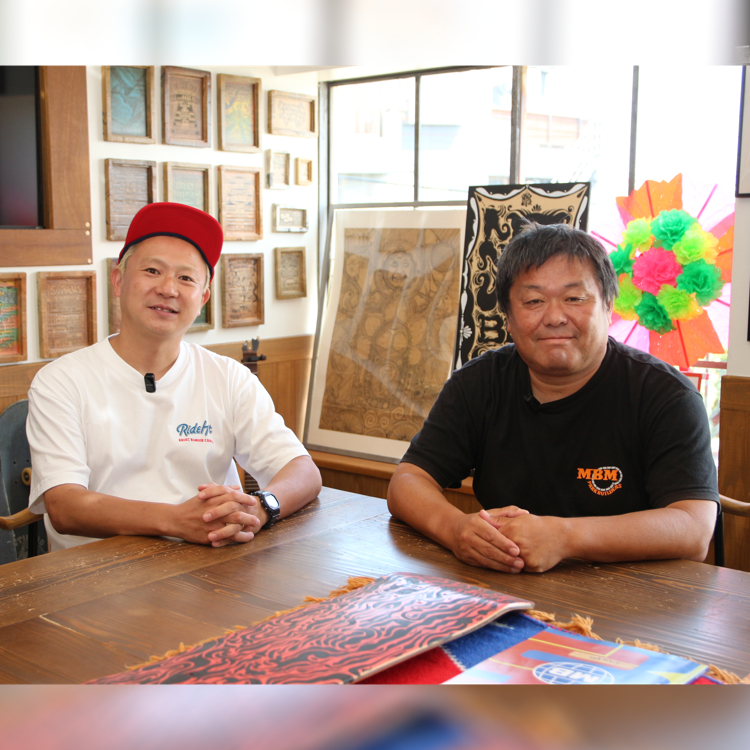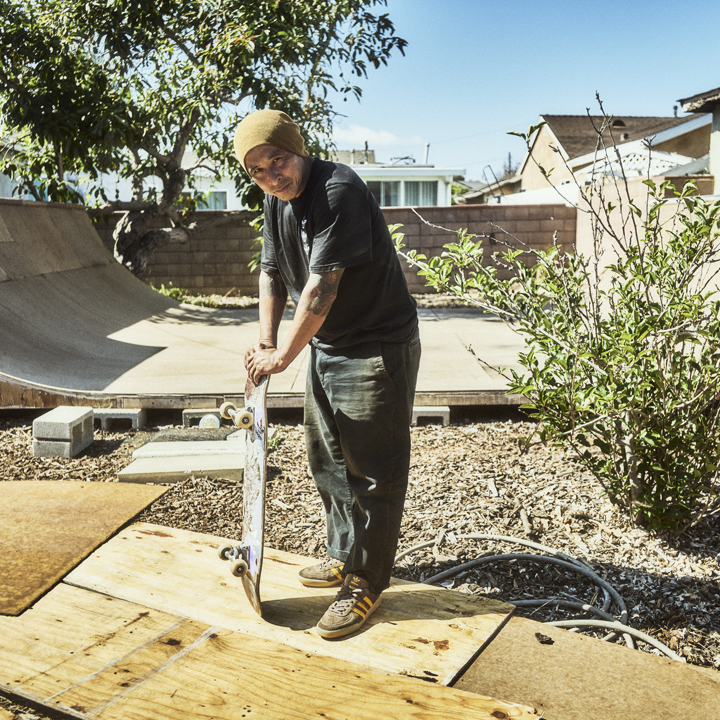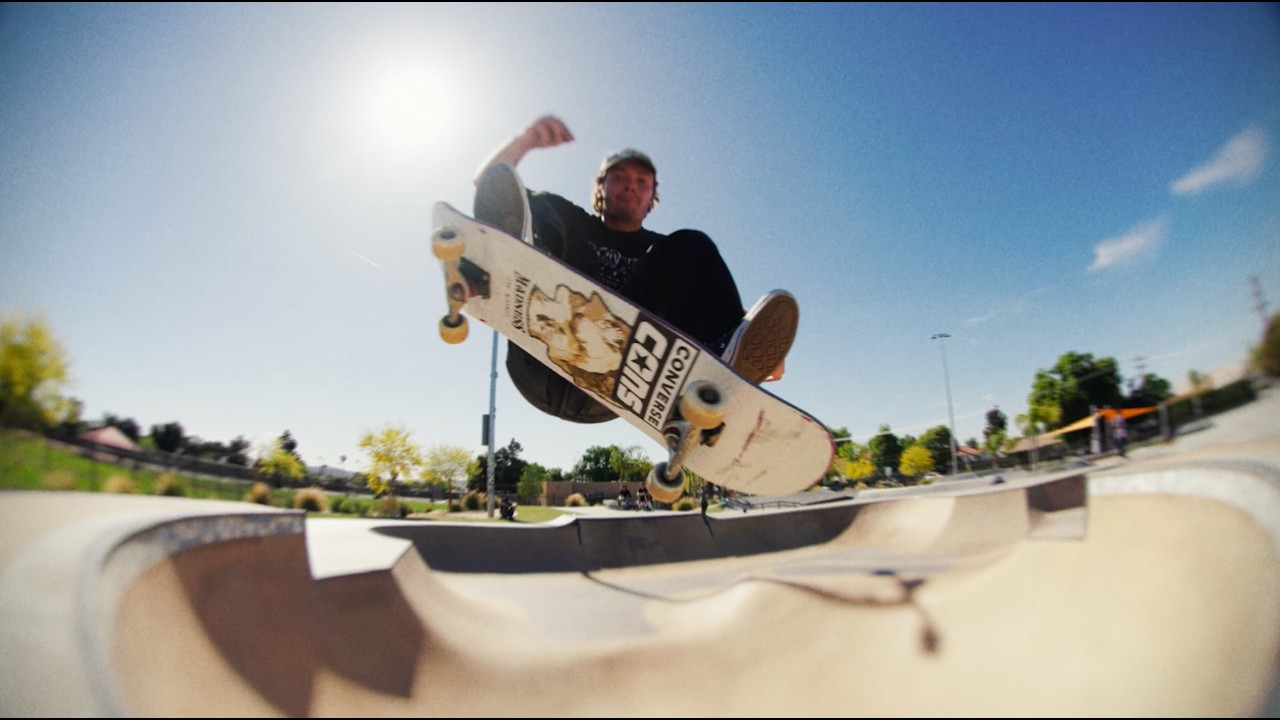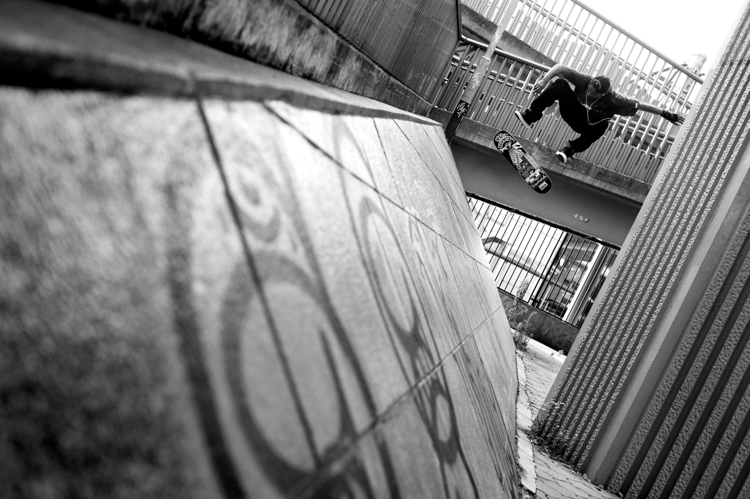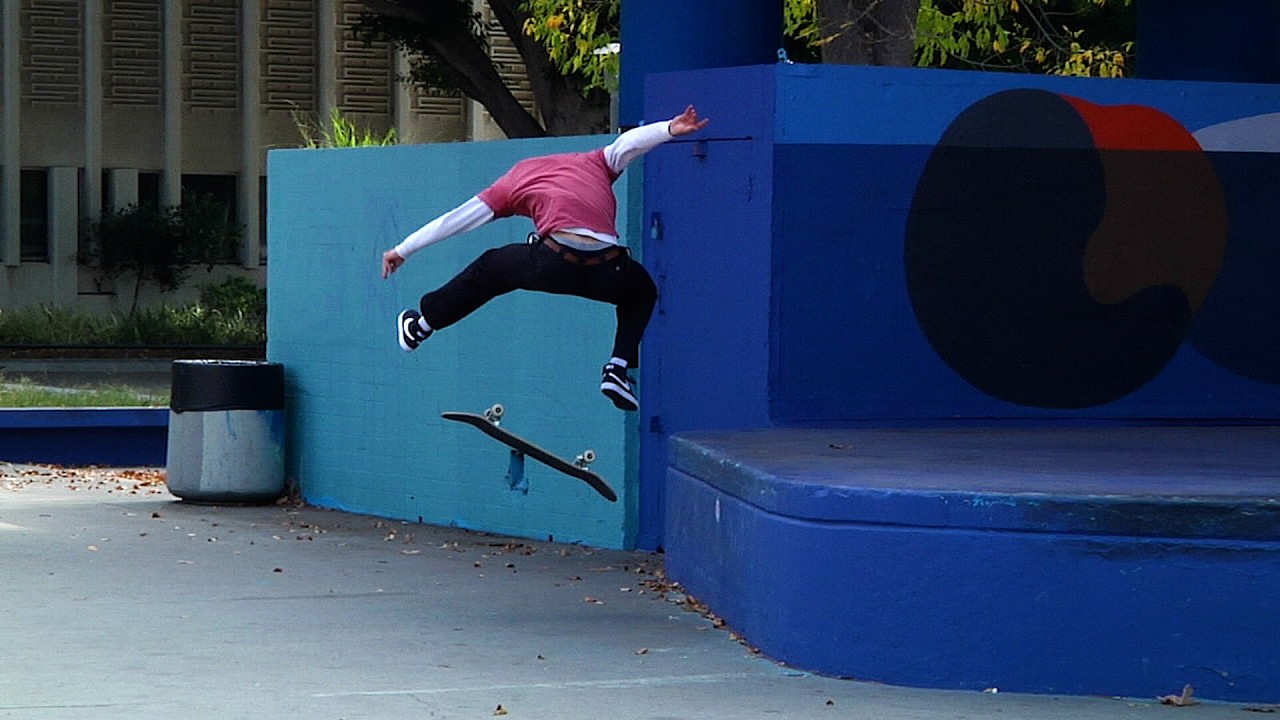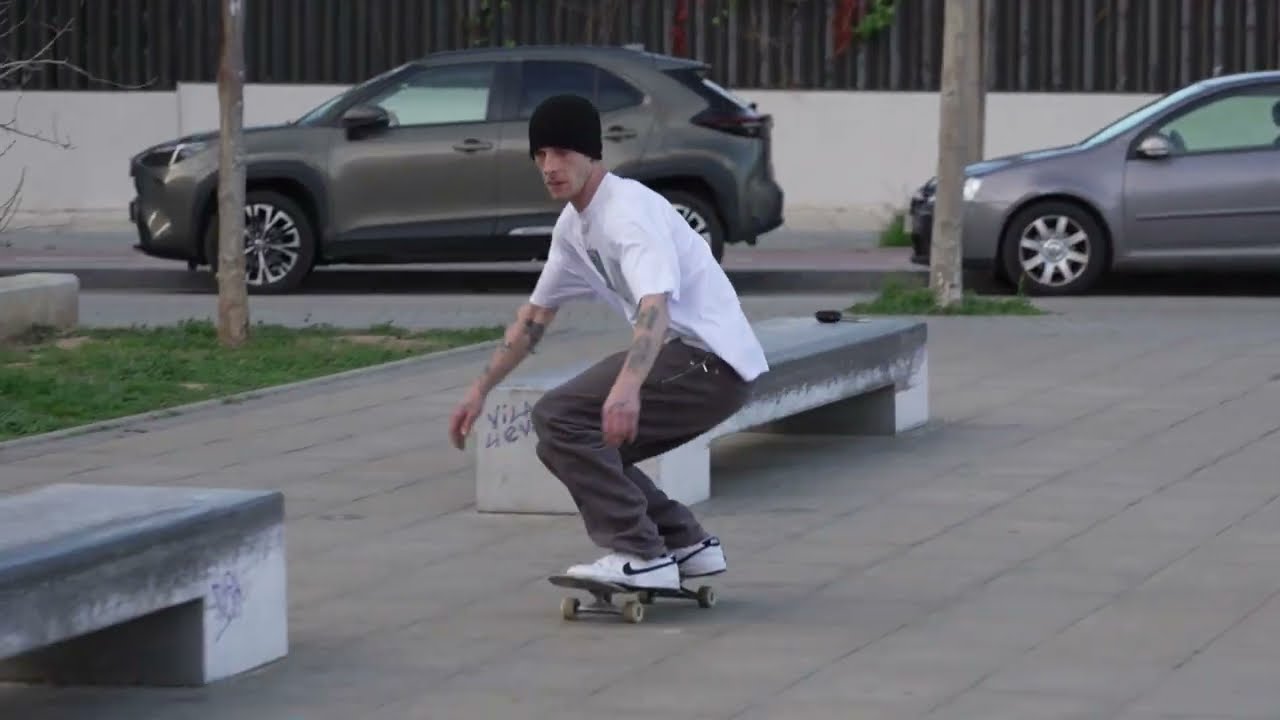


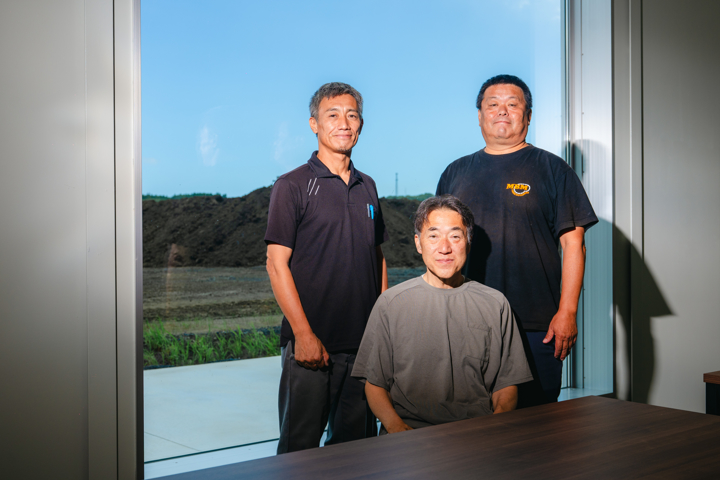
Stainless Art Kyoei, a metal fabrication company specializing in stainless steel, has opened a new factory in Hitachiota, Ibaraki. The expansive site will also feature a large-scale skatepark designed for skateboarding, BMX, surfskating, and more, with plans to open it to the local community free of charge. But why would a manufacturing facility dedicate so much of its grounds to a skatepark? Behind the project is president and CEO Yoshihiro Nagatomo’s long-standing connection to board culture, along with his desire to preserve places where children can play for future generations. We spoke with Stainless Art Kyoei president Yoshihiro Nagatomo, managing director Yasuo Kawabata, and Masahitoto Kimura of MBM Parkbuilders, who is overseeing the park’s design and construction, about how the project came to life and what they hope the space will become.
──STAINLESS ART KYOEI × MBM PARKBUILDERS
[ JAPANESE / ENGLISH ]
Photos_Taiyo Tanida
Drone_Stainless Art Kyoei
Special thanks_MBM Parkbuilders
VHSMAG (VM): First, Nagatomo-san, could you introduce yourself?
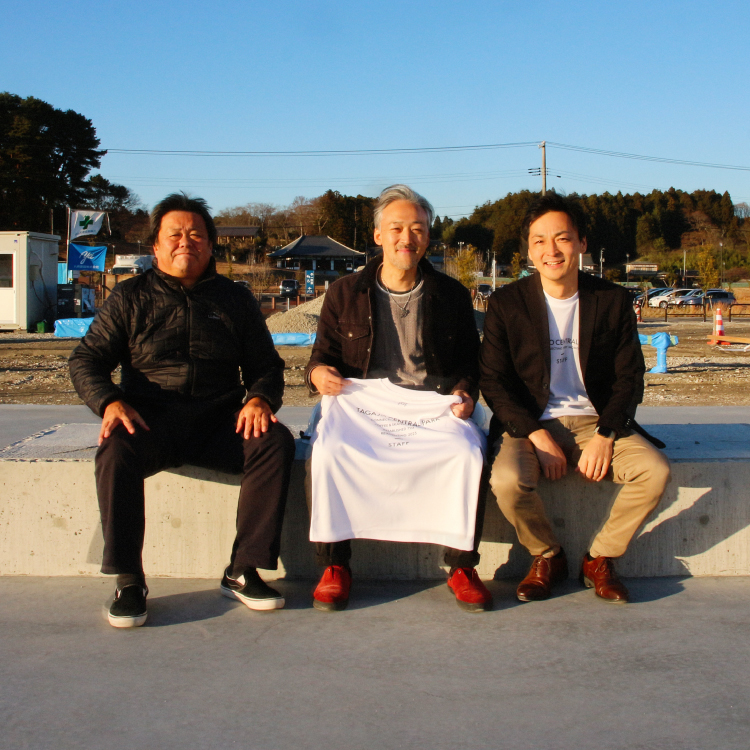
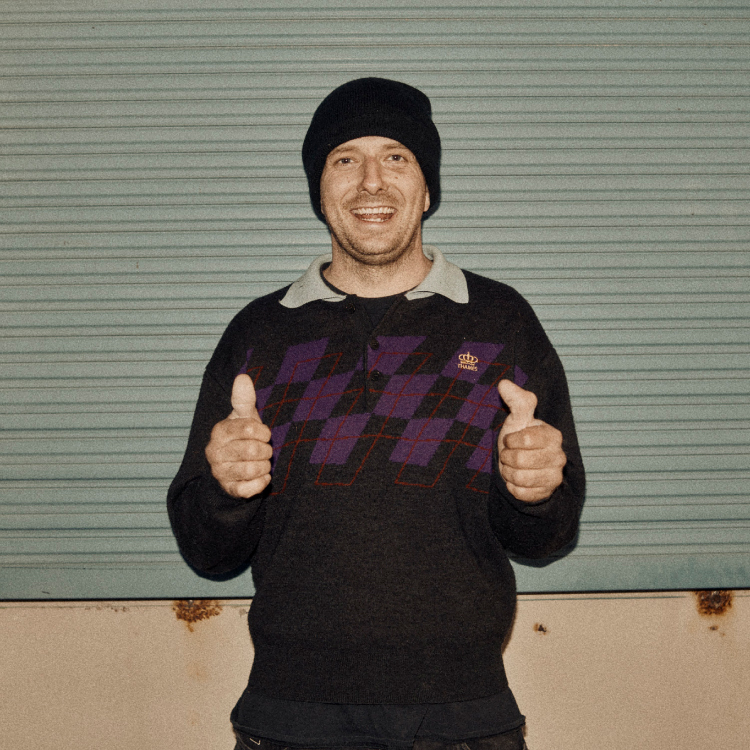
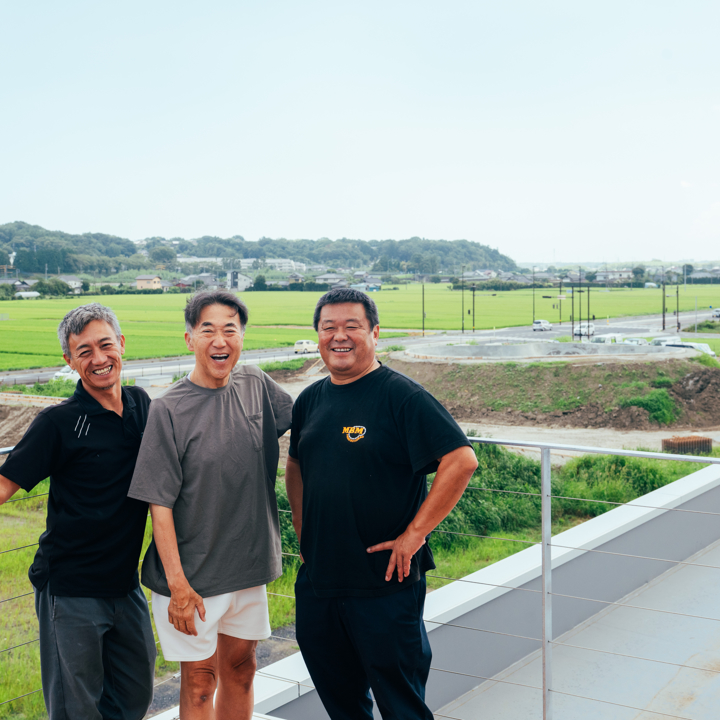
Yoshihiro Nagatomo (YN): I’m Yoshihiro Nagatomo, president of Stainless Art Kyoei. I grew up in Fussa, right next to Yokota Air Base, so skateboarding and BMX were always around me from an early age. At the time, those cultures were still far from mainstream in Japan. Later, I moved to Saitama and got interested in surfing, but since it’s a landlocked prefecture, I couldn’t exactly go to the ocean every day. That got me thinking about what I could do on land instead, and that’s when I really started skateboarding. I used to go to the skatepark in Kiyose, riding bowls and ramps and breaking bones along the way, and I completely got hooked. I also started going to Murasaki Sports, and when Steve Caballero came to Japan, I went to see him skate. I was never very good at team sports like ball games. I’ve always been much more drawn to active sports like skateboarding.
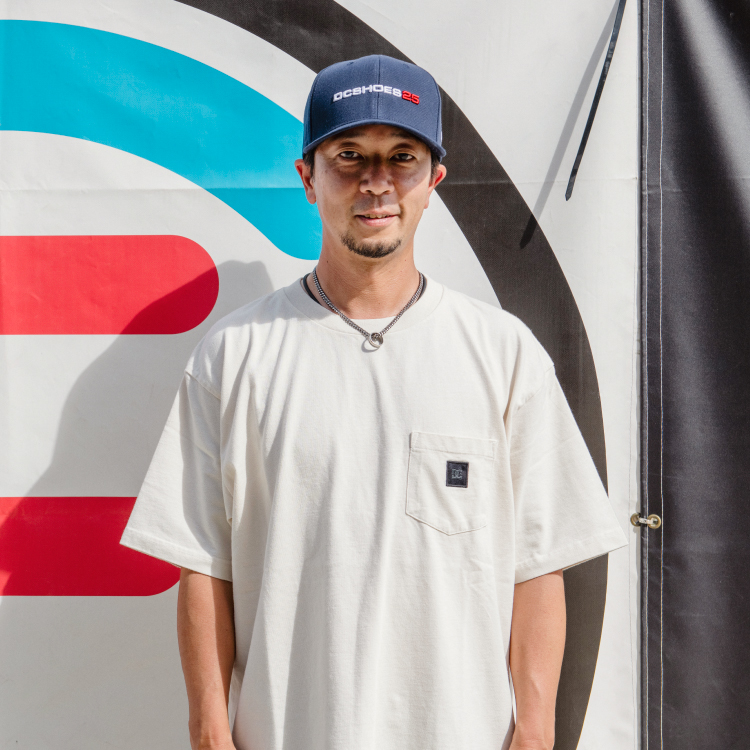
Yasuo Kawabata (YK): My family actually lived next door to his. I’m ten years younger than him, so when I was a kid, I was basically just this little kid following him around, calling him “big bro” and tagging along. Later, after he got married and had his first son, he built a jump ramp in front of his house because there wasn’t much else to do. I used to watch him and started skateboarding while he showed me things like, “This is how you ollie.” From there, I started skating seriously in the streets of Saitama and eventually ended up on teams alongside professional skaters. At one point I quit skating, just as snowboarding was starting to take off, so I got into that instead and eventually picked up sponsorship from a snowboard company. But I injured my back and started worrying about what I was going to do in the future. So when I decided to stop snowboarding, I suddenly called him and asked, “Are you hiring?”
YN: He really did just call me out of the blue on my cell phone (laughs). The company was still pretty small at the time, but Kawabata came in and joined us. One of the reasons I worked so hard was because I wanted to keep doing board sports and have more freedom and time for myself. Before I knew it, I’d gotten older, and when I looked at the younger generation today, I felt a real sense of urgency. That feeling is ultimately what led to us building this park.
—Yoshihiro Nagatomo
VM: What specifically were you concerned about?
YN: When we were kids, there were plenty of places to play outside, whether it was on the bars at a park or just anywhere around the neighborhood. But now, more and more of those places are being restricted. It almost feels like kids are being told, “Don’t play outside. Just stay home and play video games.” I want kids to be outside. I think it’s important for them to experience a certain amount of risk through play, because that’s how they develop an awareness of danger. They need opportunities to challenge themselves while thinking, “This might be dangerous,” and to learn through experience. There are especially few places in Japan today where kids in fifth or sixth grade through junior high and high school, the age when they have the most energy and need an outlet, can really play. When skateboarding is in the Olympics, adults suddenly say, “Go skate,” and celebrate it. But once the hype dies down, it goes straight back to, “Don’t skate there,” or, “You can’t do that.” It’s the same with surfing and skateboarding. When they’re popular, everyone embraces them, but step outside that moment and people start looking at you like you must be up to something bad. I’ve always hated that.
VM: And that’s what led you to open the factory grounds to the local community?
YN: Exactly. Board sports are where I come from, and even as the company grows, I don’t want to lose sight of that. This time, with future expansion in mind, we purchased a very large piece of land in Ibaraki, where land is much more affordable than in Saitama. Of course, the site is ultimately intended for use as a factory, but we’re not going to use all of it from the very beginning. So I started thinking: why not open up the unused land to local residents and kids and create a place where they can play freely? The skatepark is one part of that. Through play, I hope kids can learn about culture, respect, and how to conduct themselves. If this can become a starting point for those values to take root in the local community, that would mean a lot.
—Masahito Kimura
VM: Kimura-san, what was your first reaction when you were approached about this project?
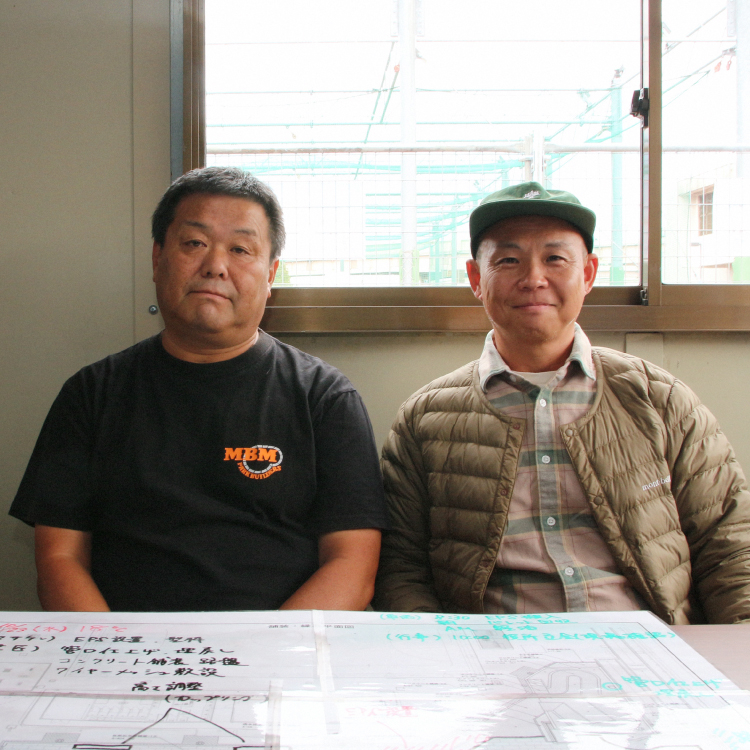
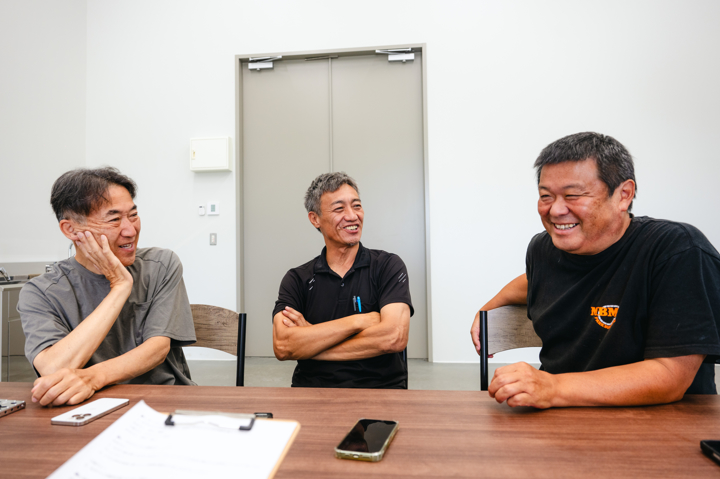
Masahito Kimura (MBM): For our first meeting, we met near the site. I went there expecting a normal-sized piece of land, but when they showed me how big it actually was, I was blown away (laughs). They said, “We’re going to use everything from here all the way over there,” and I was like, “No way. Are you getting any funding from the city or government?” When they told me it was entirely self-funded, my first response was, “You really need to think this over.” What surprised me even more was that Nagatomo-san originally wanted to cover the entire site in concrete and build what he called a “dream Neverland.” The initial vision was several times larger than the park we’re building now.
YN: I guess I was dreaming a little too big (laughs).
MBM: I told him, “That might be taking it a little too far. Let’s build it in stages and keep refining it as we go.” That was basically our first meeting (laughs). For a privately owned skatepark, this is without a doubt one of the largest in Japan, and they’re planning to open it to the public completely free of charge. It’s an undertaking on a scale you almost never see.
VM: What would you say is the most distinctive feature of the park’s design?
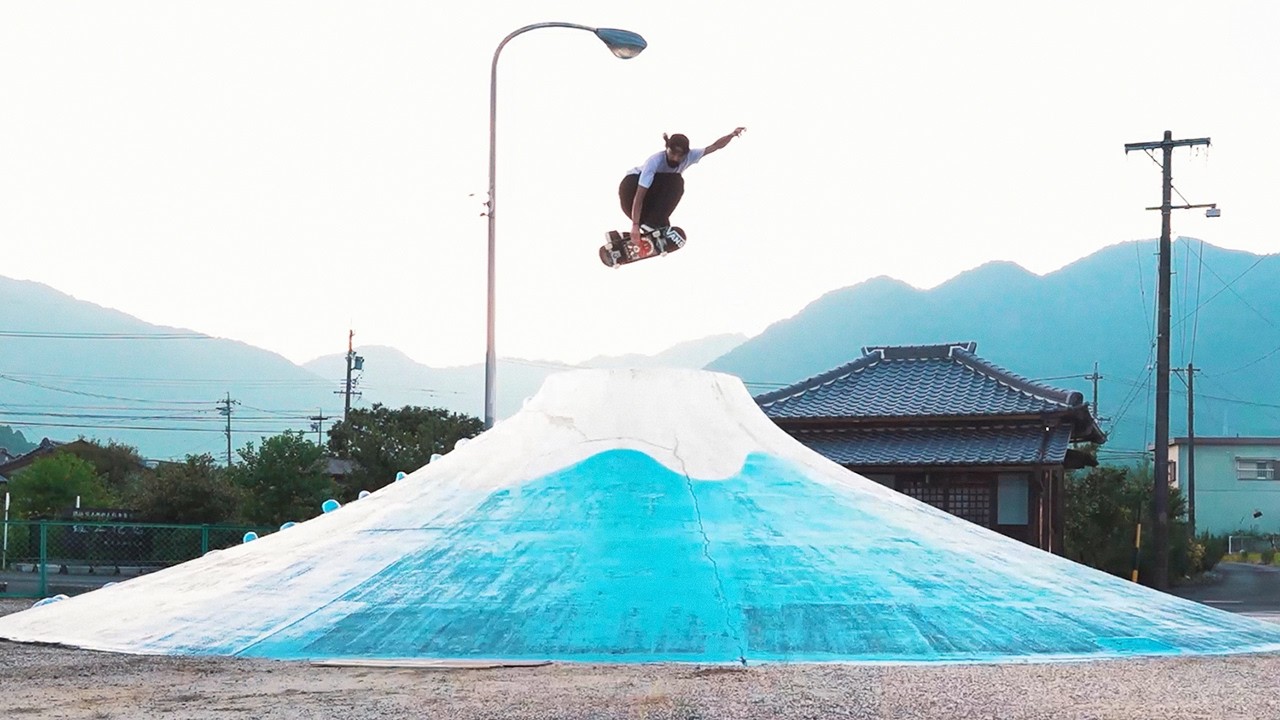
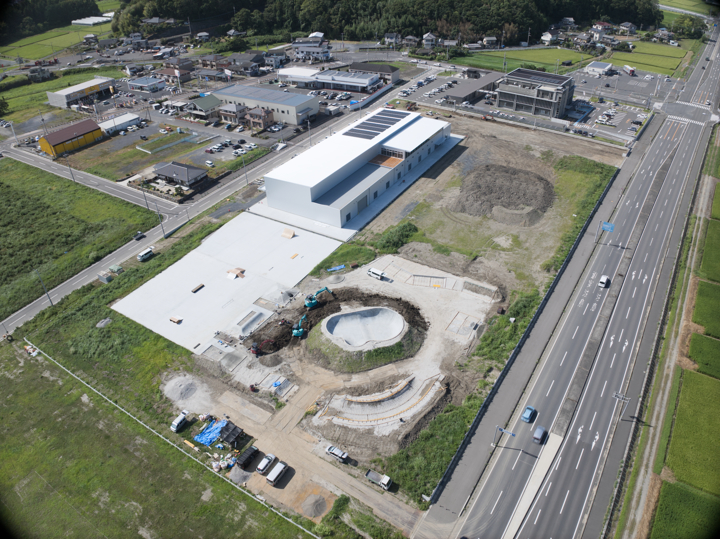
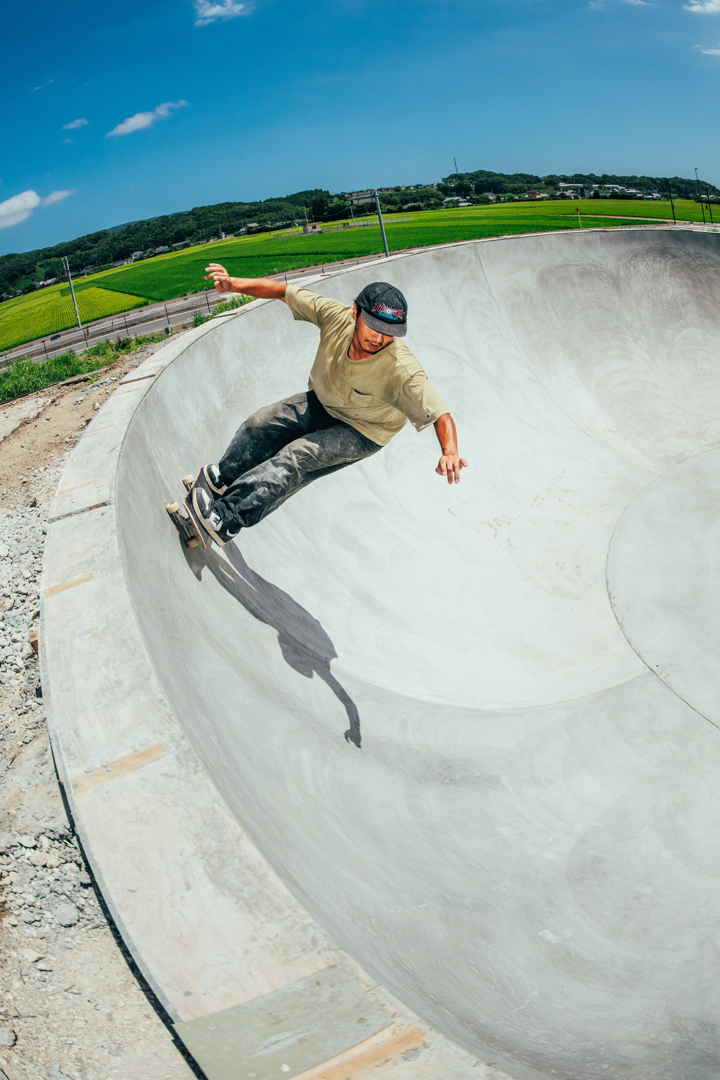
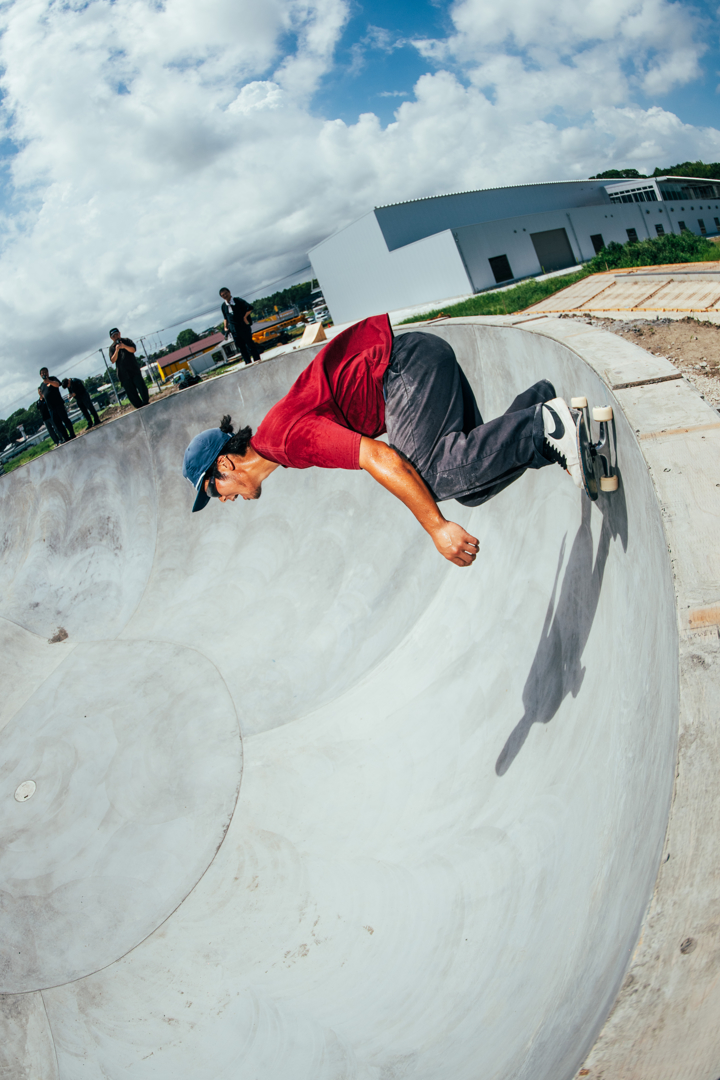
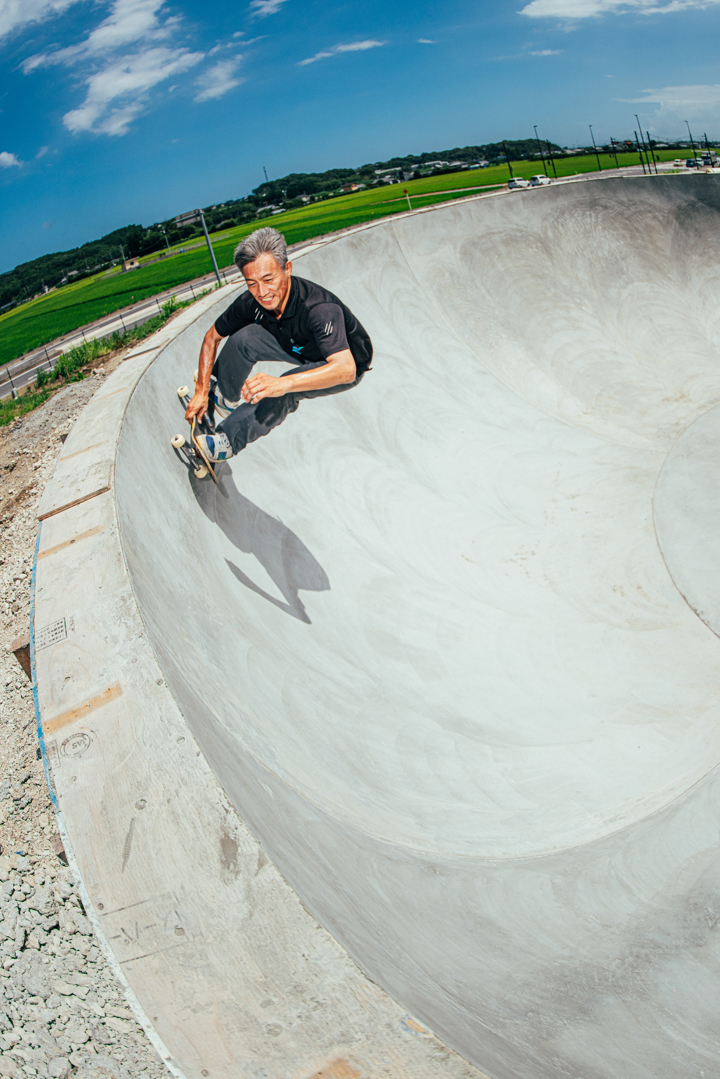
MBM: From the very beginning, Nagatomo-san had one strong request: he wanted a big mound right in the middle of the park. So I started thinking about putting a bowl into the center of that mound. The challenge was that the site relies entirely on natural drainage, and we couldn’t pump water out, so the bowl had to be built above ground level. From there, we worked backward to create a transition large enough for both surfers and skaters to enjoy, and it ultimately became a massive bowl with a 2600R radius, putting it close to vertical.
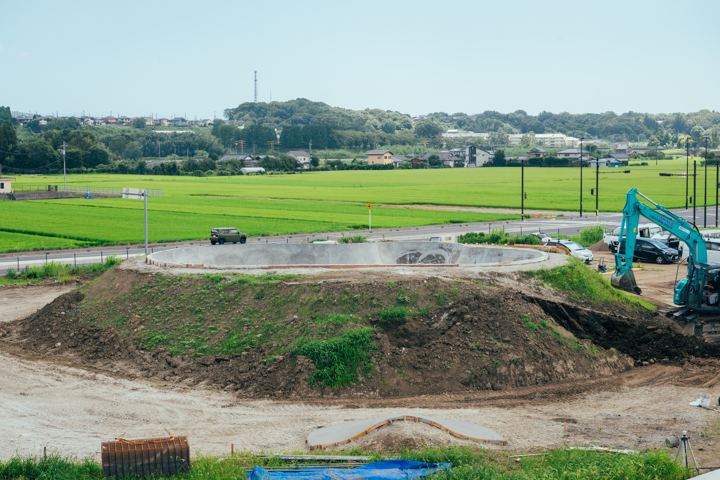
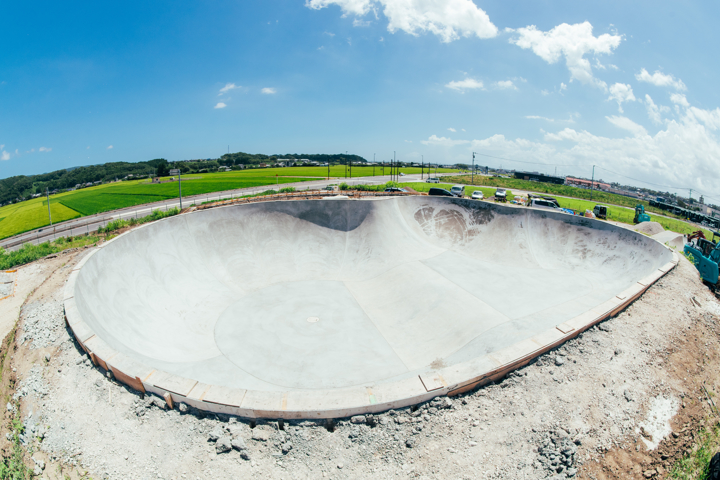
VM: Even when you’re driving toward the site, you can see it from a distance and think, “Oh, there’s a mountain over there (laughs).”
MBM: Exactly. But in the end, making the mound that big gave the park a really strong visual symbol. The bowl itself is huge, but the transitions are long and mellow, so surfers can enjoy that feeling of riding a wave just by carving around, without having to air out or grind. Rather than going with something like an 1800R, which gives you a quicker, more responsive transition geared toward skaters, we made it bigger and more open so it feels good on a surfskate as well.
YN: Word has already started spreading among the local surfers at the nearby beach. When my son goes surfing, people will come up to him and say, “You’re the son of the guy with that park, right? We’re definitely coming to skate it!” So there’s already a lot of excitement around it.
VM: How is the park laid out overall?
MBM: About 80 percent of the park is made up of snake runs and other sections designed with board sports and surfskating in mind, while the latter part of the park features more street-oriented obstacles. For the section at the very front, I left the design up to some of our younger staff.
YN: Next to the parking lot, we’ve also set aside a flat, open area that people can use freely. The idea is to turn it into a DIY zone, where people can bring in materials like wood and build their own rails, ramps, and other obstacles to skate. I come from a manufacturing background myself, so I want kids to experience the satisfaction of making something with their own hands. Whether it’s metalworking or something else, I think the fundamentals of making things are the same. Rather than simply using something that’s already finished, I’d like the local community to help shape the park together. Hopefully, that sense of fun and ownership can become part of the experience as well.
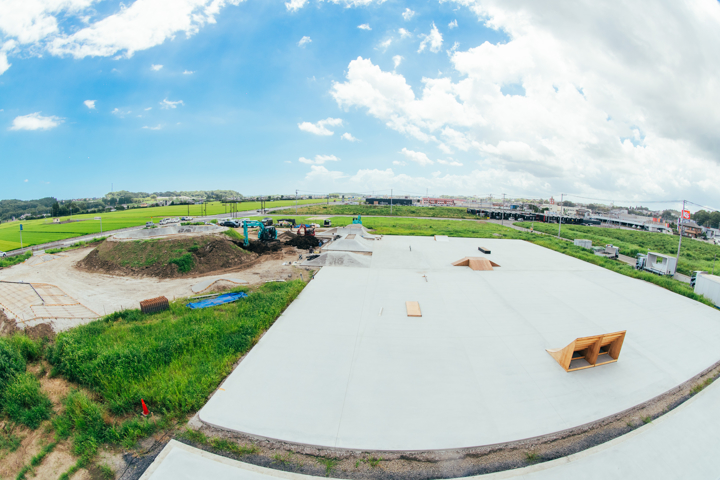
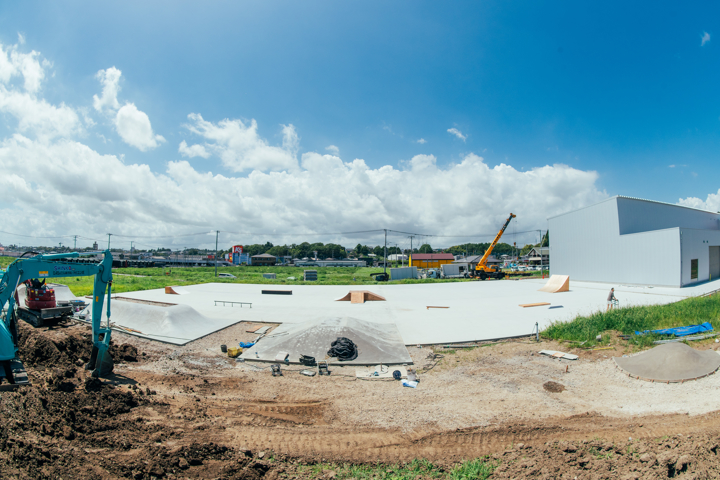
VM: It sounds like there are some parallels between Stainless Art Kyoei’s core business of manufacturing and the process of building a skatepark.
YN: We handle an extremely wide range of precision welding and fabrication, from aircraft and semiconductor components to machines that bake the snacks people eat and even pizza ovens. We’ve also worked on the design and fabrication of complex three-dimensional structures for a well-known facility in Maihama, as well as structural elements inside a large official store for a globally recognized character brand. To me, manufacturing and action sports are fundamentally very similar. You picture something in your head, use your hands to bring it to life, and then judge the result with your own eyes. That kind of sensitivity and precision is something I think Japanese people are especially good at, and it’s a skill we should be proud to share with the world.
VM: Was there also a reason for building the park right next to the factory?
YN: Absolutely. We designed the factory with glass walls so that kids using the park and people from the local community can look inside and see how things are actually made. Take welding, for example. There are plenty of people who have no idea what that kind of work really involves. But if a kid comes here to skate, looks into the factory, and thinks, “Wow, that looks like a cool job,” it might open up another possible career path for them in the future. With Japan’s declining birthrate and aging population, I think creating those kinds of opportunities is really important. We’d also like to use the park as a base for regular manufacturing workshops. For example, kids could learn 3D modeling in the first week, create the data in the second, and then actually fabricate the piece in metal in the third. Whether it’s building their own ramps through DIY or learning how products are made, we want this to become an open space where play and manufacturing come together.
VM: Kawabata-san, how do you see this project?
YK: I’ve known for a long time that he came from skateboarding and board sports, so to me, this project doesn’t feel like something that suddenly came out of nowhere. What we did when we were younger, and the culture we experienced back then, is now connecting with the work the company does and with the local community. I think that’s one of the most interesting things about this project.
VM: Kimura-san, from your perspective, what sets this park apart?
MBM: More than anything, it’s the fact that the park is completely free and there’s no reception desk. At many public skateparks in Japan, you have to register in advance through an app, check in at a front desk, and skate within a long list of rules. But when you go to parks in the US, people just show up, push in, skate freely, and leave. That’s completely normal. Say you go surfing, the waves aren’t good, and you think, “I’ll stop by the park for a surfskate session on the way home.” At a public facility, you might be told, “Sorry, check-in is already closed.” Because this is privately owned, we can create a place where people can come and go much more freely. I think that’s one of the park’s biggest strengths.
—Yoshihiro Nagatomo
VM: So the goal isn’t simply to build a skatepark, but to create a community around it as well.
YN: Exactly. I want people who come here to play, meet others, and naturally develop a sense of culture and respect along the way. You take your trash home with you. If someone falls, you ask, “Are you okay?” Even if you don’t know each other, you say hello. Those basic acts of kindness and respect aren’t really things you learn by having someone lecture you about them. I think they’re things you naturally pick up through play and by being part of a community.
VM: When are you expecting the park to be completed?
YN: Manufacturing at the factory will begin first, but we’re aiming to unveil the entire site including the skatepark and the grassy park area next spring, once the greenery has fully grown in. When it’s finished, I want it to be a place where older people, men, women, and kids can all come together without worrying about what anyone else thinks, and where everyone can leave with a smile. We grew up looking up to American culture and to the cool adults who came before us. Now it’s our turn to pass those experiences and a place like this on to the next generation. Building the park itself isn’t the goal. The real goal is for something to grow from here and take root in the local community. I think only then can we really call this project a success.
Stainless Art Kyoei @stainless_art_kyoei
Based in Fujimi, Saitama, Stainless Art Kyoei is a metal fabrication company specializing in precision sheet metal work, welding, and polishing, with a particular focus on stainless steel. The company handles the entire production process in-house, from 3D design and fabrication to assembly, and works across a wide range of industries, including food-processing machinery, semiconductor-related equipment, and aircraft interior components. In 2026, the company opened a new factory in Hitachiota, Ibaraki, where it is developing community-oriented spaces on the grounds, including a skatepark.
MBM Parkbuilders @mbm_parkbuilders
Based in Ibaraki, MBM Parkbuilders is a crew of skatepark builders working on projects across Japan. Operating under Masaken Co., Ltd., the team is made up of craftsmen who are also skaters, specializing primarily in the design and construction of concrete skateparks. Their roots go back to around 2000, when they began building the park at AXIS, a facility they operated themselves. Since then, they have completed numerous projects ranging from public facilities to privately owned skateparks.