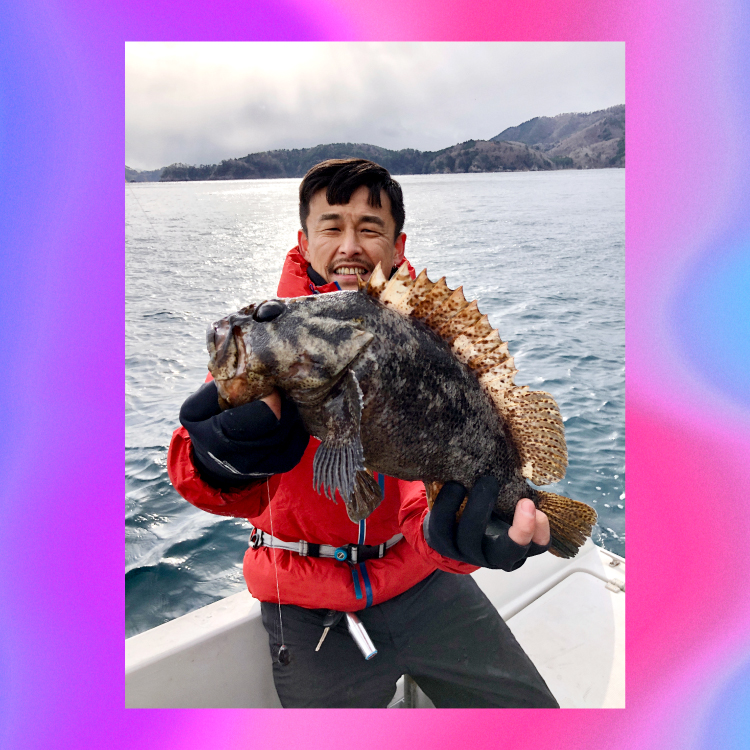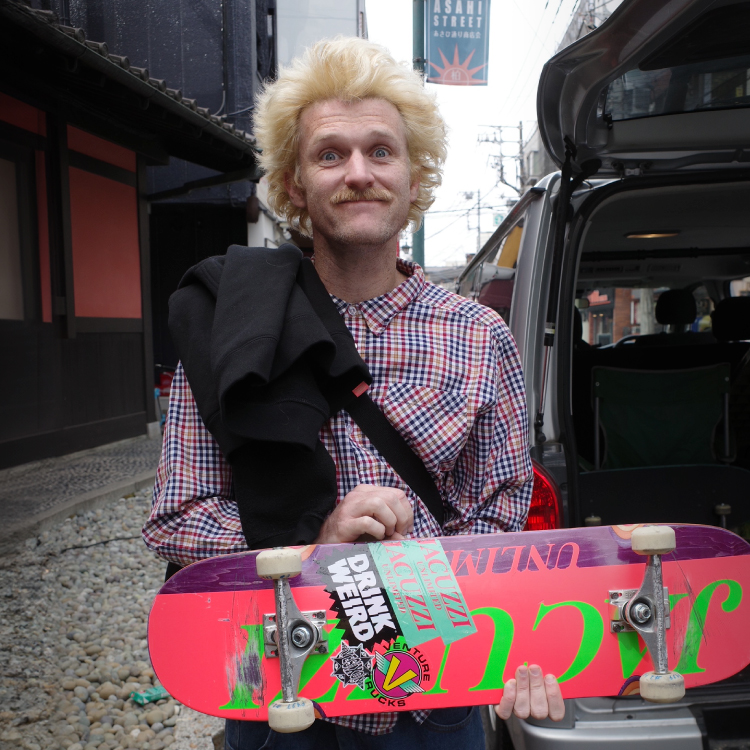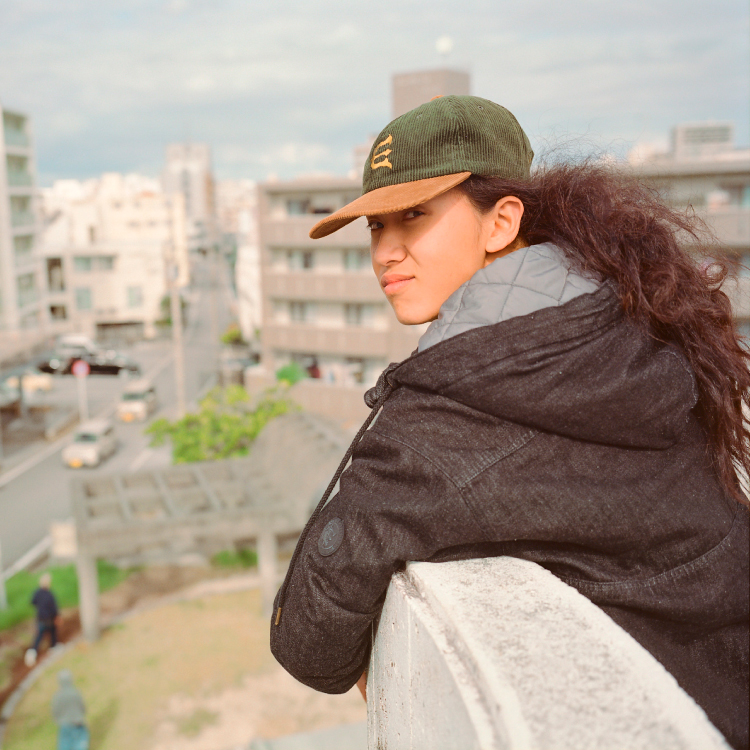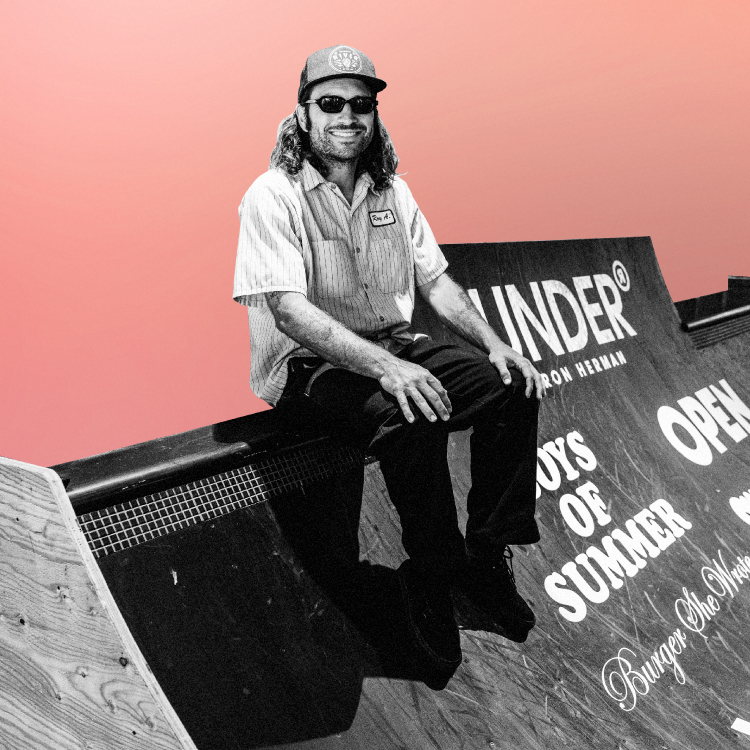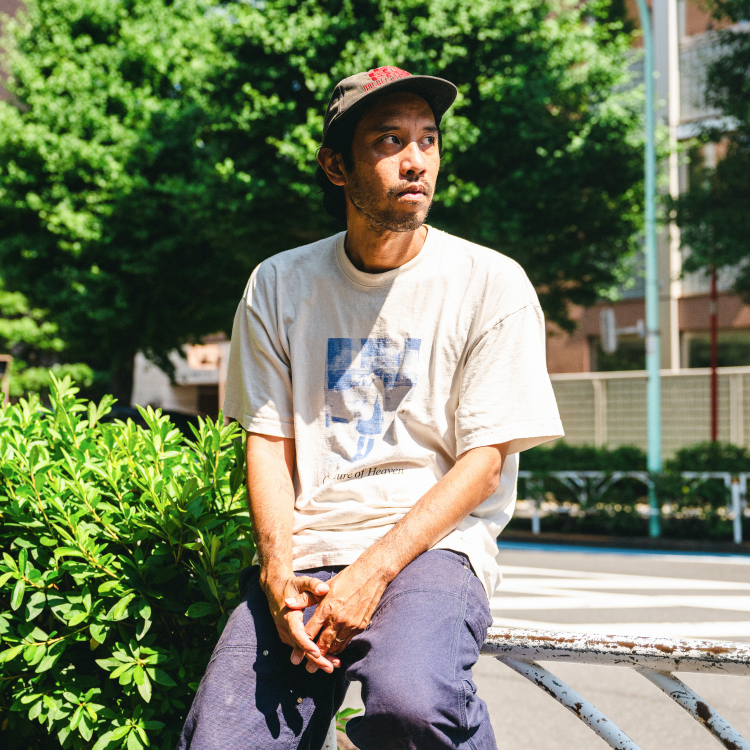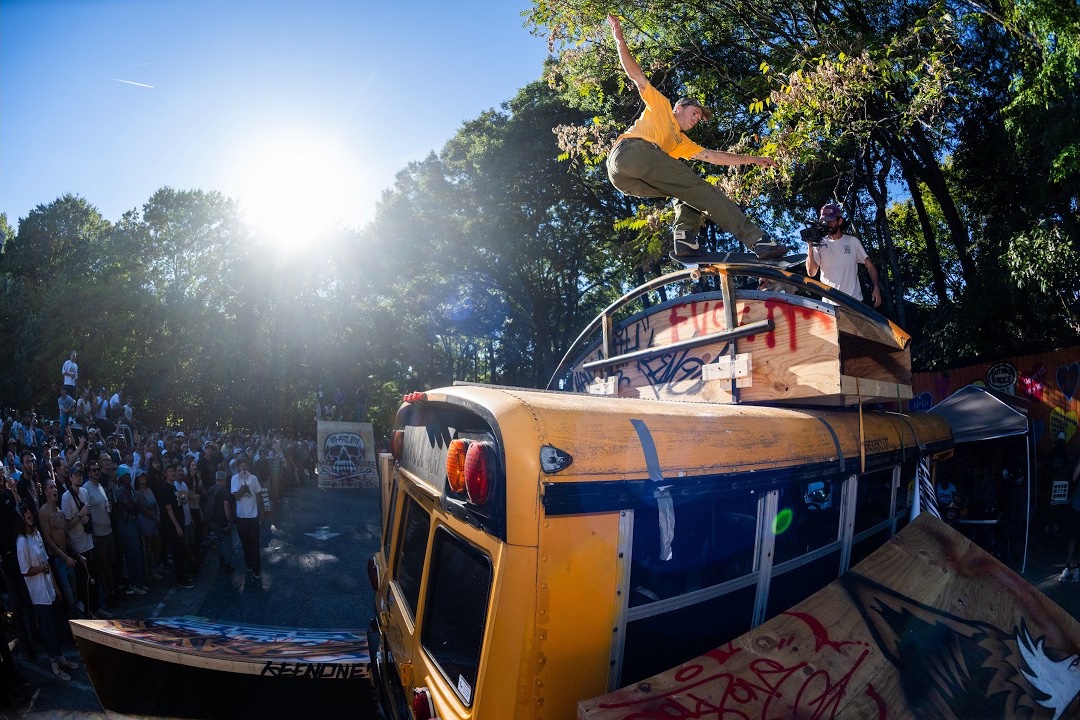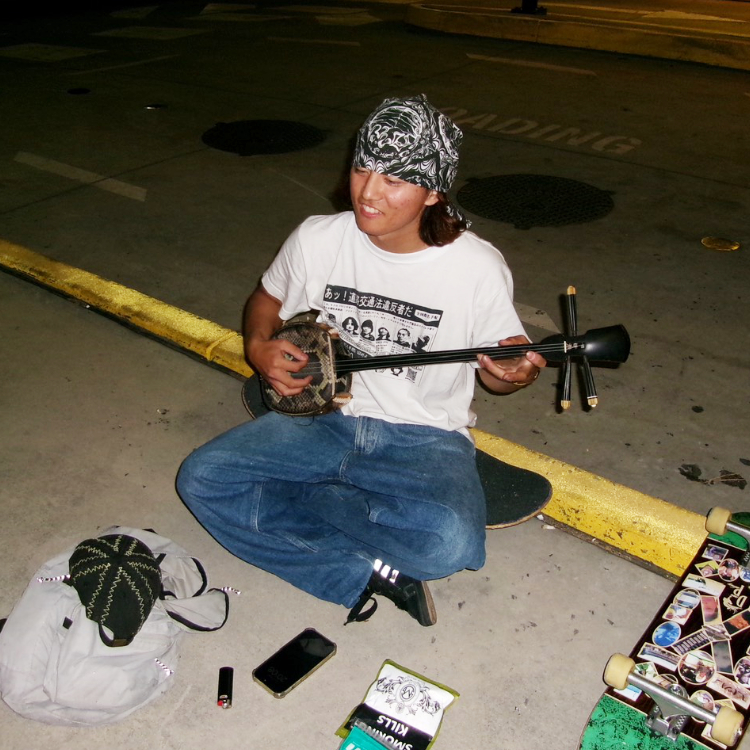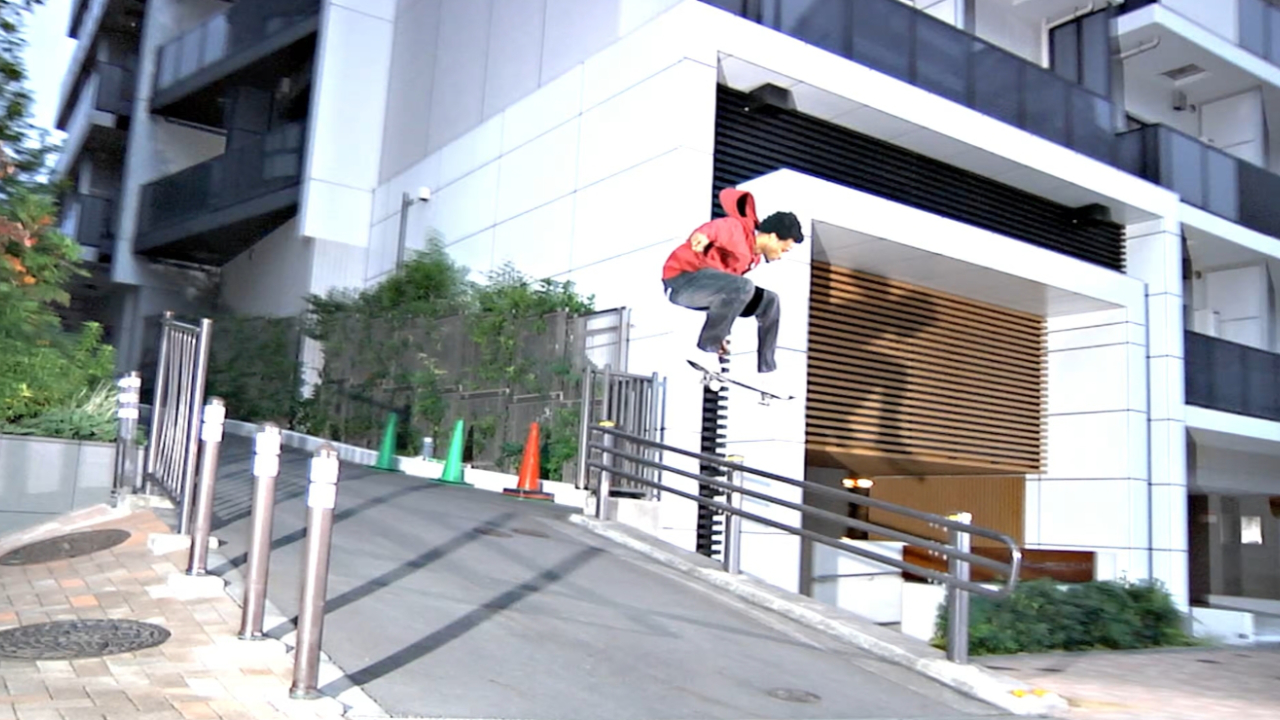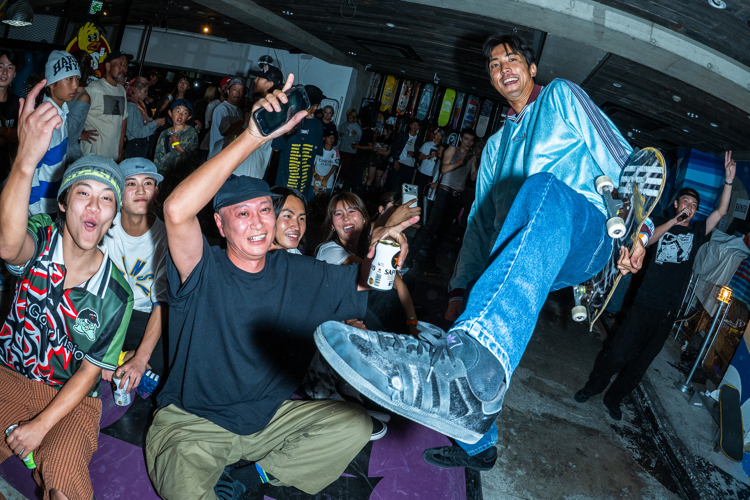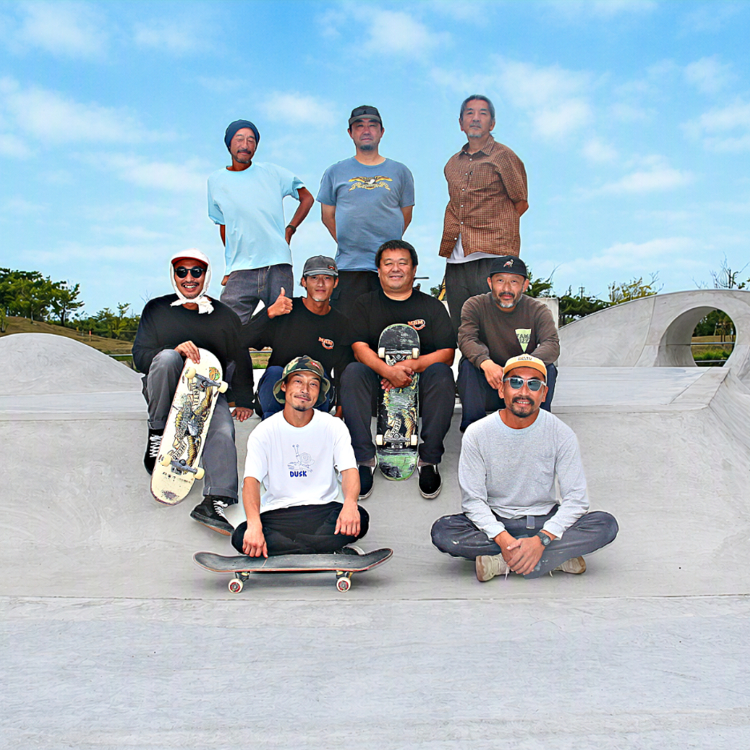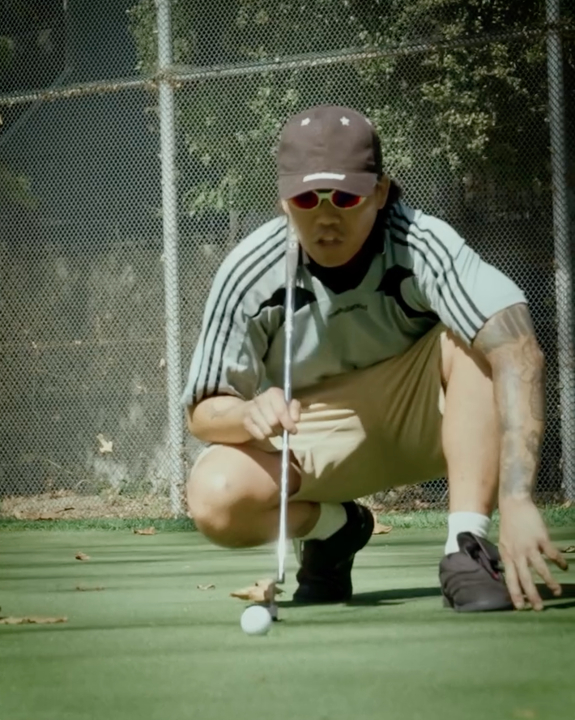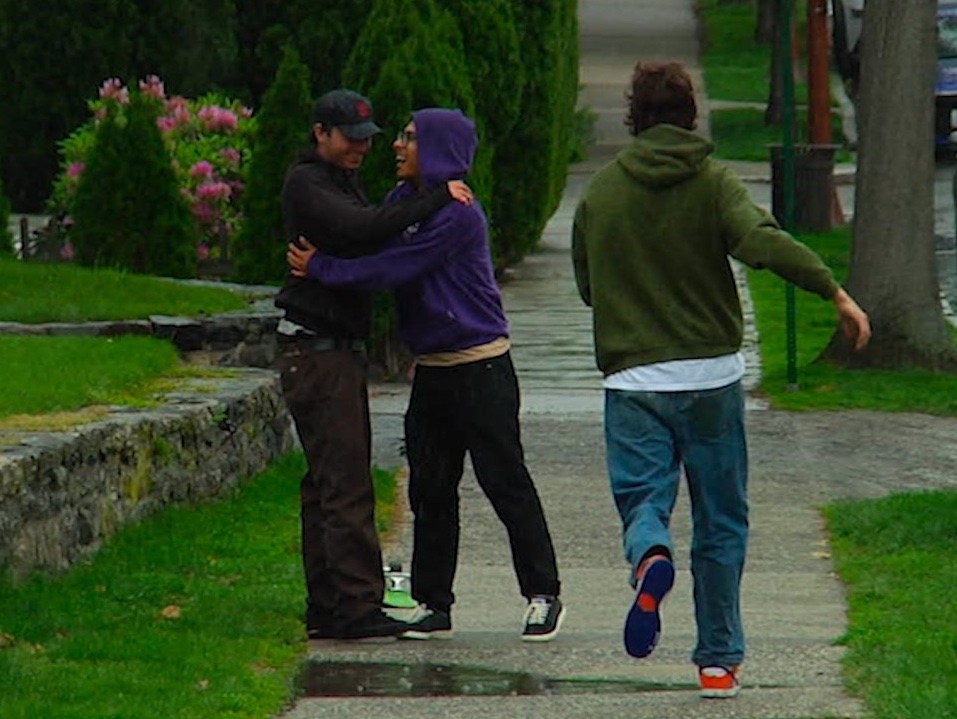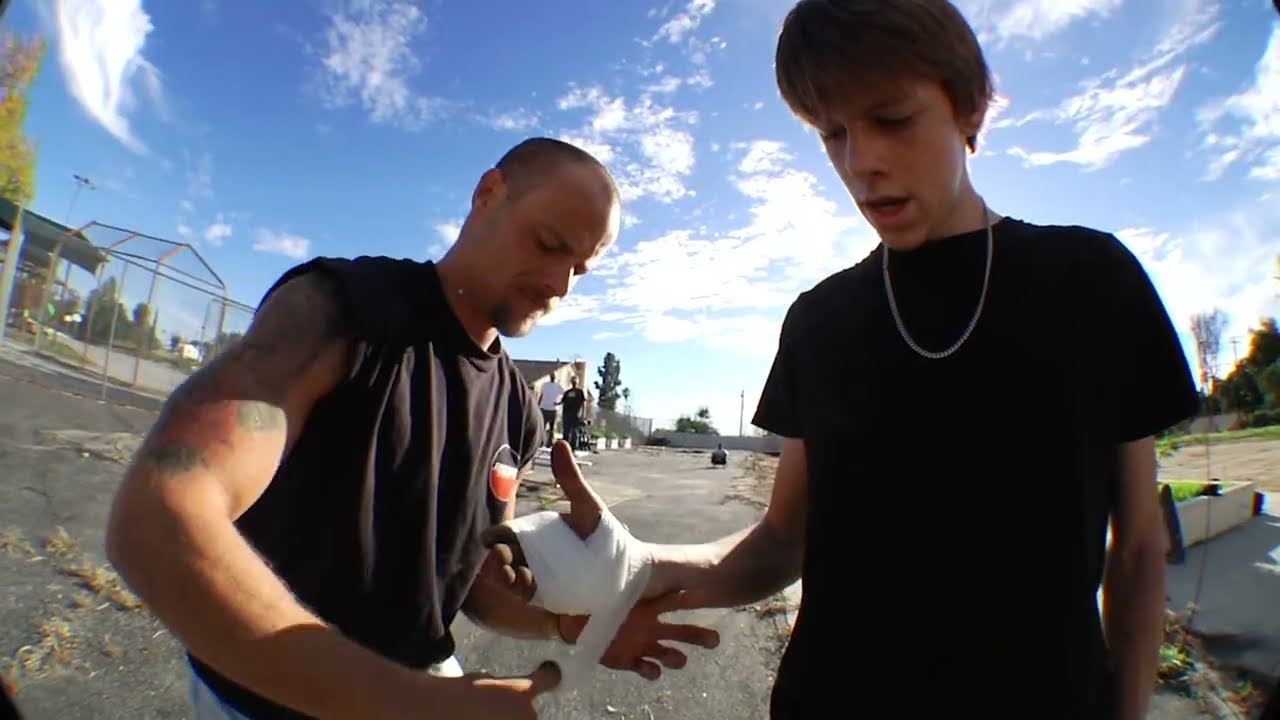
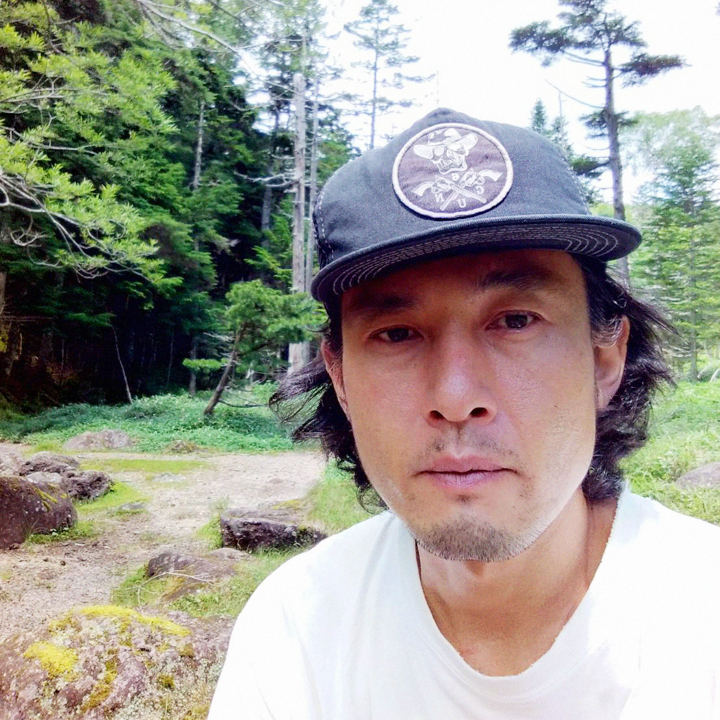
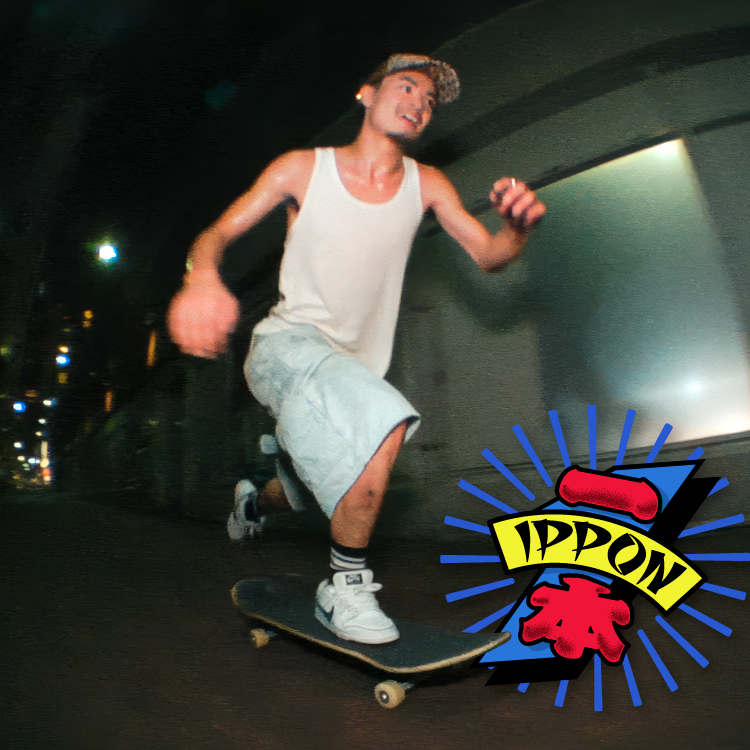

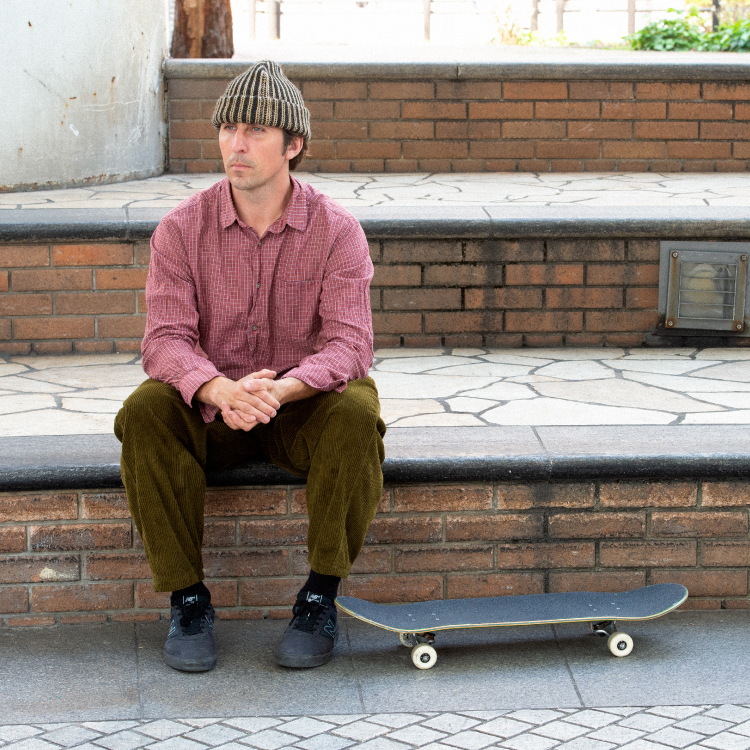



For more than a decade, Shintaro Maruyama, better known as Maru, continued skating while dealing with chronic hip pain. But as his condition worsened, even walking became difficult. Faced with few precedents in Japan, he underwent total hip replacement surgery and committed himself to the challenge of returning to skateboarding. We spoke with Maru about the road from surgery to recovery, and the determination that kept him from giving up.
──SHINTARO MARUYAMA (ENGLISH)
[ JAPANESE / ENGLISH ]
VHSMAG (V): First of all, can you explain what kind of surgery you underwent?
Shintaro Maruyama (M): The surgery I had was on my hip. The official name is a total hip replacement. Basically, they remove the entire hip joint once it's beyond repair and has no chance of recovering, and replace it with artificial parts. So yeah, it's kind of like becoming a cyborg. This whole area here (right hip) is metal now. Straight-up metal (laughs).
V: So you're pretty much a bionic man now.
M: No, seriously, I really am part machine now. Half of my femur is gone, and about a third of my hip joint is gone too. All of that has been replaced with artificial components, so it honestly feels like I'm some kind of robot.
V: What was your condition like before the surgery?
M: It all started about ten years ago. After pushing, I'd feel a bit of pain in my hip, and I gradually lost the ability to sit cross-legged properly. Whenever I tried, only my right leg wouldn't drop down naturally. But at the time, I didn't think much of it. I just figured, "Well, that's how it is." I'd been putting my body through a lot for years, so I kept skating and working around it. Then, at the end of the year before last, I went on a filming trip to Korea. That's when things got really bad. The symptoms reached a point where I could barely walk. It came on pretty suddenly. I'd spent nearly a decade ignoring the discomfort and getting by, but then all of a sudden I could hardly walk. Even something as simple as going to the convenience store closeby was painful. I could still skate, technically, but it hurt the entire time. Skating basically meant being in pain. That had become my normal.
V: What ultimately convinced you that it was time to undergo surgery?
M: I'd been trying everything for years. Seeing practitioners of Eastern medicine, visiting people who were supposed to be miracle workers, the whole deal... but nothing made a difference. On top of that, walking was becoming harder and harder. I'd already started thinking, "There's really nothing else I can do." Then, by chance, I was watching a New Year's TV special and saw a documentary about Kazushige Nagashima undergoing major surgery. The program focused on total hip replacement surgery, and I remember thinking, "Wow, that's incredible." Watching it, I was like, "He's basically turning into a robot." But the more I listened, the more I realized his symptoms were almost identical to mine. That's when I thought, "Wait a second... could this be what I have?" So for the first time, I went to a major hospital. Up until then, I'd avoided hospitals. I'd been relying on chiropractors, massage therapy, training, and things like that instead. But the moment I saw that program, something clicked, and I decided to get it checked out. The diagnosis was brutal. The cartilage where my hip joint connects to my femur was completely gone. Everything was worn down and damaged. They told me it was end-stage. The doctor basically said, "Forget skateboarding. Before long, even walking is going to become difficult."
V: Had you seen any examples of athletes successfully returning to high-impact sports after this surgery?
M: The surgery itself isn't unusual. It's actually a pretty common procedure. The thing is, it's generally intended for people over 60. Most patients are older adults whose cartilage has worn away later in life. A lot of them are women, and it's fairly common among elderly patients. Another common case is a condition called osteonecrosis of the femoral head. That's what comedian Junior Chihara had. I actually learned a lot from watching his YouTube videos. In those cases, the surgery is performed because the femur itself is deteriorating. But the problem is that these artificial joints don't last forever. They have a lifespan. These days, doctors say they can last up to about 20 years at most. So if you're around 60, you can probably live the rest of your life with that artificial joint. But if you're my age, there's a good chance it'll wear out while I'm still alive. That's why doctors in Japan generally don't recommend the procedure for younger people. I asked, "So what am I supposed to do instead?" The answer was basically, "This is the only real solution, but we still can't recommend it for someone your age. You'll just have to manage it with medication." In other words, I'd be taking painkillers like Loxonin every day just to get through life. And on top of that, they told me that even if I did have the surgery, I'd probably never skate again. Years ago, people were breaking artificial hips from something as simple as missing a step on a staircase. Until relatively recently, it was the kind of operation that could even qualify someone for a disability designation. So doctors were understandably reluctant. They'd ask me, "Your goal is to return to sports, right?" And then they'd say, "We can help you get back to a normal daily life, but we can't take responsibility for getting you back to that level of activity." I was turned down by about three major hospitals because of that.
V: After being turned down by several hospitals, how did you eventually find a doctor who was willing to take on your case?
M: I went from hospital to hospital looking for answers. The surgeon who operated on Kazushige Nagashima is basically considered one of the top specialists in Japan. He's also the doctor who operated on pro wrestler Keiji Muto. I'd done all the research (laughs). But getting surgery directly from someone at that level isn't exactly easy for an ordinary person. So I started looking for someone as close to him as possible... a protégé, a former student, somebody from that lineage. Eventually, I came across a doctor at Tohoku University Hospital, one of the leading hospitals in the Tohoku region. As it turned out, he was a prized disciple of that same superstar surgeon. He was also just one year younger than me. When I met him, I told him everything. My background, my career, and how much skateboarding meant to me. I basically bowed my head and said, "Please, you've got to help me." He struggled with the decision. It wasn't an easy case. But in the end, he told me, "I'll do it. I'll see this through with you." That's how the surgery finally became a reality.
V: So you finally found a surgeon. But for both you and the doctor, it still sounds like a bit of a gamble at that point, right? There was no way of knowing how it would turn out until you actually went through with it.
M: Yeah, exactly. One of the doctor's proposals was, "In that case, I'd like you to become a case study." He told me that if I was willing, he'd like to track my progress, collect data, and potentially use it for academic research or medical conferences in the future. My response was basically, "Whatever you need. Go ahead and use it." I hoped my experience could eventually help other skaters dealing with the same issue. And honestly, the doctor agreed to take on the surgery under that condition as well.
V: You made that post from your hospital room saying, “Surgery is tomorrow.” What was going through your mind at that point?
M: Up until the day before, I was nothing but anxious. I mean, the doctor at the university hospital literally told me it was a “one-chance” kind of situation. So I was thinking, “Man, this is bad.” But the thing that gave me hope was... do you know Dan Pensyl, who used to ride for 5Boro? Back in my San Francisco days, we were super close. We came up together and pushed each other the whole way. After I moved back from the States, though, we completely lost touch. We hadn’t spoken in over ten years. Then, after I made that post, I got a DM from Dan Pensyl. I thought, “Oh, wow, Dan Pensyl.” So I opened the message, and it said, “You’re gonna be fine. I know because I had the exact same surgery six months ago.” Then he added, “You’re gonna be stoked in two months.” That gave me a huge boost of confidence. I’d been really scared, but hearing that from Dan suddenly changed something. It wasn’t that all my worries disappeared, but it made me feel like, “Alright, let’s give this a shot.” So yeah, I’m incredibly grateful to Dan Pensyl.
V: What was the recovery process like before you were able to get back on your board?
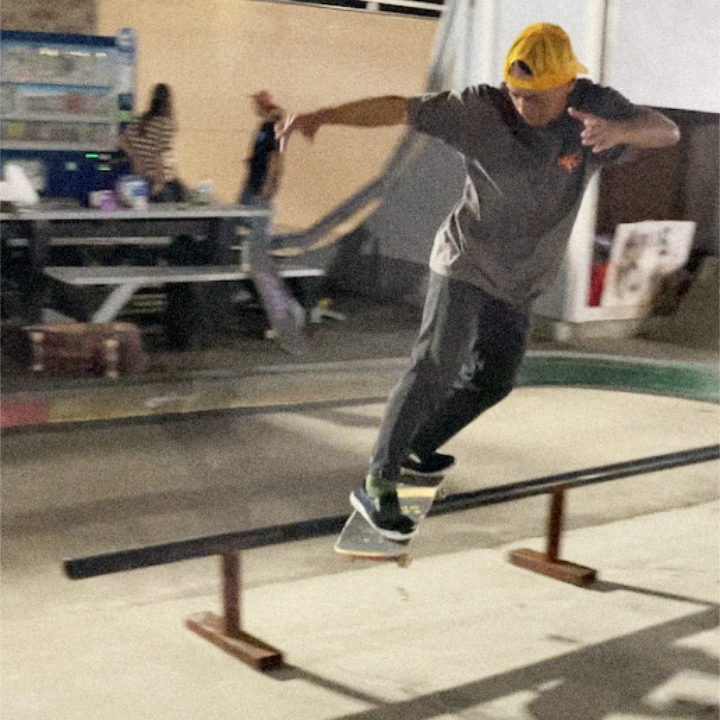
M: The first time I got a little grind in on my mini ramp at home was about a month after the surgery. I wasn’t fully healed yet, but all those weird, unbearable pains were gone. There was still some discomfort and numbness, but I was actually able to walk normally just one week after the operation. I couldn’t run or anything, but I could walk. After that, I followed my rehab and training program exactly as I was told. Around the two-week mark, I was able to start rolling back and forth on the ramp like a pendulum. Then, about a month in, I got that little grind in (laughs). That was the moment I thought, “Oh... maybe I can actually do this.”
V: Sounds like the recovery went better than you expected.
M: From there, it was really a gradual process. Little by little, the range of things I could do kept expanding. But honestly, I thought I was done with nose-heavy tricks. Things like noseblunts, crooks, nosegrinds, and nose jams. Those are some of my favorite tricks, but when I tried them again, they just felt weird. There was this discomfort, and I remember thinking, “Yeah, this might not be happening anymore.” So in my head, I accepted it. I thought, “It sucks, but I should probably give up on nose-based tricks.” Instead, I shifted my focus toward tricks that put more weight over the tail. I figured I'd just get really good at those. It wasn't until about six months later that I started thinking, “Wait... maybe nose tricks are actually possible after all.”
V: Was that Instagram line pretty much the point where you felt fully back?
M: Yeah, I’d say so. For one thing, I was skating at my park, a place I know like the back of my hand. More importantly, I wasn’t supposed to fall. My doctor had basically told me, “If you slam, you’re done.” So my whole approach was to keep progressing while skating in a way that minimized the risk of falling. I was trying to master skateboarding without taking any serious spills. But for some reason, that day I got completely fired up. I ended up taking a huge slam... an absolutely brutal one. To be honest, my body still hurts a little from it. But after that slam, I realized something. “Wait a second... my leg isn’t wrecked.” I had taken one of the hardest falls since the surgery, and everything was fine. That’s when it hit me. “Hold on... maybe I’m actually all the way back.” That was about a year after the operation.
V: How did you feel when you realized that?
M: I was incredibly happy. It made me feel like getting the surgery had absolutely been the right decision. At the same time, I knew I’d done everything I possibly could on my end. Ever since I started rehab after the operation, I’ve kept up my strength training every single day, and I still do. In fact, I was doing it this morning too. I really feel like I left no stone unturned. Anything I could think of that might help my recovery, I committed to it and never cut corners. So when I realized I was finally back, it felt like the result of all that work paying off. That’s what made me so happy.
V: That's incredible. I think it'll resonate with a lot of skaters. If you could leave a message for anyone dealing with a serious injury or facing surgery, what would it be?
M: Honestly, my message would be simple. If something feels wrong, go see a doctor. I’m not trying to knock chiropractors, massage therapists, or any of that stuff at all. But if you dismiss medical treatment based on assumptions or preconceived ideas, you could end up making things a lot worse. Looking back, if I’d gone to the hospital sooner, maybe I wouldn’t have needed such a major surgery in the first place. So if you feel even the slightest abnormality or persistent discomfort, go to a proper hospital, get examined, and find out exactly what’s going on. Then you can decide what to do from there. Trying to diagnose yourself is never a good idea.
V: Looking back on everything you've been through, how do you feel now?
M: Man, the way I see it, the moment you give up, it's over. If you don't give up, there's always a way forward. Sure, there are plenty of people out there who have gone through much tougher situations than I have. But even I had moments when things were hard enough that I thought, “Maybe this is it. Maybe I can't do this anymore.” The difference was that I just couldn't bring myself to quit. Even when I was being told that the odds were stacked against me, I refused to give up. Looking back now, I'm really glad I didn't. So if you're dealing with pain, if something feels off with your body, or if you're thinking, “Man, something's not right with my leg,” don't sit around worrying about it. Go get checked out. See a doctor, listen to the professionals, and don't give up. If you do that, I truly believe better days are ahead.
V: Thank you. Honestly, I don't think there's a single part of this interview I'd want to cut.
M: Yeah, I mean, there’s still so much I could talk about. One thing that really stood out to me was the difference in mindset between Japanese and overseas approaches to medicine. In Japan, every doctor basically told me, “Honestly, it's tough.” Meanwhile, that Instagram post actually blew up a lot more than I expected. I got hundreds of messages, including from people who weren’t even skaters. Most of the messages from Japan were things like, “Believe in a miracle,” or “Don’t give up, we’re rooting for you.” But the messages from overseas were completely different. People were saying, “You’ll be fine,” or “I had the same surgery.” There was a lot more confidence and positivity behind it. I even got a DM from a well-known snowboarder... you know, one of those Red Bull guys who drop s onto mountain faces by helicopter. He was like, “I’ve had surgery on both legs, and I’m still doing this stuff.” Here's a guy who’d had both legs operated on and was still jumping out of helicopters onto cliffs. That really made me wonder, “Why is there such a difference in perspective?” What I eventually realized is that, in Japan, the goal of medicine is generally to get you healthy again. But returning to your sport and being healthy aren’t necessarily the same thing. The medical system here tends to view restoring basic health as the finish line. Beyond that, I think a lot of doctors simply don’t want to take responsibility. That’s why so many places turned me away and told me, “If you want to keep skateboarding, it’s impossible.” But overseas, the mindset felt different. I mean, the idea of giving up skateboarding today because something might wear out twenty years from now... that’s just not how I think. It’s really a difference in values and priorities. I think part of it is that, overseas, there are more examples of athletes coming back from these kinds of surgeries. In Japan, I researched this stuff obsessively, and the one person who kept coming up was Keiji Muto (laughs). Keiji Muto has artificial hips on both sides and artificial knee joints in both knees. In his fifties, he came back from a knee surgery and was still winning Match of the Year awards. Then, in his sixties, he had to undergo hip surgery, and he was saying things like, “I’ve got work in Las Vegas in three weeks, so I’ve got to get moving.” I’m not even a huge pro-wrestling fan, but honestly, he gave me a lot of courage. If I had to name the people who helped me believe I could come back, it would be Keiji Muto, Junior Chihara, and Dan Pensyl. Those three gave me the confidence to keep going.
V: So Kazushige didn't make the list?
M: Nah, Kazushige was the one who pointed me in the right direction. But from what I hear, he went through a pretty rough time himself. Actually, yeah... he deserves credit for helping me realize what was going on. But that's exactly why I wanted to leave my own example behind. I want to be able to do for someone else what those guys did for me. For me, it was Keiji Muto, Junior Chihara, and Dan Pensyl. If sharing my story can give someone hope the way they gave me hope, then that's worth everything. I'm sure there are a lot of skaters out there dealing with the same condition I had and still trying to skate through it. I had no idea what was wrong myself, and even professionals at clinics and rehabilitation centers never told me that a joint replacement might be necessary. For years, I was stuck wondering, “Why does this hurt so much?” It was something I lived with every day. That's why I genuinely believe this surgery can help people. There are definitely people out there whose lives could change because of it. So yeah, put it all out there. Don't hold back. (laughs)
V: Man, skating through that kind of pain for ten years must've been brutal.
M: From what I learned afterward, the condition usually progresses very slowly at first. The early and middle stages can take years. It gradually gets worse over seven, eight, nine, even ten years. But once it reaches the late stage, things can deteriorate really fast. That was definitely my experience. Once I hit that point, everything went downhill in a hurry. I wasn't even thinking about skateboarding anymore. I was thinking, “Man, am I going to end up bedridden?” I couldn't go fishing. I couldn't even walk up the stairs at my shop. At that point, returning to skateboarding wasn't even part of the conversation anymore. It was beyond “Will I ever skate again?” It was more like, “How am I supposed to live like this?” I couldn't even put my own socks on. It was hell. Seriously, absolute hell.
V: When things got that bad, did you have anyone around to help you with everyday tasks and getting around?
M: Well, I run my own business, so I was able to work around my condition and move at my own pace. Because of that, I never really felt like I was burdening other people. But I could definitely feel myself shrinking as a person. I love fishing. I love camping. I love going out for drinks. I've always been the kind of person who's constantly on the move. But because of the pain, I started saying things like, “Eh, maybe not today.” I'd look at the conditions and think, “The tide is perfect today. If I go, I could probably catch something huge.” Then I'd immediately talk myself out of it. “Yeah, but my hip's going to kill me when I have to climb down that cliff, so forget it.” Little by little, I started putting limits on my own life. And honestly, I think I was starting to get depressed. I can't even imagine living that way now. Before all this, even if I was exhausted, I'd still be the guy saying, “No way, today's the day. I'm going.” But instead, I found myself saying, “Nah, I'll pass.” My drive started disappearing. My mood got worse. And that was the first thing that really scared me. More than the physical pain, I started feeling like I was becoming a different person.
V: You've still got a whole life ahead of you. If you don't make a move, things could just keep getting worse. But surgery's a leap of faith too, isn't it? That had to be mentally exhausting.
M: At the end of the day, skateboarding is my livelihood. I'm a professional skateboarder, and I own a skate shop. I've never really done anything else. I've spent my entire life putting everything I have into skateboarding. So the thought of having that taken away from me... honestly, it felt like losing my entire identity. I wouldn't have known what to do with myself. It's like asking a pianist to live without being able to use their hands. That's probably the closest comparison I can make. So mentally, I was overwhelmed. I was anxious all the time. Scared. Constantly wondering, “What's going to happen to me?” And it wasn't just me I had to think about. I have a family. There were moments when I just sat there thinking, “Man... this is bad. This is really bad.”
V: Honestly, it's incredible that you made it through all of that.
M: Honestly, it was really close. I was right on the edge. I was lucky. If a doctor had looked me in the eye and said, “We're going to get through this together. Leave it to me,” that's something you can hold onto. That gives you confidence and makes you want to fight. But instead, I got hit with, “Well... there's a chance.”
V: That was the heaviest “one chance” I've ever heard in my life (laughs).
M: Honestly, I still don't know for sure though. I can't sit here and say, “I'm completely back to the way I was before.” Maybe nobody really knows what the future holds. But what I have gotten back is my life. I can laugh again. I can go fishing again. I've found the motivation to keep pushing my skate shop forward. I've got a new idea brewing already, and I'm looking forward to seeing where it goes. So yeah, keep an eye out. I've got something planned.
Shintaro Maruyama
@bridge149 @bridgesendai
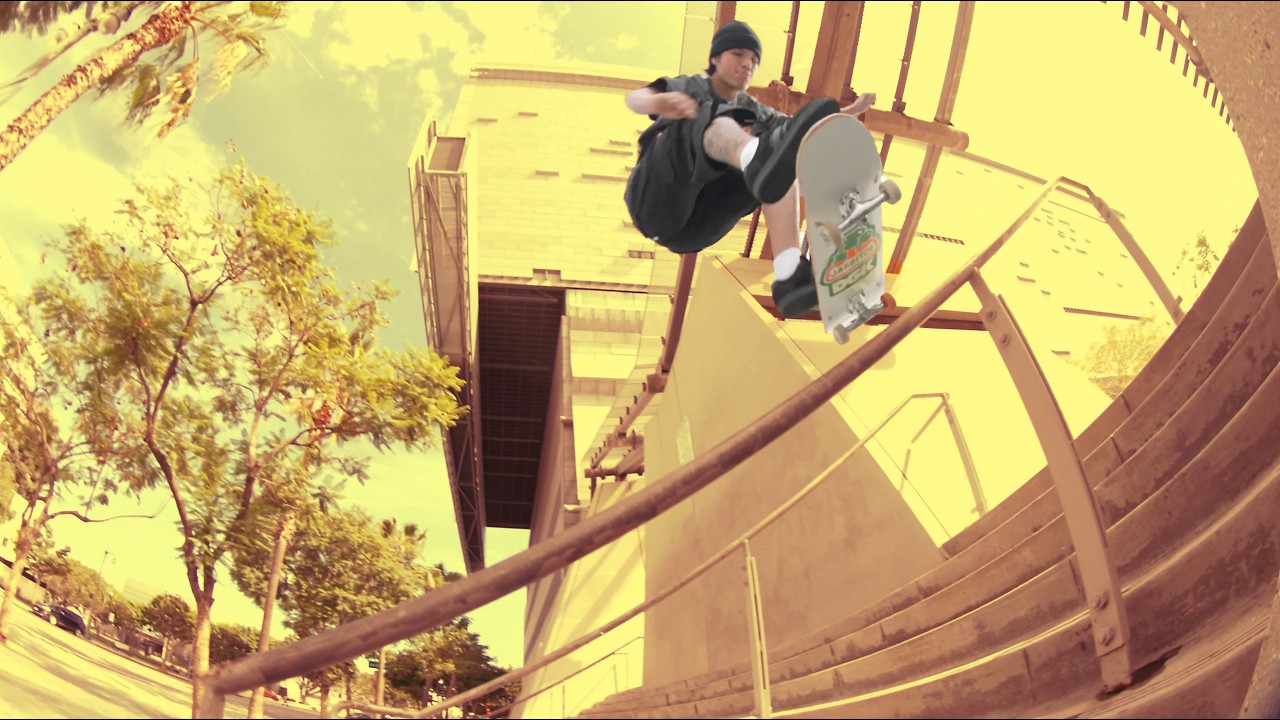
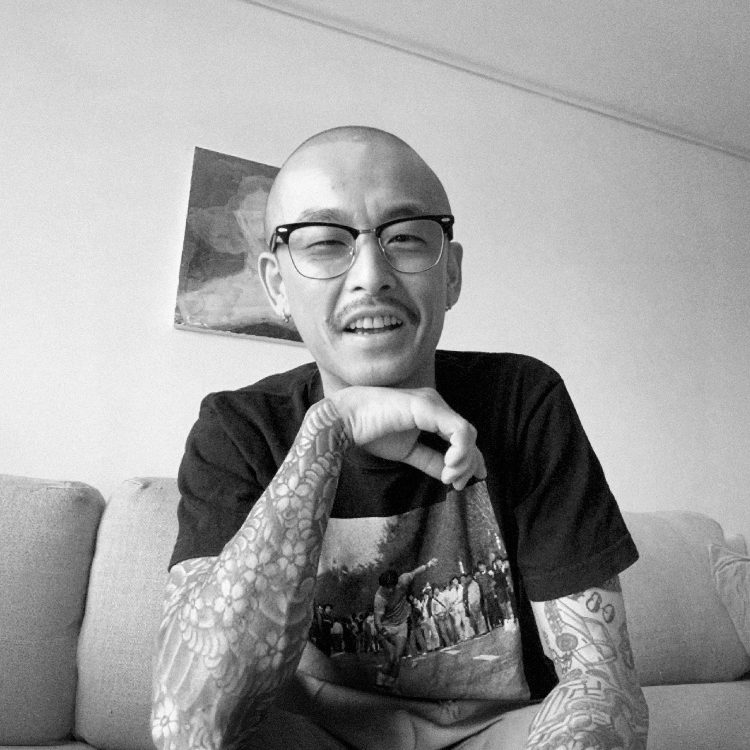
Born in 1980 and raised in Sendai. He first gained recognition for his high-speed, aggressive style. In the 2000s, he earned a pro model with Consolidated, a feat that spoke volumes at the time. Today, he rides professionally for Evisen while also running Bridge, a skate shop in Sendai.